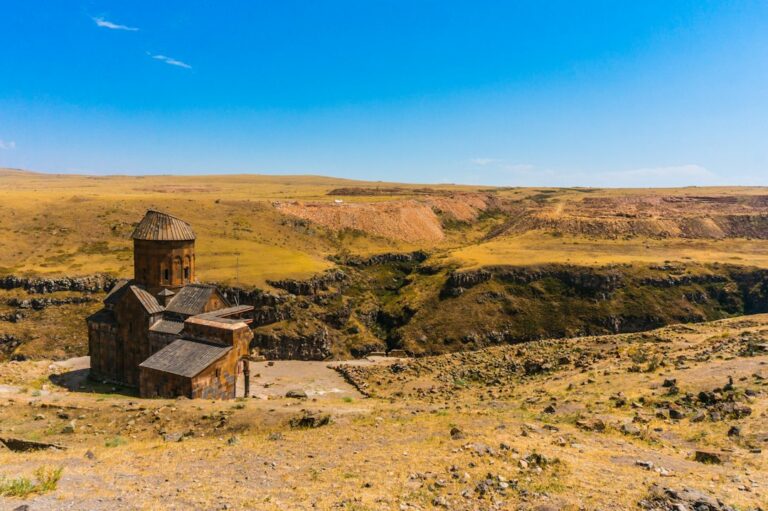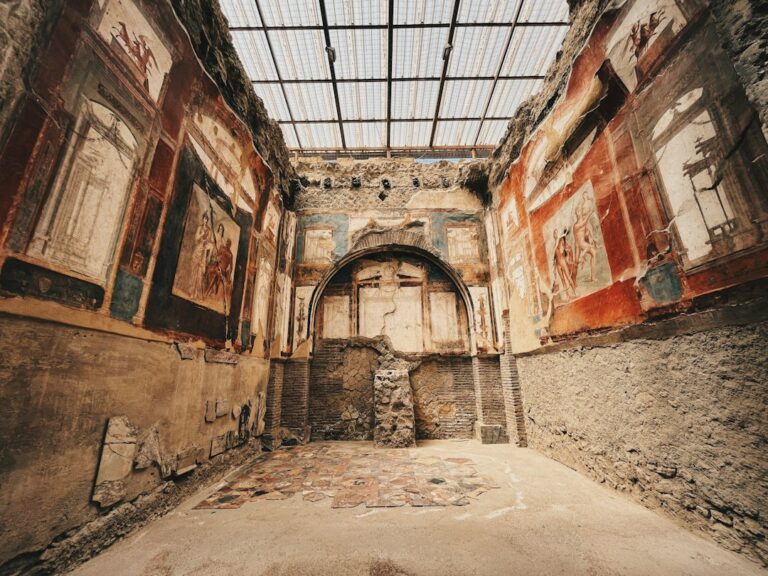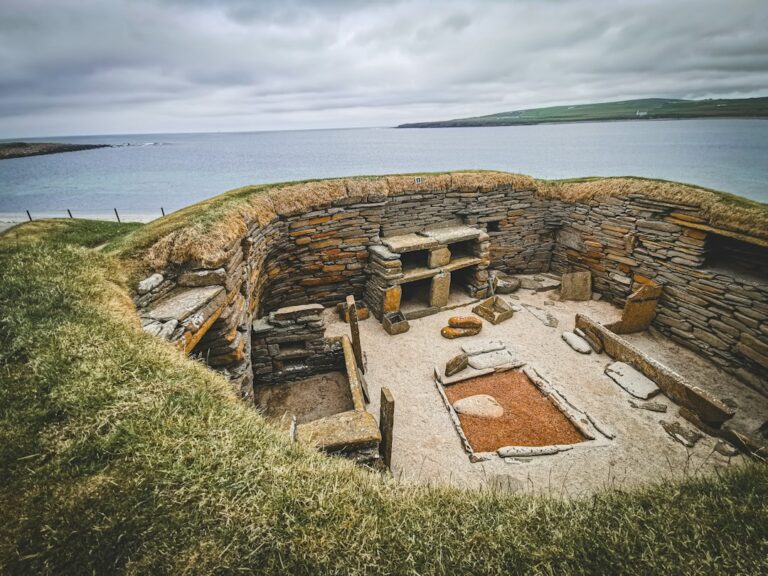
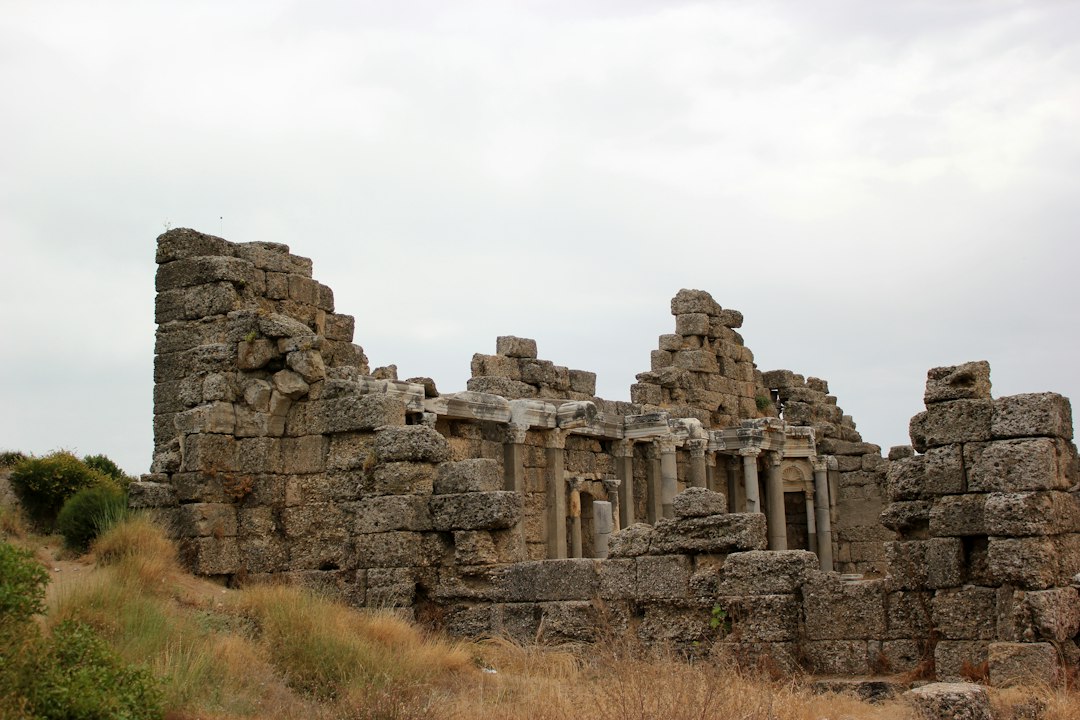
In the hills of central Anatolia, the ruins of a massive ancient capital rise from a landscape that can look surprisingly empty.
More than three thousand years ago, this was Hattusha, the capital of the Hittite Empire.
Its walls, gates, temples and archives reveal a state that controlled a large part of Bronze Age Anatolia and interacted with some of the most powerful kingdoms of the eastern Mediterranean.
Hattusha is therefore not simply a forgotten city. It is one of the places where the political world of the Late Bronze Age becomes physically visible.
A capital built into the Anatolian landscape
Hattusha stood in a rugged landscape in what is now central Turkey. The terrain was not merely a backdrop: hills, valleys and natural rock formations were incorporated into the city’s defensive and ceremonial architecture.
The settlement grew into a large urban complex with monumental walls, gates, temples, administrative areas and residential districts.
The city covered a substantial area and was divided into different zones, including an older lower city and an expanded upper city.
Who were the Hittites?
The Hittites were an Anatolian civilization whose kingdom became a major power during the second millennium BC.
At its height, the Hittite state controlled territory across much of Anatolia and interacted with neighboring powers in Syria and the Levant.
The Hittites were not isolated. Their archives record diplomacy, treaties, military campaigns and correspondence with other kingdoms.
Hattusha was the administrative centre of this political system.
The city was designed to impress
Hattusha’s architecture communicated power.
Massive defensive walls surrounded important parts of the city. Monumental gateways were decorated with sculpted figures. Temples and public buildings occupied prominent positions.
One of the best-known entrances is the Lion Gate, whose carved lions symbolized strength and protection.
Another famous entrance is the Sphinx Gate, associated with monumental sculptures that demonstrate the artistic sophistication of the Hittite capital.
The city had a complicated defensive system
Hattusha’s terrain provided natural advantages, but the Hittites supplemented them with extensive fortifications.
Walls followed the contours of the landscape rather than forming a simple rectangle.
At the highest points, the fortifications created imposing visual statements as well as practical defensive barriers.
The famous Yerkapi earthwork and tunnel system is one of the most dramatic surviving features of the city’s defenses.
Hattusha was also a religious centre
The Hittite world contained a large and diverse pantheon.
The empire incorporated traditions from different regions, and Hittite texts repeatedly describe rituals intended to maintain relationships between humans and the gods.
This helps explain the large number of temples and ceremonial structures discovered at Hattusha.
The city was not simply a royal residence. It was a sacred and administrative landscape in which political authority and religious practice were closely connected.
The Great Temple
One of the most important buildings was the Great Temple in the lower city.
Its courtyards, storage areas and surrounding structures provide evidence of organized ritual activity and administration.
Large temple complexes required labor, materials and food supplies. Their existence therefore tells us about the economic infrastructure of the state as much as about religion.
The archive changed our understanding of the Hittites
Perhaps Hattusha’s greatest contribution to history is not its walls but its written record.
Thousands of clay tablets were discovered in the royal archives.
They include treaties, legal documents, religious texts, administrative records, diplomatic correspondence and literary works.
Because clay tablets can survive for thousands of years when fired or otherwise preserved by destruction, the archive provides a rare direct view into Bronze Age statecraft.
The treaty with Egypt
One of the most famous documents from the Hittite world is the treaty between the Hittite king Hattusili III and the Egyptian pharaoh Ramesses II.
The agreement followed decades of rivalry between the two powers and is associated with the aftermath of the Battle of Kadesh.
Versions of the treaty survive in both Hittite and Egyptian contexts, making it an extraordinary example of international diplomacy in the ancient world.
It also shows that Bronze Age kingdoms could use formal treaties, diplomatic language and negotiated obligations rather than relying only on warfare.
The Battle of Kadesh was not a simple victory
Modern popular culture sometimes describes Kadesh as a decisive Egyptian triumph.
The surviving evidence is more complicated.
Ramesses II presented the battle as a major personal victory, while the Hittite political record reflects a different perspective. The subsequent treaty demonstrates that both powers eventually had reasons to stabilize their relationship.
The episode is a useful reminder that ancient history is often reconstructed from sources written by competing political systems.
Hattusha was a multilingual world
The tablets reveal the cultural complexity of the Hittite state.
Hittite scribes used several languages and writing traditions, including Hittite, Akkadian and other languages associated with the empire’s religious and diplomatic environment.
Akkadian served as an important international language of diplomacy in the Late Bronze Age, much as certain international languages have done in later periods.
The archive therefore reveals not a culturally uniform empire but a network of traditions brought together under Hittite rule.
The city was rebuilt repeatedly
Hattusha was not created all at once.
Different periods of construction changed the city’s walls, temples, roads and administrative spaces.
Archaeologists can therefore read the site almost like a layered architectural document.
Walls were repaired. Buildings were replaced. Religious spaces changed. The capital evolved as the political needs of the kingdom changed.
Why was Hattusha abandoned?
At the end of the Late Bronze Age, Hattusha was abandoned and the Hittite imperial system collapsed.
The timing coincided with a wider period of political disruption across the eastern Mediterranean around the end of the second millennium BC.
But there is no single universally accepted explanation.
Climate stress, food shortages, internal political instability, warfare, migration and disruption of trade have all been investigated as possible factors in the wider Late Bronze Age collapse.
Hattusha’s decline should therefore not be reduced to one dramatic invasion unless the evidence supports it.
Fire tells only part of the story
Some parts of Hattusha show evidence of destruction by fire.
That does not automatically mean that one enemy army arrived and burned the entire city.
Fires can accompany warfare, internal destruction, accidental events and abandonment processes.
Archaeologists therefore combine destruction layers with pottery, texts, settlement patterns and regional evidence to reconstruct what happened.
The Hittite empire did not simply vanish
The collapse of the imperial Hittite state did not mean that every Hittite-speaking community disappeared overnight.
Smaller successor states emerged in parts of Anatolia and northern Syria, preserving elements of Hittite language, art and political traditions.
The end of Hattusha was therefore the end of an imperial capital, not the instantaneous disappearance of every cultural tradition associated with the Hittites.
Rediscovering the capital
Modern archaeological investigation at Hattusha began in the nineteenth century and developed into one of the most important long-term excavation projects in Anatolia.
The discovery and decipherment of the cuneiform tablets transformed understanding of the Bronze Age eastern Mediterranean.
Suddenly, the Hittites were no longer known mainly through references in Egyptian and biblical traditions. They could speak for themselves through their own written records.
Why Hattusha matters to world history
Hattusha changes the way we imagine the Bronze Age.
It reveals sophisticated state administration, long-distance diplomacy, formal treaties, monumental architecture, organized religion and complex written traditions.
It also demonstrates that the ancient Near East was a connected political world in which kingdoms communicated across hundreds of kilometres.
A city that became an archive
When Hattusha was abandoned, its political system disappeared.
But the clay tablets remained.
Those tablets preserved arguments between rulers, instructions to officials, prayers, treaties, rituals and records of daily administration.
That is why the ruins feel unusually alive.
The stones show us what the capital looked like.
The tablets tell us something about what its people were thinking, negotiating and trying to control.
The forgotten capital of a superpower
For centuries, Hattusha was absent from modern historical memory.
Today, its ruins reveal a civilization that stood alongside Egypt, Assyria and other major powers of the Bronze Age.
Its walls show the scale of its ambitions. Its temples show its religious world. Its archives show its bureaucracy.
And its destruction reminds us that even powerful capitals are temporary.
Hattusha was once the centre of an empire.
Today, the empire is gone—but the city still preserves the evidence of a world that was far more interconnected, organized and sophisticated than the phrase “Bronze Age” might suggest.
What the city layout reveals
Hattusha’s remains show that the capital was organized into different functional and ceremonial zones rather than being an unplanned settlement. Roads, gates, temples, storage areas, administrative buildings and defensive walls formed a connected urban system.
The city’s enormous fortifications also reveal something about the political world in which it existed. Walls were not merely barriers. They expressed the resources available to the state and helped define the capital as a protected centre of royal power.
The Lion Gate and royal symbolism
The Lion Gate is among Hattusha’s most recognizable surviving monuments. Its monumental entrance, including carved lions, combined practical control of access with visual statements about power and protection.
Ancient monumental gateways often served more than one purpose. A visitor entering through such a structure encountered an architectural message before reaching the administrative or sacred heart of the city.
Yazilikaya: the sanctuary outside the walls
Near Hattusha is the rock sanctuary of Yazilikaya, whose carved reliefs depict deities in procession. The sanctuary provides an important complement to the urban archaeology because it shows how the Hittites represented their divine world in monumental art.
The reliefs also remind us that Hattusha was part of a wider sacred landscape. Religion was not confined to one temple building; ritual spaces, processions, natural features and political authority could be connected across the landscape.
Curiosity Publication by Aadvik Agastya
Sources & further reading
Have a question about this topic?
Join fellow Qurons on the Quron Forum to ask questions, challenge ideas, share discoveries and explore further.
Discuss on Quron Forum