
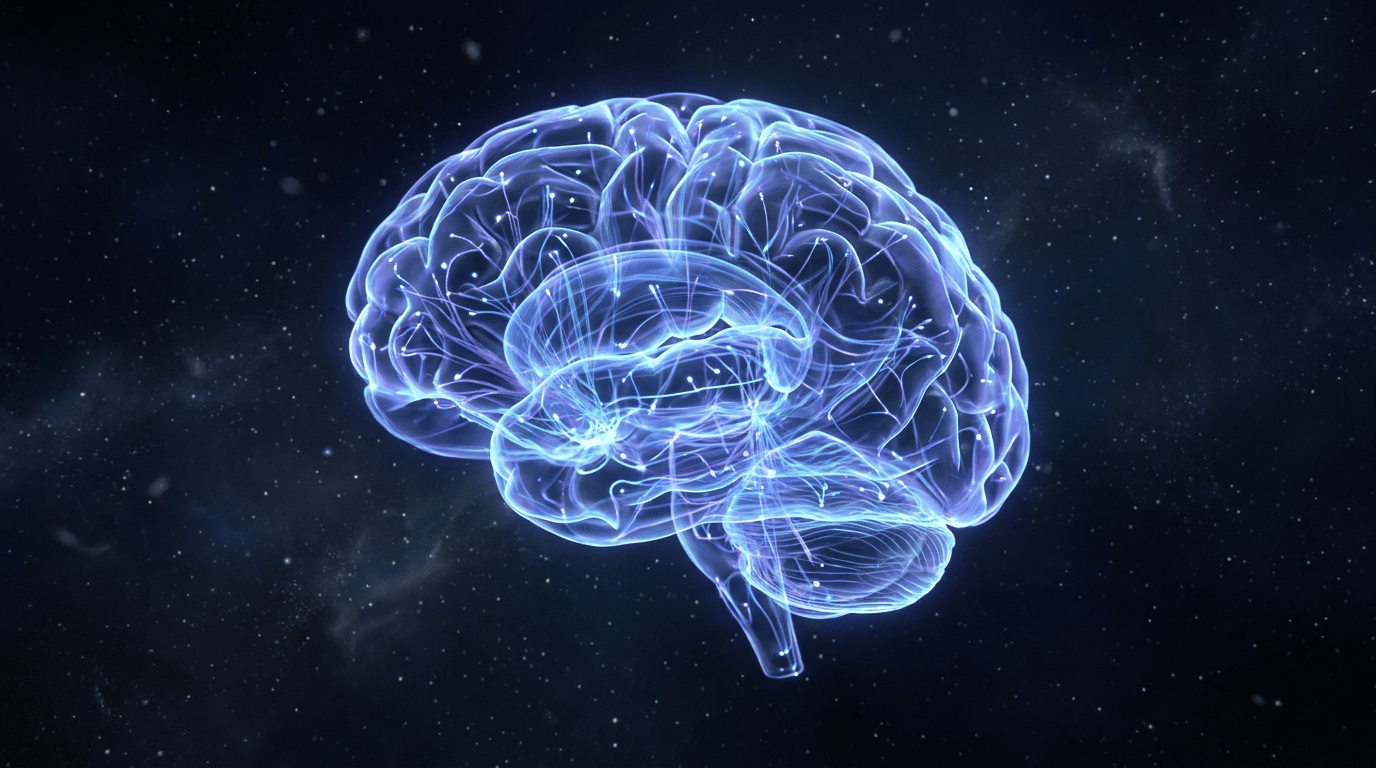
Have you ever remembered an event with complete confidence only to discover that it never happened—or happened very differently?
Human memory feels like a record of the past. It is not.
Memory is reconstructive. Each time we remember something, the brain rebuilds an account from stored information, context and expectations. That makes memory remarkably useful, but also surprisingly vulnerable to distortion.
Remembering is not replaying
The brain does not store experiences like video files waiting to be replayed.
Memories are distributed across neural systems. When we recall an event, the brain reconstructs aspects of the experience.
Most of the time this works well enough for everyday life. But reconstruction creates opportunities for details to change.
Small suggestions can change memory
Psychological research has shown that wording and later information can influence recall.
If someone asks whether you saw a particular object, the suggestion itself can sometimes increase the likelihood that the object becomes part of the person’s later recollection.
This does not mean memories are always false. It means confidence and accuracy are not identical.
Source confusion is a major problem
You may remember information correctly but forget where you learned it.
A story told by a friend, a photograph, a dream and a real event can become confused in memory, especially when similar details appear repeatedly.
The brain remembers content more easily than the origin of that content in many circumstances.
Why vivid memories can still be wrong
People often assume that a vivid memory must be accurate.
But emotional intensity can increase confidence without guaranteeing factual precision. A person can sincerely remember something that did not happen exactly as remembered.
Collective memories can change too
Families, communities and societies repeat stories. Repetition can strengthen a narrative even when details change.
Over time, people may become confident in details that entered the story later.
False memories are not simply lies
A false memory is not necessarily a deliberate invention.
The person can experience genuine recollection. The problem lies in the accuracy of the reconstruction.
The deeper mystery
Memory has to be flexible. If the brain stored every detail of every experience with equal weight, learning would become impossible.
Forgetting and reconstruction are therefore part of the same system that lets us generalize from experience.
The strange consequence is that the machinery that makes memory useful also makes perfect memory impossible.
How the Mind Can Remember Something That Never Happened
Memory often feels like a recording of the past, but psychological research shows that remembering is reconstructive. People can sometimes become confident that an event occurred even when important details are inaccurate or an event never happened at all. These false memories are not necessarily signs of poor intelligence or deliberate deception. They can emerge from ordinary processes involved in storing, retrieving and interpreting information.
Memory is rebuilt, not replayed
When we remember an event, the brain reconstructs it from stored fragments, knowledge, expectations and contextual information. Details can be strengthened, weakened or altered over time. Each act of remembering can therefore be influenced by what has happened since the original event.
Source monitoring
One important mechanism is source monitoring: deciding where a piece of information came from. You may remember a detail but lose track of whether you saw it yourself, heard it from someone else, imagined it or encountered it in a story. If the detail feels familiar enough, the mind can sometimes attach it to the wrong source.
The misinformation effect
Experiments in cognitive psychology have demonstrated that information introduced after an event can influence later recall. When people are exposed to misleading details, some may incorporate those details into their memory reports. The effect is especially important for eyewitness testimony because questioning, conversation and media coverage can occur after an event and before a formal statement is given.
Why confidence can be misleading
A person can sincerely and confidently remember an inaccurate detail. Confidence is influenced by factors other than accuracy, including repetition, social reinforcement and the vividness of the memory. This does not mean confidence is worthless, but it means that confidence should not automatically be treated as a perfect indicator of truth.
Emotion and vivid memories
Emotional events can produce memories that feel exceptionally vivid. Vividness can increase the subjective sense that a memory is accurate, but vividness and accuracy are not identical. Some central features of an emotional event may be remembered well while peripheral details remain vulnerable to reconstruction and later influence.
Can memories be changed deliberately?
Research has shown that suggestions and misleading information can affect memory, but the process is not unlimited or identical for everyone. People differ in suggestibility, prior knowledge and attention. The strongest conclusions come from controlled experiments rather than from assuming that every disputed recollection must be false because memory is reconstructive.
Why false memories matter
False memories matter in everyday life, education, relationships and especially legal settings. A witness may be completely sincere while reporting something inaccurately. Good interviewing practices therefore try to reduce suggestion and encourage people to distinguish what they directly remember from what they inferred or later learned.
The deeper lesson about remembering
The existence of false memories does not mean that memory is useless. Most of the time it provides a remarkably effective way to retain information about the world. Its reconstructive nature is part of what makes memory flexible and useful. The important lesson is more subtle: remembering is an active process, and the feeling of remembering something is not by itself proof that every remembered detail is historically exact.
Memory Is Not a Recording
One reason false memories are so fascinating is that ordinary remembering is already a constructive process. When we remember an event, the brain does not appear to replay a perfect stored video. It reconstructs a past experience from fragments, associations, expectations and contextual information.
That usually works remarkably well. But the same flexibility that allows memory to be useful also creates opportunities for distortion.
How a Memory Can Change
Memory can be influenced at several stages. Attention determines which details are encoded strongly. Later information can become associated with the original event. When a memory is retrieved, the act of retrieval can make it susceptible to modification before it is stored again.
This does not mean every memory changes every time it is recalled. Rather, memory is dynamic enough that errors can sometimes become incorporated into what later feels like a genuine recollection.
Suggestion Can Add Details
Psychological experiments have shown that suggestive questions can influence reports of past events. A person who is asked about a detail that was never present may sometimes become more likely to report it later.
The important point is that a confident recollection is not automatically a verified recollection. Confidence and accuracy can diverge, particularly when memories have been repeatedly discussed or reconstructed.
Why Familiarity Can Feel Like Truth
Repeated exposure can increase familiarity. The mind may then experience information as easier to process, and that fluency can sometimes be mistaken for evidence that the information is true or was personally experienced.
This is one reason repeated claims can become persuasive even without new evidence. Familiarity is psychologically real, but it is not the same thing as historical accuracy.
Emotion Does Not Guarantee Accuracy
People often assume that emotionally intense events must produce especially accurate memories. Emotion can certainly strengthen some aspects of remembering, but it does not make every detail immune to distortion. People may remember the central meaning of an event while becoming less reliable about peripheral details, timing or sequence.
Why Eyewitness Memory Is Complicated
Eyewitness testimony can be valuable, but it is affected by attention, stress, expectations, lighting, delay, discussion with other witnesses and the wording of later questions. Investigators therefore distinguish between a person’s sincere recollection and independently corroborated evidence.
This distinction is important because false memory does not require deliberate lying. A person can honestly report something they remember and still be mistaken about what happened.
Can Memories Be Completely False?
Yes, in the sense that people can report detailed recollections of events that did not occur as remembered. But false memory is not a single phenomenon. Distortions can range from a wrong detail in an otherwise real event to a more extensive recollection built around suggestion, imagination or source confusion.
Source Monitoring: Where Did This Come From?
The brain does not only need to remember information; it also needs to identify its source. Did you experience something, hear it from another person, read it, imagine it or dream it? Source-monitoring errors occur when information is remembered without the correct origin attached to it.
This helps explain why imagined scenarios can sometimes acquire the subjective quality of memories, especially when they are repeatedly rehearsed.
What False Memories Teach Us
False memories do not show that memory is useless. They show that memory is optimized for flexible use rather than archival perfection. The same system that lets people generalize lessons, recognize familiar situations and connect past experiences can also create errors.
The deeper lesson is that remembering is an active act of reconstruction. When the past matters—whether in science, law, history or ordinary relationships—the strongest conclusions come from memory combined with independent evidence.
Curiosity Publication by Aadvik Agastya
Sources & further reading
Have a question about this topic?
Join fellow Qurons on the Quron Forum to ask questions, challenge ideas, share discoveries and explore further.
Discuss on Quron Forum