
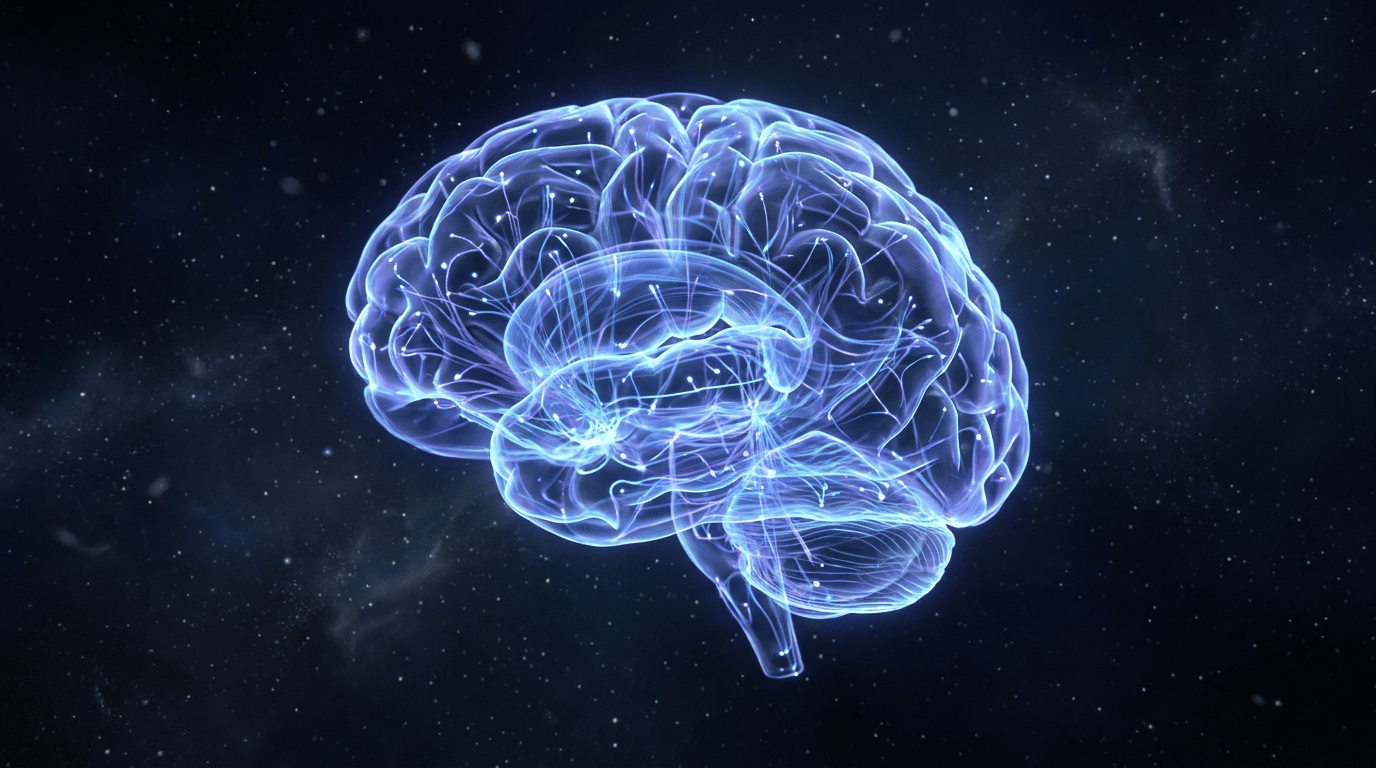
You go to sleep with a memory in your head and wake with the strange feeling that something happened to it. Sometimes a dream seems to preserve fragments of the previous day. Sometimes a difficult idea becomes easier after a night of sleep.
Sleep does not simply switch the brain off. It is an active biological state during which neural systems alter how recently learned information is represented, stabilized and integrated.
Memory begins before sleep
When you learn something, the brain first has to encode it. Attention, emotion and the context in which information is learned all influence what enters memory in the first place.
Sleep cannot rescue information that was never encoded effectively. This is why concentration and meaningful engagement still matter even when sleep is excellent.
Consolidation is not simple storage
Older metaphors imagined memories as files copied from short-term storage into a permanent archive. Neuroscience suggests something more dynamic.
Memory depends on distributed neural networks. During sleep, patterns associated with recent experiences can be reactivated, allowing the brain to strengthen some connections and integrate new information with older knowledge.
The hippocampus and cortical networks
The hippocampus plays an important role in forming and retrieving many kinds of new episodic memories. During non-REM sleep, particularly slow-wave sleep, coordinated patterns of activity involving the hippocampus and cortex have been linked to memory consolidation.
Researchers have proposed that brief hippocampal replay events help train longer-term cortical representations. The exact mechanism is still being investigated, and different forms of memory may depend on different sleep processes.
Slow waves, spindles and ripples
Sleep research has identified several recurring neural events associated with memory. Slow oscillations in cortical activity, sleep spindles and hippocampal sharp-wave ripples can interact in time.
The coordination of these events may help newly learned information become integrated into broader neural networks. This is one reason sleep is increasingly viewed as an active stage of memory processing rather than simply a period of inactivity.
REM sleep has a role too
Memory is not only about slow-wave sleep. REM sleep has been associated with emotional memory, procedural learning and the integration of information in ways that may complement processes occurring during non-REM sleep.
The popular idea that one sleep stage “stores memories” is therefore too simple. Different stages may contribute differently depending on what was learned.
Dreams are not memory playback
Dreams can include recent experiences, but they are rarely literal recordings of the previous day. Dream content can combine recent memories with older memories, emotions and imagined scenarios.
This mixture is consistent with a brain that is processing and recombining information rather than simply replaying a video file.
Sleep can strengthen some information and weaken other details
Consolidation does not necessarily preserve every detail equally. Sleep may help extract regularities and relationships across experiences while some specific details become less accessible.
This can be useful for learning. Understanding a general pattern often matters more than remembering every individual example.
Why sleep deprivation harms memory
Insufficient sleep can impair attention and learning before consolidation even begins. It can also disrupt the later processes that stabilize newly encoded memories.
This creates a double problem: a tired brain may encode information less effectively and then have fewer opportunities to consolidate what it did learn.
Can sleeping on a problem help?
Sometimes. Sleep can improve the discovery of relationships between pieces of information and may contribute to creative problem solving. But the brain generally needs useful information to work with first.
Sleeping does not manufacture knowledge from nothing. It can reorganize and connect information that was already encountered.
The deeper mystery
Every night, the brain enters a state in which conscious experience is reduced but neural activity remains highly organized. Recent experiences can be replayed, modified and integrated with older knowledge.
Memory is therefore not simply something we possess. It is something the brain continually reconstructs. Sleep is one of the periods when that reconstruction happens most intensively.
That does not mean the brain spends the night making perfect copies of everything that happened during the day. Memory is selective and reconstructive. Sleep appears to help some information become more stable while reorganizing, integrating or weakening other aspects.
A deeper look: Memory begins before sleep
When you learn something, the brain first has to encode it.
Attention matters. So do emotion, context, prior knowledge and the way information is processed. If you encounter a fact while distracted, there may be a weak memory trace to consolidate later.
Sleep cannot rescue information that was never effectively encoded.
This is why good sleep does not replace attention or meaningful learning. The processes of memory begin while we are awake.
A deeper look: Consolidation is not simple storage
Older metaphors imagined memories as files copied from short-term storage into a permanent archive.
Neuroscience suggests something more dynamic.
Memories depend on distributed neural networks. After learning, the brain can continue modifying the relationships among those networks. During sleep, activity associated with recent experiences can be reactivated, helping some memories become more stable and integrating new information with older knowledge.
Consolidation is therefore not simply moving a finished object from one location to another. It can involve transformation.
The hippocampus acts like a temporary indexing system
The hippocampus plays an important role in forming and retrieving many kinds of new episodic memories.
One influential framework proposes that the hippocampus can rapidly bind together different elements of an experience—where something happened, when it happened and what was present—while longer-term cortical representations develop more gradually.
During sleep, interactions between hippocampal and cortical networks may help integrate newly learned information with broader knowledge.
This framework is useful, but it is not a complete description of every kind of memory. Different forms of learning depend on partly different neural systems.
Replay: the brain revisiting recent activity
One of the most fascinating findings in sleep research is the phenomenon often described as neural replay.
After an experience, patterns of neural activity associated with that experience can reappear during later sleep.
In animal studies, researchers have observed sequences of hippocampal activity during sleep that resemble patterns produced during earlier exploration. Human research has also found evidence consistent with sleep-related reactivation of recently learned information.
Replay does not mean that the brain consciously watches a recording of the day. It refers to neural activity patterns that may help strengthen and reorganize memory.
A deeper look: Slow waves, spindles and ripples
Non-REM sleep contains several distinctive forms of neural activity that appear to interact during memory consolidation.
Slow oscillations reflect large-scale changes in cortical activity. Sleep spindles are brief bursts of rhythmic activity generated through thalamocortical networks. Sharp-wave ripples are fast events associated particularly with hippocampal activity.
Researchers have found evidence that the timing of these events can be coordinated.
One influential picture is that slow cortical rhythms help create windows during which spindles and hippocampal replay can interact, allowing recently learned information to become integrated into longer-lasting networks.
The details remain an active research area. It would be too strong to say that one neural event “stores” a memory by itself.
A deeper look: REM sleep has a role too
Memory is not simply a non-REM phenomenon.
REM sleep has been associated with aspects of emotional memory, procedural learning and the integration of information. Its contribution may complement processes occurring during non-REM sleep.
This helps explain why the popular claim that “deep sleep stores memories while REM is just for dreams” is too simple.
Different stages may contribute differently depending on the type of information being learned.
Different memories need different kinds of processing
Remembering a phone number, learning how to ride a bicycle and recalling an emotionally important event are not the same neurological problem.
Episodic memory involves remembering events and contexts. Procedural memory involves skills and habits. Semantic memory concerns facts and concepts.
Sleep may influence each of these through partly different mechanisms.
That is why research findings about one type of learning should not automatically be generalized to every form of memory.
A deeper look: Sleep can strengthen some information and weaken other details
Consolidation does not necessarily preserve every detail equally.
Sometimes sleep appears to help people retain the central structure or regularity of information while individual details become less accessible.
This can actually be useful.
If you learn a series of examples, discovering the underlying pattern may matter more than remembering every example separately. Sleep may help the brain extract regularities and integrate them with existing knowledge.
Forgetting is part of memory too
A perfectly preserved record of everything we experience would not necessarily be useful.
The brain constantly receives more information than can be represented with equal precision. Forgetting, weakening and updating memories may help maintain a manageable system.
Sleep therefore should not be imagined as a process that only strengthens. Memory is continually being reorganized.
Some information becomes more accessible. Some becomes less important. Some may be integrated into general knowledge rather than retained as a vivid episode.
Emotional memories behave differently
Emotion can strongly influence memory before sleep and during later consolidation.
Emotionally important events often receive greater attention and can be remembered more vividly. Sleep may interact with those emotional processes in ways that help preserve central information while changing how strongly certain details are experienced.
This is one reason dreams sometimes seem connected to emotionally significant events even when they are not literal reproductions.
A deeper look: Dreams are not memory playback
Dreams can include recent experiences, but they rarely behave like recordings of the previous day.
Dream content can combine recent memories with older experiences, emotions, expectations and imagined scenarios.
This mixture is consistent with a brain that is recombining information rather than simply replaying a video file.
The appearance of a person or place from the previous day in a dream therefore does not necessarily mean the brain is consciously “processing that memory” in a simple one-to-one way.
A deeper look: Why sleep deprivation harms memory
Insufficient sleep can interfere with memory at multiple stages.
A tired brain may be less attentive while learning, which weakens encoding. Later, disrupted sleep can interfere with the neural processes that normally help stabilize newly learned information.
This creates a double problem: less effective learning while awake and less effective consolidation afterward.
That is one reason an all-night study session can be less effective than learning followed by adequate sleep.
Can sleep help solve a difficult problem?
Sometimes.
Sleep can improve the discovery of relationships between pieces of information and may contribute to certain forms of creative problem solving.
But sleep does not manufacture knowledge from nothing.
The brain needs useful material to reorganize. If you have never encountered the relevant information, sleeping for eight hours will not magically produce the missing facts.
What sleep may do is alter how existing information is connected, making a relationship easier to notice later.
Why waking with an answer can feel mysterious
Conscious thought tends to have a narrative structure. We experience ourselves working through a problem step by step.
Some neural processing continues outside conscious awareness.
During sleep, information can be reorganized without the person consciously monitoring the process. When the result becomes accessible after waking, it can feel as though the answer appeared from nowhere.
It did not. The work may have been distributed across processes that were not available to conscious awareness.
Memory is reconstructed, not replayed
One of the deepest implications of sleep research is that memory should not be treated as a perfect recording.
When we later remember an event, the brain reconstructs it from distributed representations. Each retrieval can potentially modify the memory.
Sleep is one stage in this larger cycle of stabilization and reconstruction.
This helps explain why two people can remember the same event differently, or why a memory can feel exceptionally vivid while still containing errors.
A deeper look: The deeper mystery
Every night, the brain enters a state in which conscious experience is reduced but neural activity remains highly organized.
Recent experiences can be reactivated, strengthened, integrated and transformed. Some details become less accessible while broader patterns become more useful.
Memory is therefore not simply something we possess. It is something the brain continually rebuilds.
Sleep is one of the periods when that rebuilding becomes especially visible.
Perhaps the strangest part is that we usually wake believing we simply “remembered” yesterday.
In reality, the brain may have spent the night deciding—through biological processes rather than conscious choice—which parts of yesterday should become part of tomorrow.
Curiosity Publication by Aadvik Agastya
Sources & further reading
Have a question about this topic?
Join fellow Qurons on the Quron Forum to ask questions, challenge ideas, share discoveries and explore further.
Discuss on Quron Forum