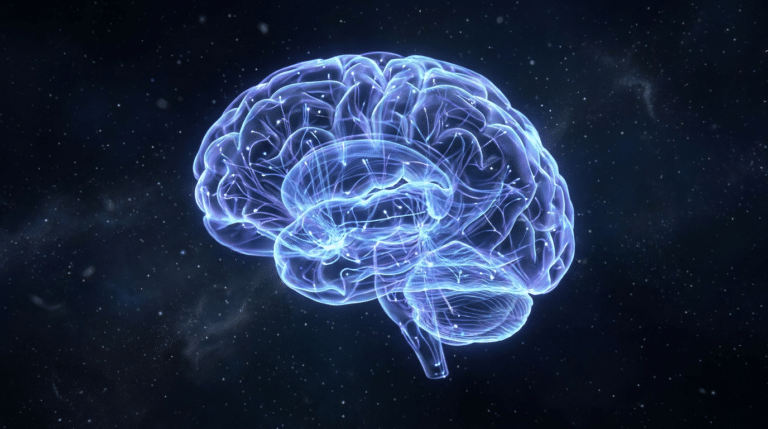

Humans are surrounded by mysteries, yet not all mysteries are equally attractive. We are often drawn to questions with missing information, surprising twists and the possibility that a hidden explanation exists.
Why does uncertainty feel so compelling?
A mystery creates an information gap
When we know almost everything about a situation, curiosity may be low. When we know almost nothing, the problem can seem impossible.
Mysteries often occupy the middle ground: enough information exists to form a hypothesis, but not enough to settle it.
The brain wants closure
Humans naturally try to complete incomplete patterns. An unfinished sentence, unexplained sound or missing piece of a story creates tension because the mind is waiting for resolution.
This does not mean every person experiences curiosity in exactly the same way. But uncertainty can motivate information seeking.
Why surprise makes a mystery stronger
A mystery becomes especially engaging when something violates expectation.
A ship found abandoned without its crew is more compelling than an ordinary shipwreck. A signal with unusual properties is more interesting than ordinary cosmic noise.
Surprise tells the brain that its existing model may be incomplete.
We also enjoy solving things ourselves
Curiosity is not only about receiving an answer. Solving a puzzle can be rewarding because the learner constructs the explanation.
That is why mystery stories, archaeological discoveries and scientific problems can hold attention even when the subject has no practical value.
But curiosity has a dark side
The same desire for patterns and explanations can make people vulnerable to attractive but unsupported stories.
A mystery creates uncertainty. A confident explanation removes it. Unfortunately, a satisfying explanation can be wrong.
Good investigation therefore requires curiosity and skepticism at the same time.
Science turns mysteries into questions
Science rarely begins by knowing the answer. It begins with something that does not fit the existing model.
The difference is what happens next: measurements, experiments, competing hypotheses and attempts to reproduce results.
The deepest mystery may be the mind itself
Humans do not merely encounter mysteries in the world. We create stories about them.
Our curiosity can produce science, art and philosophy—but also superstition and false certainty.
The same mental machinery that asks “What is out there?” also asks “What does this mean?”
The deeper question
Perhaps humans love mysteries because uncertainty is uncomfortable but possibility is exciting.
A mystery tells us that there is more to discover.
The important skill is not losing the mystery too quickly by accepting the first satisfying explanation.
Sometimes the best curiosity is the willingness to keep asking after the easy answer arrives.
Why an Unanswered Question Can Feel So Compelling
People do not simply enjoy knowing things; we can also become strongly motivated by not knowing. A mystery creates an information gap, and the mind often treats that gap as something worth resolving. But curiosity is more complicated than a generic desire for information. The strength of curiosity depends on what we already know, how uncertain we feel, whether an answer seems attainable and how meaningful the question appears.
The information gap
A useful way to understand curiosity is to imagine a question sitting between complete ignorance and complete knowledge. If we know absolutely nothing about a subject, a specific question may not mean much. If we already know the answer, there is no mystery left. Curiosity can become especially strong when we know enough to recognize that something is missing.
Prediction and surprise
The brain constantly makes predictions about the world. When an event violates those expectations, attention can increase because the existing model no longer explains what is happening. A strange sound, an unexpected result or an unexplained historical event can therefore become mentally “sticky.” Curiosity can be understood partly as a drive to reduce uncertainty and improve the model we use to interpret the world.
Not every mystery is equally attractive
There is often an optimum level of uncertainty. A puzzle that seems completely impossible can be frustrating rather than fascinating. A puzzle that is trivial can be boring. The most engaging questions often provide clues, partial explanations or patterns that suggest an answer might be within reach. This is one reason mysteries in stories are effective: the audience receives enough information to form hypotheses without receiving enough to close the case.
Why curiosity can feel rewarding
Research on curiosity and reward suggests that seeking information can engage neural systems involved in motivation and learning. The experience is not identical to hunger or another basic biological drive, but information itself can acquire value when it helps resolve uncertainty. This helps explain why people may voluntarily pursue answers that have no obvious practical benefit.
Curiosity and attention
An unresolved question can also hold attention because the brain continues to treat it as incomplete. Once a mystery becomes personally relevant, competing information may be filtered around it. This can be useful for learning: a question creates a reason to remember the evidence that answers it. But it can also have a downside. Strong curiosity can encourage people to keep searching long after the useful information has been found, especially when emotionally charged or surprising material is involved.
Why mysteries spread socially
Curiosity is not purely individual. Humans learn by watching other people, and a question that captures one person’s attention can quickly become a shared cultural puzzle. Rumors, legends, conspiracy theories and internet mysteries can exploit this mechanism. The feeling of “there must be an answer” can be powerful even when the available evidence does not justify a confident conclusion.
The important distinction between curiosity and truth
A compelling mystery is not necessarily an evidence-rich mystery. Humans are good at generating explanations, and a satisfying explanation can feel true before it has been properly tested. Good inquiry therefore requires a second step after curiosity: evaluating sources, considering alternatives and accepting that some questions remain unresolved. Curiosity starts the investigation; evidence determines how far the conclusion can go.
Why the unanswered question matters
The attraction of mystery may ultimately reflect something fundamental about intelligent learning. An unexplained event signals that our current model is incomplete. Instead of simply tolerating the gap, the mind can turn the gap itself into a goal. That is why a question can sometimes occupy our attention more strongly than an answer: the unresolved possibility keeps the search alive.
Why Mystery Feels So Rewarding
A mystery creates a distinctive psychological situation: we know enough to recognize a gap in our understanding, but not enough to close it. That gap can produce curiosity, attention and a desire to keep searching. The experience is not simply about enjoying stories; it reflects the brain’s broader tendency to build models of an uncertain world.
Curiosity becomes especially powerful when information arrives in pieces. A clue raises a possibility, another clue challenges it, and the mind begins comparing competing explanations. Puzzles, detective stories, scientific problems and unexplained events can therefore produce similar feelings of mental tension.
Prediction Is Part of the Brain’s Job
Human perception is not a passive recording system. The brain constantly combines incoming information with expectations about what is likely to happen next. Predictive-processing theories describe perception in terms of interactions between sensory signals and internal models, although the exact neural implementation remains an active research topic.
When something violates an expectation, the mismatch becomes informative. A mystery is essentially an extended mismatch: the available model cannot yet explain all of the evidence.
Uncertainty Can Increase Attention
Not every unknown is equally interesting. A question that feels just within reach can be more engaging than one that appears completely impossible. Compelling mysteries often provide partial information, allowing a person to generate hypotheses while preserving uncertainty.
Curiosity and Information Gaps
Research on curiosity has examined the role of information gaps: people become motivated when they recognize that they are missing knowledge needed to resolve a question. Too little uncertainty leaves nothing to discover; too much can make a problem feel hopeless.
This helps explain why questions can be so effective at attracting attention. The mind treats the missing information as something potentially valuable.
The Reward System Is Involved, But It Is Not the Whole Story
Curiosity has been linked to brain systems involved in motivation and reward, including dopaminergic circuits. But it would be misleading to reduce curiosity to a simple “dopamine hit.” Attention, learning, memory, uncertainty and the expected value of information all matter.
Why Mysteries Can Become Addictive
Stories can exploit the same mechanisms that make genuine investigation rewarding. Partial reveals provide progress while new questions preserve uncertainty. The emotional structure of a mystery can, however, become stronger than the evidence. Confirmation bias can then encourage attention to clues that support a favored explanation.
Pattern Seeking Has a Useful Side
The tendency that can produce false connections is also essential to learning. Recognizing patterns helps people understand language, predict environmental changes and detect meaningful signals. The challenge is that random data also contain apparent patterns, so pattern detection must be paired with testing.
Science Turns Curiosity Into a Method
Scientific investigation can be understood as disciplined curiosity. A surprising observation generates a question; researchers propose explanations, derive predictions, collect evidence and attempt to challenge the result. The goal is not merely to find an interesting story but to distinguish a genuine pattern from coincidence.
Why Some Questions Refuse to Disappear
Some mysteries persist because evidence is incomplete. Others survive because several explanations fit the available evidence. Still others sit at the boundary between what can be measured and what people want to know. Mystery is therefore not simply the pleasure of being confused. It is the moment when the mind recognizes that its current model is incomplete—and decides that the missing piece is worth searching for.
Curiosity Publication by Aadvik Agastya
Sources & further reading
Have a question about this topic?
Join fellow Qurons on the Quron Forum to ask questions, challenge ideas, share discoveries and explore further.
Discuss on Quron Forum