Across Indian civilization, water has repeatedly been treated as more than a physical resource. Rivers, lakes, wells, tanks, springs and the monsoon appear in religious traditions, architecture, pilgrimage and everyday life.
The connection is not mysterious. A society shaped by major rivers and strongly seasonal rainfall had practical reasons to treat water as precious. Over centuries, that practical importance became intertwined with ritual and cultural meaning.
Water is necessity and symbol at the same time
Water sustains agriculture, animals and human settlements. It also cleanses, refreshes and renews. Those physical properties provide an intuitive basis for symbolic associations with purification and rebirth.
But there is no single “Indian meaning of water.” Different religious and regional traditions developed different practices and interpretations.
Rivers became sacred landscapes
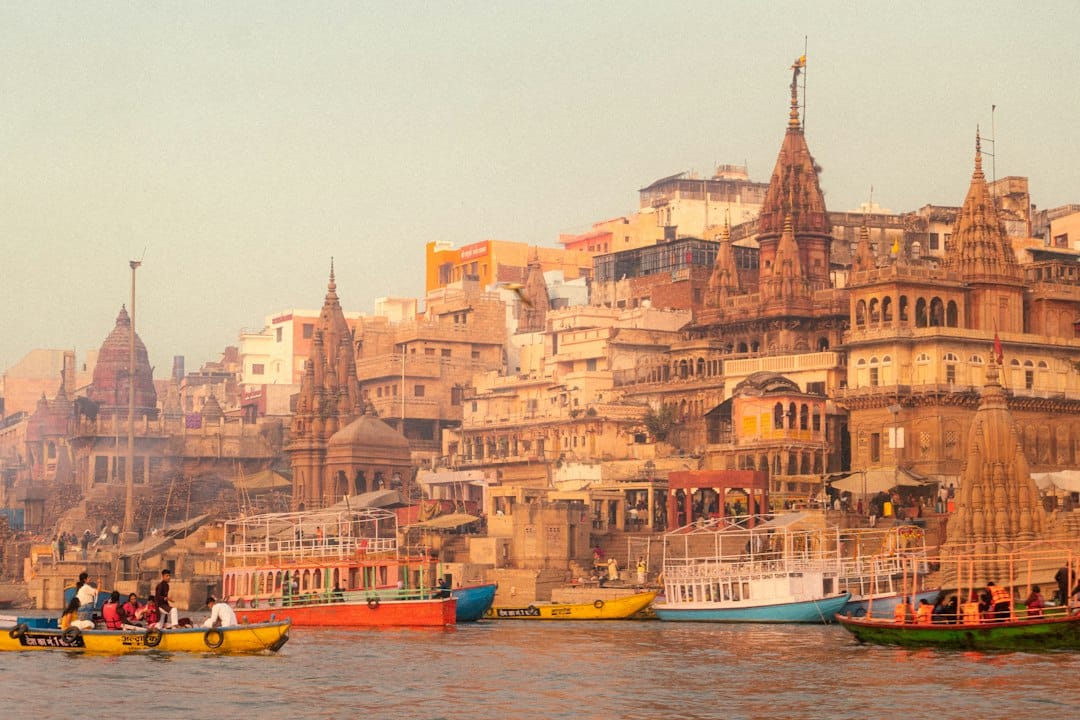
Rivers such as the Ganga, Yamuna and Narmada acquired deep religious significance in different traditions. Sacred geography connected particular river stretches with pilgrimage, bathing, festivals and stories.
This created a powerful feedback between landscape and culture. A river was simultaneously a source of water, a transport corridor, an agricultural resource and a place of ritual.
The monsoon shaped the imagination
Much of the Indian subcontinent experiences strong seasonal variation in rainfall. The arrival of the monsoon can transform landscapes, replenish reservoirs and recharge groundwater, while a weak monsoon can create severe stress.
Communities therefore developed elaborate systems for collecting and storing water. Tanks, ponds, reservoirs, wells and stepwells helped bridge seasonal differences.
Architecture made water visible
Stepwells, temple tanks and reservoirs turned infrastructure into public architecture. Stairs created access as water levels changed. Shaded spaces provided relief from heat. Some sites became gathering places as well as water sources.
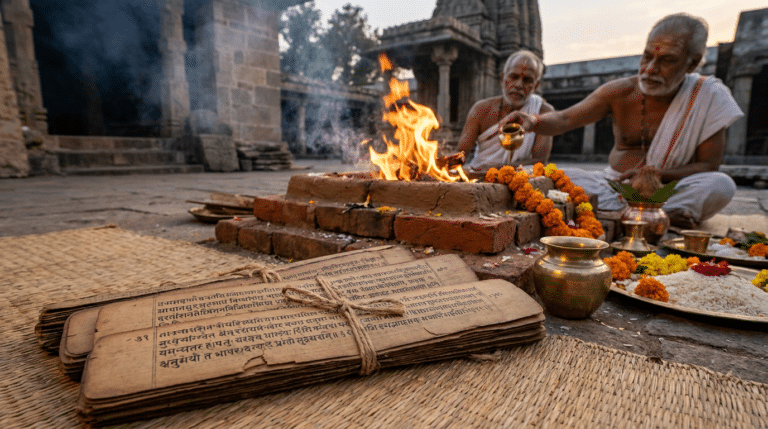
Temple tanks could support ritual bathing while also serving practical community functions. The sacred and utilitarian roles were not necessarily contradictory.
Purification is an unusually powerful symbol
Water physically removes dust and dirt, making it an intuitive symbol for purification. Religious traditions can extend that physical experience into moral or spiritual meanings.
The symbolic interpretation varies by tradition. It should not be treated as evidence that ancient people possessed a modern scientific theory of cleanliness or disease.
Water created institutions and power
Building a tank or canal is only the beginning. Someone has to maintain it, regulate access and resolve disputes. Historical inscriptions and archaeological remains show that rulers, temples, communities and local institutions could participate in water management.
Water therefore became social infrastructure as well as physical infrastructure.
Why tanks mattered in dry seasons
A reservoir can store water during periods of high rainfall and release it later. This simple principle becomes enormously important in monsoon climates.
Traditional systems varied by region because rainfall, geology and settlement patterns varied. A technology successful in Rajasthan was not necessarily identical to one used in southern India or the Himalayan foothills.
Water, pilgrimage and collective memory
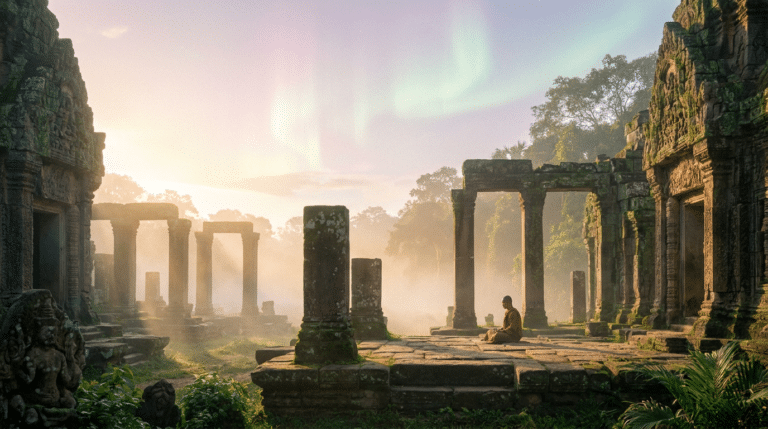
When a water body becomes associated with stories, festivals or pilgrimage, generations repeatedly return to the same landscape. Ritual practice can preserve knowledge about places even as the original engineering context changes.
But sacred status does not guarantee ecological protection. Rivers can be revered and polluted at the same time, because cultural values and modern economic pressures do not always align.
What the historical record can teach today
Modern cities face familiar problems: groundwater depletion, seasonal flooding, drought, pollution and growing demand. Traditional systems cannot simply be copied into modern cities, but they demonstrate principles that remain relevant—capture rainfall, store water locally, design for maintenance and adapt infrastructure to local geography.
The deeper lesson
Water became sacred in much of Indian civilization not because practical and spiritual meanings were separate, but because they were repeatedly experienced together.
Water meant survival, agriculture, settlement and renewal. A river could be a physical system and a sacred landscape at the same time.
That long relationship between ecology, engineering and belief is one reason water remains such a powerful theme in Indian culture.
Water Was Never Just a Resource
Across the Indian subcontinent, water shaped settlement, agriculture, religion, trade and political power. The challenge was not uniform: some regions received intense seasonal rain, others depended on rivers or groundwater, and still others faced long dry periods.
Indian water architecture therefore developed as a collection of regional solutions rather than one single system.
Rivers, Tanks and Wells
Settlements could draw on rivers, springs, wells, ponds and artificial tanks. Each source behaved differently. Rivers provided large flows but could flood or shift. Wells offered access to groundwater but depended on geology and recharge. Tanks could store seasonal runoff and release it gradually.
The most resilient systems often combined several sources rather than depending on one.
Stepwells as Climate Infrastructure
Stepwells are among the best-known examples of Indian water architecture. Their descending stairs allowed people to reach water as the level changed, while the massive masonry also created shaded, cooler spaces.
But a stepwell was not simply a large staircase. Its usefulness depended on groundwater conditions, rainfall, construction, maintenance and the wider catchment landscape.
Temple Tanks and Sacred Water
Water also acquired religious significance. Temple tanks and associated ponds could support ritual bathing while serving practical functions within settlements. Their sacred status could reinforce social attention to maintenance and cleanliness, although actual practice varied enormously by place and period.
The important point is that symbolic and practical functions were not necessarily separate. A water body could be both part of a ritual landscape and part of an urban water system.
Rainfall Determines the Architecture
Monsoon climates create a distinctive problem: large quantities of water can arrive during a relatively short period, followed by months of scarcity. Storage therefore becomes a form of time travel, moving water from the wet season into the dry season.
Channels, bunds, tanks, reservoirs and recharge areas could slow runoff and reduce the loss of seasonal rainfall.
Water Management Required Institutions
Engineering alone does not keep a water system alive. Tanks silt up, channels clog, wells need maintenance and catchments can be damaged by construction or land-use change. Someone must organize labor, settle access and pay for repairs.
This makes traditional water management a social technology as much as a physical one.
Why Some Systems Declined
Traditional systems could decline when political institutions changed, maintenance arrangements weakened, groundwater conditions shifted or newer infrastructure became available. It is therefore misleading to describe every historical water system as either an unbroken success or a forgotten technology.
What Ancient Water Systems Can Teach Us
Modern cities have technologies that ancient societies did not, but the underlying problems remain recognizable: flood management, groundwater depletion, seasonal scarcity, water quality and competing demands.
The most useful lesson is not to copy an ancient structure literally. It is to think of water as a connected landscape involving rainfall, storage, recharge, drainage, demand and maintenance.
Water and the problem of seasonal time
One of the most important ideas behind traditional water systems is that rainfall and water demand do not necessarily occur at the same time. Monsoon rain may arrive intensely during a limited season, while agriculture and households need water throughout the year.
Storage therefore changes the timing of water availability. A tank, reservoir or groundwater recharge system effectively carries part of the wet season into the dry season.
Water architecture also shaped settlements
Where people could reliably access water influenced where settlements developed, how streets were organized and where markets and religious institutions were placed. Water was therefore not an isolated utility; it was part of the geography of everyday life.
This helps explain why some historical settlements contain elaborate relationships among wells, tanks, drainage channels and public spaces.
Sacredness did not eliminate practical engineering
It is tempting to divide history into “religious” and “scientific” categories, but older societies often did not make that distinction in the modern way. A water body could be sacred, aesthetically important and technically necessary at the same time.
That overlap is one reason Indian water heritage is so revealing. Cultural meaning could help determine where water was accessed, how spaces were organized and which places received continued attention.
Maintenance was the hidden technology
Every reservoir eventually collects sediment. Channels can become blocked, wells can fail and catchments can be damaged. A water system survives only when institutions maintain it.
Historical water management therefore depended not only on engineering knowledge but also on rules, labor, funding and collective responsibility. The physical structure was only one part of the system.
Why ancient does not automatically mean sustainable
Traditional systems should not be romanticized. They existed in societies with inequality, conflict, environmental pressures and periods of failure. Some systems declined or were abandoned for reasons that included changing economies, political institutions and environmental conditions.
The useful lesson is not that the past had perfect water management. It is that many communities understood water as a landscape-wide problem involving capture, storage, recharge, distribution and maintenance.
Curiosity Publication by Aadvik Agastya
Sources & further reading
Have a question about this topic?
Join fellow Qurons on the Quron Forum to ask questions, challenge ideas, share discoveries and explore further.
Discuss on Quron Forum