Almost every ancient civilization developed ideas about what happens after death.
Some imagined an underworld. Others described judgment, rebirth, ancestors, divine realms or a transformation into another form of existence. Some traditions imagined death as a journey; others treated it as a transition in a repeating cycle.
The variety is enormous.
Yet behind that diversity is a question that humans everywhere eventually encounter: what, if anything, continues when the body stops?
Ancient cultures could not answer that question through ordinary observation, so they built explanations through religion, philosophy, ritual and storytelling. Those ideas then shaped how people buried their dead, remembered ancestors and understood how the living should behave.
Death Is a Universal Biological Fact
Every human society has to confront the same physical event: a person who was present is suddenly absent.
The body changes. Relationships change. Families grieve. Communities have to decide what to do with the dead.
From this shared experience emerged very different cultural answers.
Some societies imagined continued personal existence. Others emphasized ancestors. Some described judgment after death. Others developed systems of rebirth in which death is one transition within a much larger cycle.
Ancient Egypt: Death as a Journey
Ancient Egyptian funerary traditions developed some of the most elaborate known systems for thinking about death.
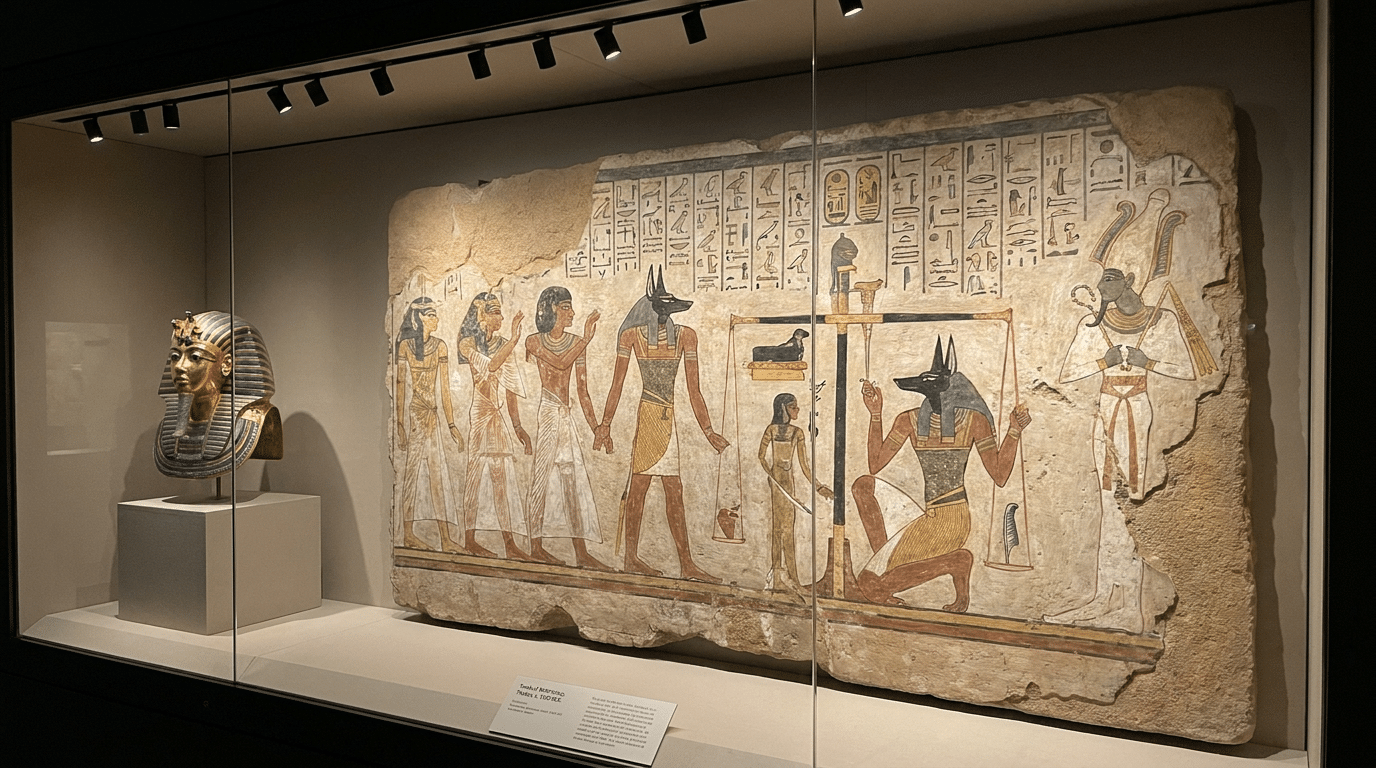
The deceased was imagined as continuing into another realm in which divine powers, judgment and transformation played important roles. Funerary texts, tomb paintings, offerings and mummification formed parts of a larger religious system.
The famous weighing of the heart represents a moral dimension to the afterlife. The deceased’s heart is evaluated in relation to truth and moral order, often symbolized by the goddess Ma’at.
But there was no single unchanging Egyptian doctrine. Beliefs evolved across thousands of years, and royal, elite and non-elite practices could differ.
Why Egyptians Mummified the Dead
Mummification is sometimes described simply as an attempt to preserve the body forever.
It was more than that.
Egyptian concepts of personhood and the afterlife involved several dimensions of identity and continued existence. Preserving the body, providing offerings and maintaining the tomb could all contribute to the deceased’s continued existence within the religious framework.
The physical treatment of the dead therefore reveals something about how Egyptians understood the relationship between body, identity and afterlife.
Mesopotamia: A Darker Underworld
Ancient Mesopotamian traditions often presented the afterlife differently from the Egyptian ideal of a richly prepared continuation.
Texts associated with Mesopotamian cultures describe the dead entering an underworld where existence could be shadowy and diminished.
The Epic of Gilgamesh makes mortality central to its story. Gilgamesh’s search for a way to escape death ultimately confronts the limits of human existence.
The lesson is strikingly different from traditions promising an elaborate transformation after death: sometimes the central question is not how to defeat death, but how a mortal should live knowing that death cannot be avoided.
Greek Ideas Were Not One Belief
Ancient Greek traditions included the underworld ruled by Hades, but Greek ideas about death changed across periods and communities.
Some traditions focused on the fate of the dead in the underworld. Others offered special hopes through mystery religions. Philosophers developed their own arguments about the soul and what might survive bodily death.
Plato, for example, used ideas about the soul’s fate to explore justice, knowledge and the structure of reality.
These philosophical arguments should not be treated as though every ancient Greek automatically believed them.
Plato and the Soul
In works such as the Phaedo, Plato presents arguments for the possibility that the soul survives bodily death.
The dialogue connects mortality with philosophical preparation. A philosopher’s task is partly to examine attachment to the body and focus attention on what is intellectually and morally enduring.
Whether Plato’s arguments are convincing is a philosophical question. Historically, however, they demonstrate that ancient Greek thought could approach death through rational argument as well as myth.
South Asia Changed the Question
Several Indian religious and philosophical traditions developed ideas of rebirth and karma.
This creates a fundamentally different structure from the idea of a single earthly life followed by one permanent afterlife.
In many Indian traditions, death is one stage within a continuing cycle. Actions have consequences that can influence future existence, while liberation involves escaping the cycle altogether.
But “Indian belief” is not one doctrine. Hindu, Buddhist and Jain traditions developed different accounts of what continues, how karma operates and what liberation means.
Hindu Traditions and Rebirth
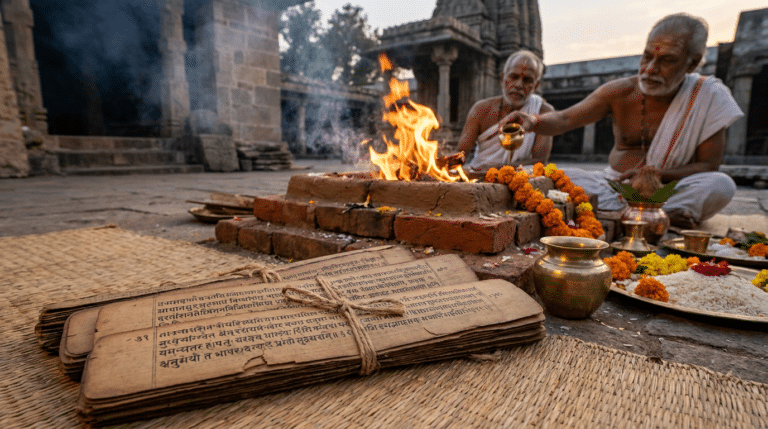
Hindu traditions contain diverse ideas about death, rebirth, the self and liberation.
Some philosophical systems describe an enduring Atman, while others emphasize different relationships between the individual, divine reality and the world.
Texts such as the Bhagavad Gita discuss the self, death and rebirth within a broader teaching about duty, knowledge and spiritual liberation.
The idea is not simply that a person dies and then goes to another place. Rebirth can be part of samsara, the continuing cycle from which liberation is sought.
Buddhism Introduces a Different Problem
Buddhist traditions also discuss rebirth and karma, but their account differs fundamentally from traditions that posit an eternal individual soul.
The doctrine of anatta or non-self challenges the idea of a permanent, unchanging self.
This creates a philosophical puzzle: if there is no eternal soul, what is reborn?
Different Buddhist traditions explain continuity through causal processes rather than an unchanging personal essence.
The distinction is important because “rebirth” does not mean exactly the same thing in every Indian tradition.
Jainism and the Soul
Jain philosophy offers another distinct account.
Jainism teaches the existence of individual souls and places strong emphasis on karma as a material-like substance that binds the soul to cycles of rebirth.
Liberation involves removing karmic bondage through ethical discipline and spiritual practice.
Comparing Jain, Buddhist and Hindu traditions therefore reveals both shared concerns and profound philosophical differences.
Ancestor Traditions
Not every afterlife is imagined as an individual journey into another world.
Many societies developed strong traditions involving ancestors.
The dead could remain part of the social world through offerings, rituals, household practices and commemorative ceremonies.
In such systems, the relationship between living and dead can become an important part of family identity and social continuity.
Why Burial Practices Matter
Archaeologists often use graves and funerary structures to investigate ancient beliefs.
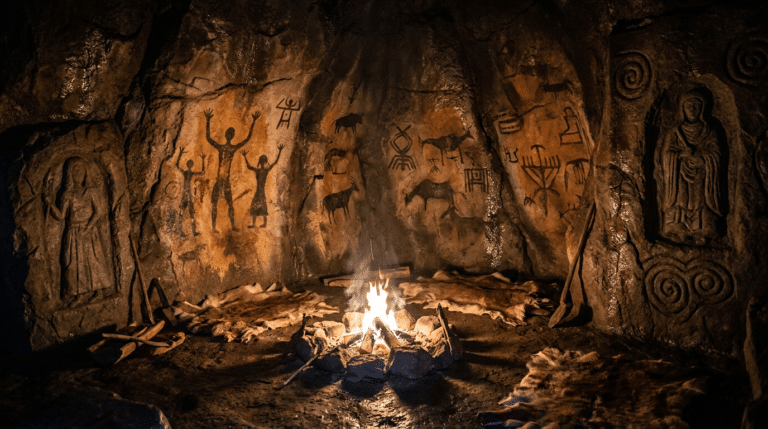
Burial position, grave architecture, offerings, food remains, ornaments and inscriptions can all provide clues.
A richly furnished tomb may suggest beliefs about the status or continued existence of the deceased. A simple burial may reflect different beliefs—or simply different economic circumstances.
The evidence must therefore be interpreted in context.
Can a Grave Tell Us What People Believed?
Only partly.
An object placed in a grave can have multiple possible meanings.
A weapon may represent the person’s profession, social identity or ritual symbolism. Food may have been intended for the dead, used in the ceremony or placed there for another reason.
Archaeologists therefore compare many graves, settlement evidence, inscriptions and contemporary texts rather than treating one object as a direct statement of belief.
Funerary Texts Are Different From Archaeological Objects
Written funerary texts can provide much more explicit evidence about beliefs, but they also have limitations.
A religious text tells us what its authors or tradition taught. It does not automatically tell us what every person in that society believed.
Just as modern societies contain multiple religious and philosophical viewpoints, ancient societies were not intellectually uniform.
Death and Social Status
Funerary practices can reveal social hierarchy.
Some individuals receive elaborate tombs and expensive grave goods, while others are buried with few surviving objects.
This difference can reflect wealth, political power, family status or religious roles.
But archaeologists must also account for preservation. Organic objects may disappear, while stone and metal survive, creating the illusion that some graves were more materially elaborate than they originally were.
Afterlife Beliefs Can Shape the Living
Ideas about death influence behavior before death.
If people believe actions affect the fate of the dead or the next life, those beliefs can influence moral systems.
Funerary rituals can also reinforce family relationships, community identity and political legitimacy.
Royal tombs, for example, can transform the death of a ruler into a statement about the continuity of a kingdom.
Why Journeys Appear So Often
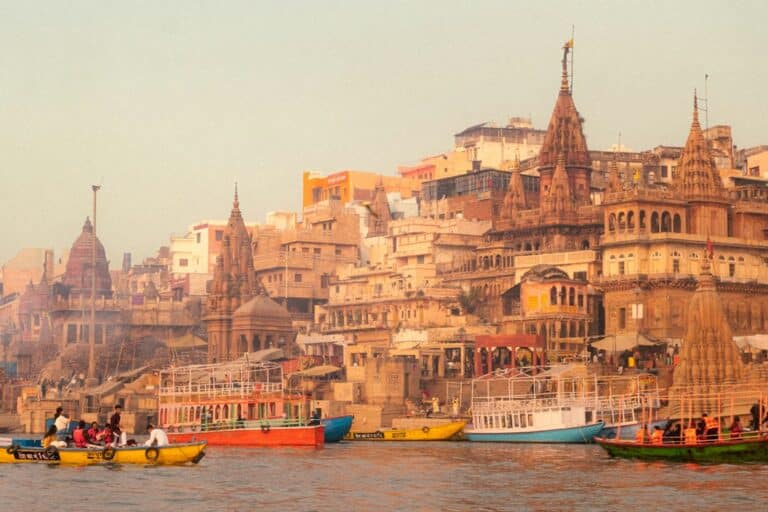
One recurring motif is the journey.
The dead cross a river, pass through gates, encounter guardians or travel toward another realm.
This may reflect the human experience of death as a transition between known and unknown states. A journey is a powerful narrative structure for representing that uncertainty.
But recurring motifs do not necessarily prove cultural contact. Different societies can independently develop similar metaphors for similar human experiences.
Judgment Is Another Recurring Theme
Many traditions connect death with evaluation.
Egyptian traditions include moral judgment. Some Greek philosophical and religious traditions imagined consequences for how a person lived. Later religious systems developed elaborate concepts of judgment, reward and punishment.
The idea can serve a social function as well as a theological one: it provides a framework in which moral actions matter beyond immediate worldly consequences.
Rebirth Changes the Meaning of Death
If death is part of a cycle, then the question is no longer simply “Where do I go after death?”
It becomes “How do I escape the cycle?”
This shift is central to several Indian philosophical traditions.
Liberation becomes more important than securing a comfortable afterlife. Ethical conduct, meditation, knowledge and spiritual discipline can become methods for changing one’s relationship to the cycle of existence.
Why Similar Ideas Appear Worldwide
The recurring appearance of ancestors, journeys, judgment, rebirth and renewal can be explained in several ways.
Some similarities may arise because humans face the same biological reality. Others may reflect cultural transmission between societies. Still others may emerge because certain metaphors are particularly powerful for describing uncertainty.
Similarity alone cannot determine which explanation is correct.
What Historical Research Can Establish
History can establish that a society held or transmitted a particular belief when the evidence supports it.
Archaeology can reveal funerary practices. Texts can preserve theological teachings. Inscriptions can record rituals. Art can depict imagined worlds.
But these sources cannot independently establish that an afterlife objectively exists.
That is a different philosophical or religious question.
Why This Distinction Matters
There is a tendency to treat ancient descriptions of the afterlife either as literal reports or as meaningless superstition.
Both approaches miss the historical value.
These beliefs were systems through which people understood death, morality, identity, grief and social continuity. Whether one accepts the metaphysical claims or not, the beliefs shaped real human behavior.
The Bigger Perspective
Ancient civilizations did not agree about what happens after death.
Egypt offered a complex journey and moral judgment. Mesopotamian traditions often imagined a shadowed underworld. Greek thinkers debated the soul and its fate. Hindu, Buddhist and Jain traditions developed different concepts of rebirth, karma and liberation. Ancestor traditions maintained relationships between the living and the dead.
The differences matter as much as the similarities.
Humans faced the same biological boundary and created radically different intellectual responses to it.
Ancient afterlife beliefs therefore tell us less about what lies beyond death than about what different societies believed made a human life meaningful before death.
Curiosity Publication by Aadvik Agastya
Sources & further reading
- Encyclopaedia Britannica — Afterlife
- The Metropolitan Museum of Art — Ancient cultures and funerary traditions
Have a question about this topic?
Join fellow Qurons on the Quron Forum to ask questions, challenge ideas, share discoveries and explore further.
Discuss on Quron Forum