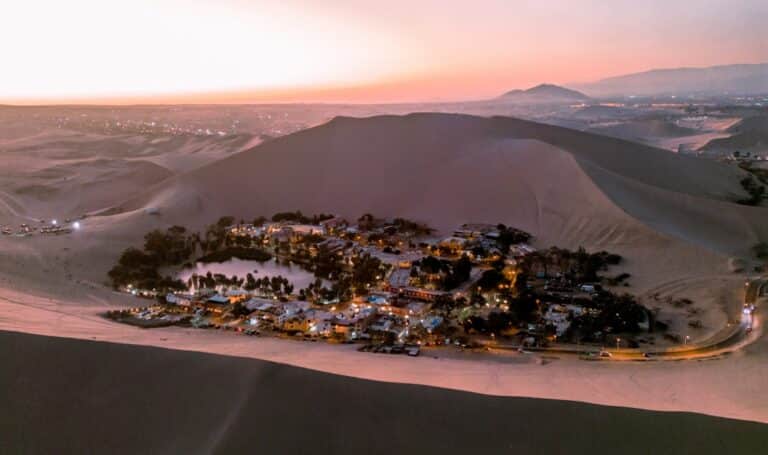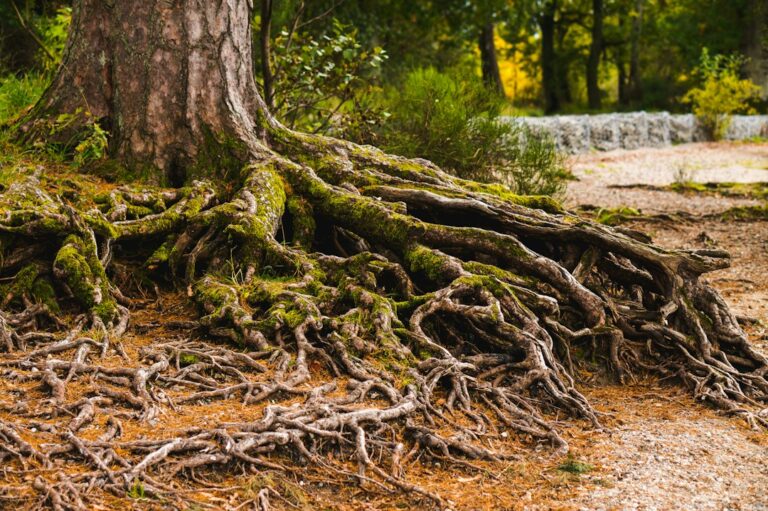
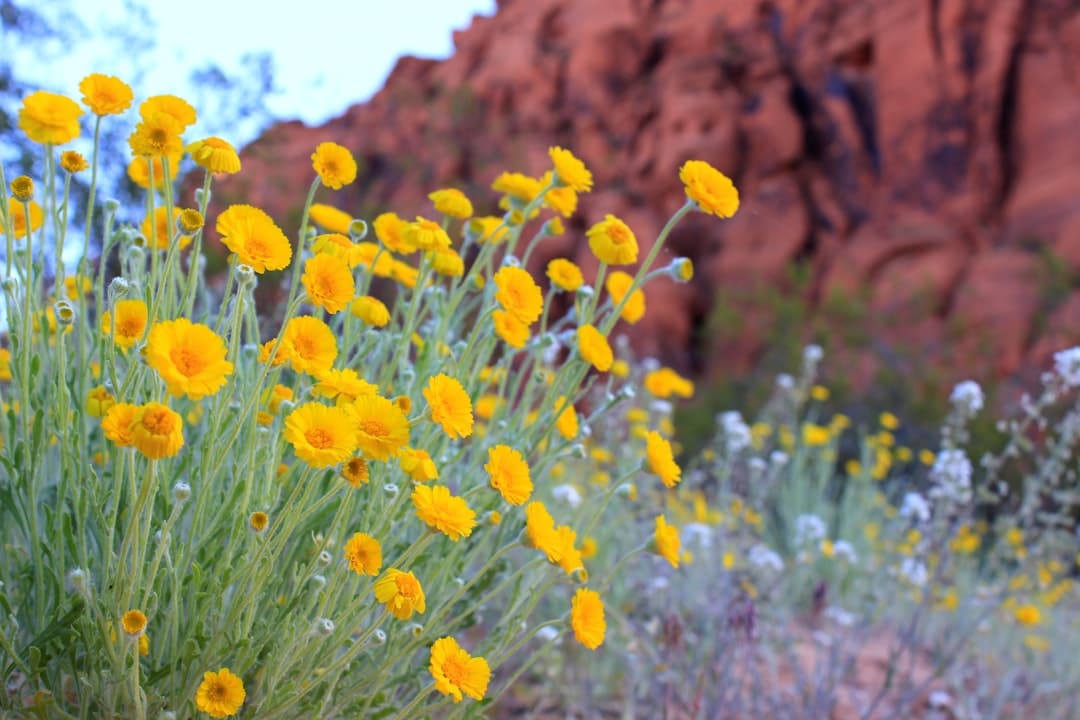
A desert can look almost empty for months. Then, after the right sequence of rain and temperature, the same landscape can erupt into thousands—or even millions—of flowers.
It can look like the desert has suddenly come alive.
But the life was never truly gone. Much of it was waiting in the soil as seeds, roots or dormant organisms. A desert superbloom is what happens when a brief window of favorable conditions allows an unusually large fraction of that hidden biological potential to become visible at once.
The desert is not an ecosystem without life
Deserts are defined by scarcity, especially scarcity of water. That does not mean organisms cannot live there. It means they must solve a different problem: how to survive long periods when growth is impossible.
Many desert annual wildflowers solve it by escaping drought rather than resisting it. They grow, flower and produce seeds during a short favorable period, then disappear from the landscape while their seeds remain dormant. National Park Service and USGS research describes this strategy as a way of surviving extreme dry periods.
The hidden seed bank
Before a superbloom, the desert floor may contain a surprisingly large reservoir of dormant seeds.
Some seeds can remain in the soil for years. They do not all germinate during the first rain because germination at the wrong moment can be fatal. A seed that sprouts after a tiny shower may produce a seedling that dies when the soil quickly dries.
In the Mojave Desert, studies have found that seed banks can persist through unsuitable years and that the number and species of plants emerging above ground can differ substantially from the seeds present in the soil.
The desert therefore contains a biological memory of previous successful seasons.
Rain is the trigger—but one shower is rarely enough
The first substantial rainfall can break dormancy in some species. In certain desert plants, a seed coat or protective layer responds to sufficient moisture, preventing germination during insignificant rainfall events.
But germination is only the beginning.
The young plant must develop roots, produce leaves, flower and set seed before heat and drought return. That means the sequence of rainfall matters as much as the total amount.
Death Valley National Park notes that successful wildflower seasons can depend on well-spaced precipitation through winter and spring, sufficient warmth and an absence of harsh drying winds.
Why timing matters so much
Imagine two years with exactly the same total rainfall.
In one year, several deep soaking storms arrive at useful intervals. Seeds germinate, roots establish, plants grow and flowers appear.
In the other, most of the rain falls in one intense event followed by weeks of heat and dryness. Seeds may germinate, but many seedlings can die before reproducing.
The desert does not respond to rainfall as a simple annual total. It responds to when, where, how much and how quickly water becomes unavailable again.
Why a bloom can appear almost overnight
The apparent suddenness is partly an illusion.
The biological preparation may have been happening underground for months or years. Once the environmental trigger arrives, many plants can grow rapidly because they have evolved to complete their life cycles before the next dry period.
When a large region receives similar weather conditions, thousands of seeds can respond within a relatively narrow window.
From a human perspective, it looks as if the desert has transformed overnight. From the plant’s perspective, the bloom is the culmination of a long period of dormancy followed by a carefully timed race against drought.
Temperature matters too
Water alone is not enough. Seeds and seedlings respond to temperature, sunlight and seasonal timing.
In Death Valley, seeds germinating after cool winter storms can remain small while the soil is cool, developing roots before warmer spring conditions trigger rapid above-ground growth.
This is an elegant strategy. The plant can use the cool, relatively moist part of the season to establish itself before the environment becomes hostile.
Then comes the race against heat
Desert annuals have very little time to complete their life cycle.
They need to transform temporary water availability into leaves, flowers and seeds before the soil dries and temperatures rise beyond the range in which their tissues can survive.
That is why desert flowers can seem delicate and short-lived. Their entire strategy is built around speed.
In some places, a superbloom may last only a few weeks. Death Valley’s 2026 superbloom, for example, was followed by early high temperatures that brought the main low-elevation display to an end after roughly two weeks.
A superbloom becomes an ecosystem-wide event
The flowers are not the only organisms responding.
When flowering plants suddenly become abundant, they provide food and habitat for pollinators such as bees, butterflies, moths and hummingbirds. Those pollinators can in turn influence how successfully plants reproduce.
Other animals can exploit the temporary abundance of vegetation and seeds. Predators may respond to the increase in herbivorous insects and other prey.
A superbloom is therefore an ecological pulse moving through multiple levels of the food web.
Why flowering at the same time can be useful
Mass flowering can create an unusually large and temporary food supply for pollinators. It can also increase the likelihood that compatible plants are flowering simultaneously and can exchange pollen.
But synchronization is not perfect. Different species respond to different combinations of moisture and temperature, which is why a desert landscape can change color and composition throughout the bloom season.
How much rain is enough?
There is no universal rainfall threshold for a superbloom.
Different species have different germination requirements. Soil depth, elevation, slope, previous rainfall, temperature and seed-bank composition all matter.
Studies in the Sonoran Desert have found substantial differences among species in the rainfall associated with seedling emergence and survival.
This is why a weather forecast saying “above-average rain” cannot automatically predict a spectacular flower season.
Why location matters as much as rainfall
Desert rainfall is often highly uneven.
A storm can soak one valley while leaving another almost untouched. Even within a single landscape, differences in elevation, slope and soil can create very different moisture conditions.
That is why one hillside can become covered in flowers while another nearby remains mostly bare.
El Niño can influence desert flower years
Large-scale climate patterns can alter the probability of favorable seasons.
USGS research has linked above-average winter rainfall, including rainfall associated with El Niño conditions in parts of the Mojave, with increased annual plant production. But even these relationships are not deterministic because species respond differently to the timing and distribution of precipitation.
A climate pattern can tilt the odds. It does not press a “superbloom button.”
Why too much rain can also be complicated
It is tempting to assume that more water must always produce more flowers.
But ecological responses are nonlinear. Heavy rain at an unsuitable time may produce runoff rather than useful soil moisture. Intense storms can damage seedlings or alter soils. Subsequent heat can erase the advantage of an unusually wet period.
And a wet year can favor non-native species as well as native wildflowers. In the Mojave, some invasive annual grasses respond strongly to wet years, potentially changing future competition and fire dynamics.
What happens after the spectacle?
The flowers are temporary, but the real objective is reproduction.
Pollination leads to seeds. Seeds fall or are dispersed across the landscape. Most will not immediately become plants. Some will be eaten, some will fail to germinate, and others may remain dormant for future years.
The desert is effectively rebuilding its hidden seed bank.
The colorful landscape therefore contains the next generation of flowers—and potentially the generations after that.
Why scientists study superblooms
A superbloom is a natural experiment in how dry ecosystems respond to pulses of water.
Researchers can compare rainfall, soil moisture, temperature, seed-bank composition, plant emergence and flowering to understand why some years produce extraordinary growth while others produce very little.
Remote sensing and satellite imagery can extend this work across large landscapes, allowing scientists to track changes in vegetation that would be difficult to measure entirely from the ground.
Climate change adds a new uncertainty
Future desert flowering will depend not only on average rainfall but on changes in the timing and variability of precipitation, temperature extremes and drought.
A warmer environment can shorten the period between germination and lethal heat. A shift in rainfall season can cause seeds to germinate at less favorable times. More intense storms may not provide the same ecological benefit as several moderate soaking events.
This does not mean superblooms will simply disappear or become more common everywhere. The outcome will differ among deserts and species.
The desert’s great trick
The most remarkable thing about a superbloom is not that flowers can survive in a desert.
It is that the ecosystem has evolved to wait.
Seeds can remain dormant through years that would kill an actively growing plant. Then, when moisture and temperature align, thousands of plants can race through their entire life cycle before the desert closes the window again.
The flowers are therefore not an exception to the desert.
They are one of the desert’s most elegant adaptations to scarcity.
A desert is not empty—it is patient
When a dry landscape suddenly becomes a sea of yellow, pink, purple or white, it can feel like nature has performed a miracle.
But the science reveals something arguably more extraordinary.
The seeds were already there. The ecological machinery was already there. The desert had simply been waiting for a narrow combination of conditions that allowed life to move from dormancy into action.
A superbloom is not life appearing from nowhere.
It is life revealing how much of itself it had been storing in silence.
Curiosity Publication by Aadvik Agastya
Sources & further reading
- National Park Service — Death Valley wildflowers
- National Park Service — Joshua Tree wildflowers
- USGS — Ecology of Death Valley National Park
- USGS — Monitoring Ecosystem Quality and Function in Arid Settings
Have a question about this topic?
Join fellow Qurons on the Quron Forum to ask questions, challenge ideas, share discoveries and explore further.
Discuss on Quron Forum