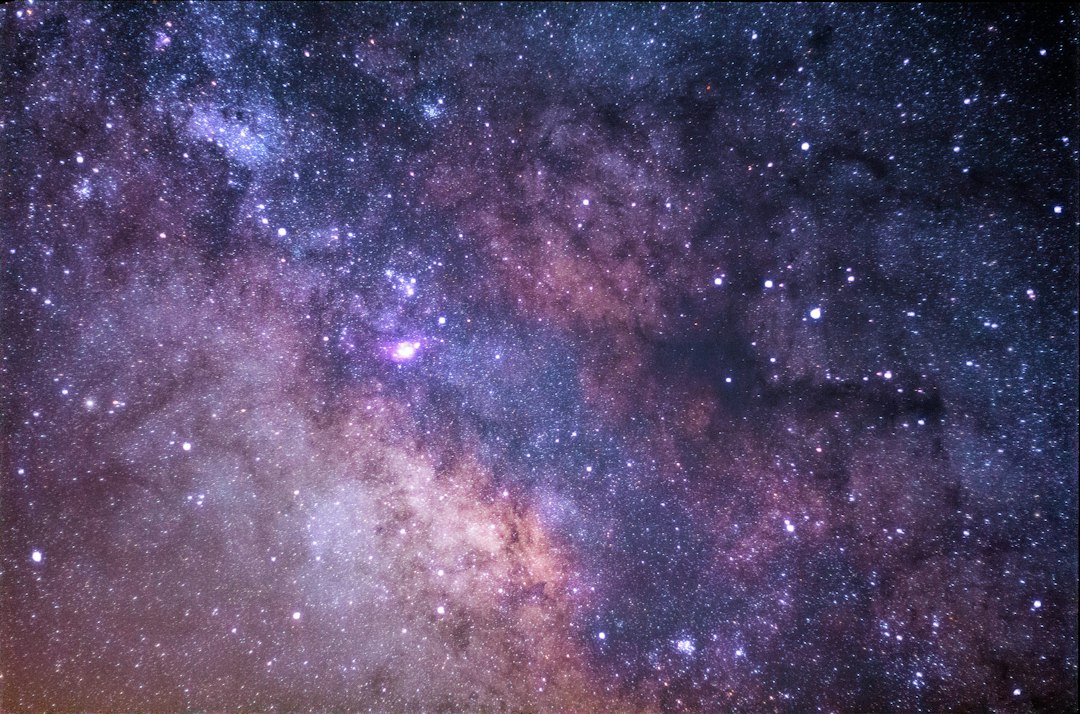
How many technological civilizations might exist in the Milky Way?
It sounds like a question that should be impossible to answer. We have confirmed only one technological civilization: humanity.
Yet in 1961, astronomer Frank Drake proposed a way to turn the mystery into a structured scientific question. Instead of asking vaguely whether aliens exist, he separated the problem into a chain of smaller questions about stars, planets, life, intelligence and technology.
The result became known as the Drake Equation.
It is often presented as a calculator that can produce a number of extraterrestrial civilizations. That description misses its more important purpose.
The Drake Equation is best understood as a framework for exposing what we know, what we do not know and which unknowns dominate the problem.
What is the Drake Equation?
In its traditional form, the equation is written as:
N = R* × fp × ne × fl × fi × fc × L
Here, N represents the number of civilizations in the Milky Way whose detectable signals could be reaching us at a given time.
The factors describe successive stages:
- R* — the rate at which suitable stars form.
- fp — the fraction of those stars with planets.
- ne — the average number of potentially suitable planets per planetary system.
- fl — the fraction of those planets on which life actually arises.
- fi — the fraction of life-bearing worlds on which intelligent life develops.
- fc — the fraction of intelligent civilizations that develop detectable technology.
- L — the length of time such a civilization remains detectable.
The multiplication is straightforward. The difficulty lies in assigning scientifically defensible values to the terms.
Why Drake proposed it
The equation was developed in the context of early discussions about the search for extraterrestrial intelligence.
Drake wanted to organize the scientific questions involved in estimating the number of detectable civilizations. The equation also provided a useful agenda for research: astronomers could work on the astronomical terms while biologists and other scientists considered the biological and evolutionary terms.
At the time, humanity knew far less about planets around other stars than we do today. The first confirmed exoplanet discoveries around Sun-like stars were still decades away.
The equation therefore emerged before some of its early astronomical uncertainties could be directly measured.
The first term: how many stars are being formed?
The first factor concerns the rate at which stars suitable for the development of planetary systems are formed.
The Milky Way contains hundreds of billions of stars, but not all stars are equally relevant to the question. Their masses, lifetimes, chemical compositions and environments differ.
A very massive star may burn through its fuel rapidly. A low-mass star can survive for vastly longer periods.
The equation simplifies a complicated population into a rate that represents the supply of stellar systems.
This is one of the terms astronomy can constrain much better than the biological terms.
The second term: do stars have planets?
Modern exoplanet astronomy has transformed this part of the equation.
We now know that planets are common around stars. Thousands of exoplanets have been confirmed, and statistical studies indicate that planetary systems are widespread.
This means the old question “Do other stars have planets?” has largely become “What kinds of planets do they have, and how common are the different types?”
That is an enormous improvement in our knowledge.
The third term: how many planets could support life?
Finding a planet is only the beginning.
The next question is whether a planetary environment could support life.
Scientists often consider factors such as temperature, liquid water, atmospheric composition, energy sources and planetary chemistry. But the concept is more complicated than simply counting planets inside a star’s habitable zone.
A planet can be inside a nominal habitable zone and still have an atmosphere that makes its surface hostile. A world outside the conventional zone might contain subsurface water or another environment suitable for life.
So ne is not simply the number of Earth-sized planets in a particular orbital band.
The fourth term may be the greatest unknown
Suppose a planet has water, energy and suitable chemistry.
How often does life actually begin?
This is represented by fl.
And here our direct evidence becomes extremely thin.
Earth is the only confirmed example of a planet on which life arose. From one example, we cannot directly calculate the probability that life emerges on another suitable planet.
If abiogenesis is relatively easy whenever conditions are favorable, life could be widespread. If the transition from chemistry to biology is extraordinarily rare, even billions of suitable environments might contain very little life.
We currently do not know which of these broad possibilities is closer to reality.
One example creates a profound statistical problem
Imagine discovering one successful coin toss and then trying to determine the probability that the coin lands heads.
One observation tells you something, but not enough to establish the underlying probability with confidence.
Earth presents an even harder problem. We know life exists here, but we do not know how many opportunities for life existed before it appeared, how many unsuccessful chemical pathways occurred, or whether the transition was fast or slow relative to the planet’s history.
The absence of a second independent example makes the biological terms extraordinarily uncertain.
The fifth term: does life become intelligent?
Even if life is common, intelligence may not be.
Earth contains an enormous diversity of organisms, but only one lineage has developed a technological civilization capable of building radio telescopes, spacecraft and computers.
The evolution of intelligence is therefore a separate question from the origin of life.
It is also difficult to define “intelligence” in a way that is directly useful to the equation. Many animals demonstrate sophisticated cognition, problem-solving and communication without developing industrial technology.
The relevant question is really whether a life-bearing world produces a civilization capable of the kind of technological activity that could become detectable across interstellar distances.
The sixth term: does intelligence produce detectable technology?
A civilization can be intelligent without becoming radio-loud.
Humanity itself illustrates the point. Our technological civilization has existed for a tiny fraction of Earth’s history, and our strongest radio and electromagnetic leakage is changing as communication technologies evolve.
An extraterrestrial civilization might use communications systems that are difficult for us to detect. It might deliberately minimize leakage, use tightly directed beams, communicate through technologies we have not imagined, or have no interest in broadcasting into space.
That makes fc a question not merely about intelligence, but about technological behavior.
The final term: how long does detectability last?
This may be the most important term in the entire equation.
Imagine a galaxy containing many civilizations. If each becomes detectable for only a few hundred years, their periods of technological detectability may rarely overlap.
Two civilizations could exist in the same galaxy and even be relatively close in astronomical terms, yet never detect each other because their technological eras occur millions of years apart.
The term L represents the duration over which a civilization remains detectable.
The timing problem is easy to underestimate
Suppose one civilization becomes detectable today but another existed on the same planet 50 million years ago.
From the perspective of the Drake Equation, the second civilization does not contribute to the number of civilizations detectable now.
This is why the equation is fundamentally about simultaneous detectability, not the total number of civilizations that have ever existed.
A galaxy could have hosted a vast number of civilizations over its history while containing very few detectable ones at any particular moment.
Modern astronomy has narrowed some uncertainties
When Drake proposed the equation, astronomers did not know whether planets were common.
That situation has changed dramatically.
Exoplanet surveys have demonstrated that planetary systems are widespread and have revealed an extraordinary diversity of worlds: hot gas giants, compact planetary systems, super-Earths, sub-Neptunes and planets orbiting different kinds of stars.
This means some of the astronomical terms can now be estimated far more effectively than they could in the 1960s.
The great unknowns have increasingly shifted toward biology, evolution and technological behavior.
Why the equation can produce wildly different answers
Because the terms are multiplied, uncertainty compounds.
Suppose several terms are known only within broad ranges. Multiplying those ranges together can produce an enormous interval for N.
A small change in the assumed probability of life could matter enormously. So could a different assumption about technological longevity.
This is why different researchers can use the same equation and obtain radically different estimates without making an arithmetic mistake.
The disagreement lies in the assumptions.
It is not a prediction with one accepted number
There is no universally accepted value of N produced by the Drake Equation.
Any numerical estimate depends on choices about uncertain parameters. Some values can be constrained observationally; others remain speculative.
For that reason, presenting one number as “the number of alien civilizations” gives the equation more certainty than the evidence supports.
Its scientific value lies more in showing where the uncertainty enters the calculation.
The equation can change as knowledge improves
One of its strengths is that it is not fixed.
As astronomers discover more planets, estimates of planetary frequency improve. As atmospheric studies become more capable, our understanding of potentially habitable environments improves. As astrobiology investigates the origins and limits of life, the biological terms can eventually be informed by evidence.
If humanity ever finds independent evidence of life elsewhere, the equation would change dramatically.
A second example of life would immediately tell us that life is not unique to Earth. Multiple independent examples would eventually provide a much stronger empirical basis for estimating how frequently biology emerges.
What if the Great Filter is real?
The Drake Equation is closely related to a broader question sometimes called the Great Filter.
Some transition between sterile chemistry and long-lived technological civilization may be extremely difficult. It could be the origin of life, complex cells, multicellular organisms, intelligence, technological development or long-term survival.
The Drake Equation does not identify where such a bottleneck exists.
It simply makes the chain of transitions explicit.
Why SETI fits naturally into the equation
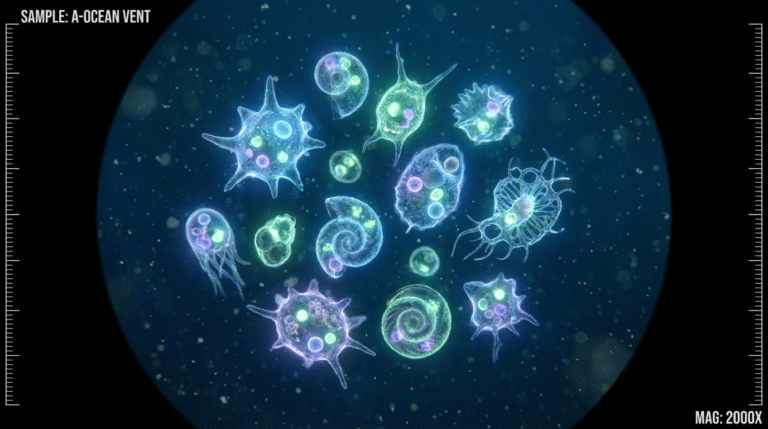
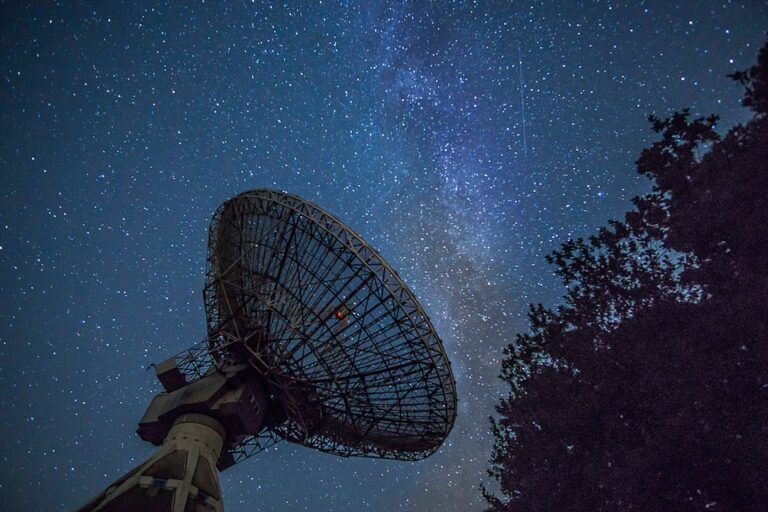
SETI searches for technological evidence rather than life itself.
That means SETI is most directly connected to the later terms of the equation: intelligent civilizations, technological development and detectability.
A negative search result cannot establish that no civilizations exist. It constrains the kinds of detectable civilizations present within the searched regions, frequencies, sensitivities and observation times.
Likewise, a confirmed technosignature would transform the equation from a mostly theoretical framework into one informed by an actual second technological example.
What would make the equation scientifically powerful?
The biggest advances may not come from inventing a better multiplication formula.
They may come from replacing unknown terms with observations.
Finding life beneath the ice of another world would constrain the biology term. Detecting a convincing biosignature on an exoplanet would provide another independent example. Finding a technosignature would directly demonstrate that technological civilizations exist elsewhere.
Each discovery would remove some of the uncertainty that currently dominates the equation.
The deeper question
The Drake Equation does not tell us how many civilizations exist.
It tells us why the answer is difficult.
We are trying to estimate the abundance of something for which humanity has exactly one confirmed example and almost no direct information about the crucial evolutionary transitions between chemistry, life, intelligence and detectable technology.
That can make the equation look weak.
But its real achievement is different.
It transforms one enormous mystery into a sequence of questions that different branches of science can attack independently.
How common are planets?
How often does life begin?
How often does life become complex?
How often does intelligence produce technology?
And how long does that technology remain detectable?
Every one of those questions can eventually move from speculation toward evidence.
The Drake Equation is therefore less a machine for calculating aliens than a map of our ignorance—and, potentially, a map of how we might reduce it.
Curiosity Publication by Aadvik Agastya
Sources & further reading
Have a question about this topic?
Join fellow Qurons on the Quron Forum to ask questions, challenge ideas, share discoveries and explore further.
Discuss on Quron Forum