
When we imagine an ancient Buddhist monastery, it is easy to picture a quiet religious retreat separated from ordinary intellectual life. But many monasteries across Buddhist Asia were much more than places of worship.
They could be communities of learning, manuscript production, debate, translation, medicine and travel. Their importance came partly from a practical fact: monks needed to study, preserve texts and train new generations of teachers.
Why monasteries became places of learning
Buddhist traditions placed strong emphasis on studying teachings, memorizing texts, debating interpretations and training in disciplined practice. A monastery provided a stable community in which this could happen.
Students could learn from senior monks rather than relying entirely on scattered individual teachers. Manuscripts could be copied and stored. Visiting scholars could meet people from other regions.
Learning was not limited to religious doctrine
The curriculum varied by place and period, but major Buddhist centers could engage with grammar, logic, philosophy, medicine, astronomy and other fields of knowledge.
This did not mean every monk studied every subject. It means that monasteries could function as intellectual institutions whose interests extended beyond ritual.
Nalanda shows how large the system could become
Nalanda in present-day Bihar became one of the most famous Buddhist centers of learning in South Asia. It attracted students and teachers from different parts of Asia and developed a large institutional complex.
Its importance illustrates how religious networks could create international intellectual networks long before modern universities.
Translation was an intellectual technology
Buddhist texts traveled across languages. Translators had to compare terminology, explain concepts and sometimes create new vocabulary.
Translation was therefore not simply copying words. It required interpretation.
As texts moved from India into Central Asia, China, Tibet and elsewhere, communities preserved different versions and commentarial traditions. Comparing them today can reveal how ideas changed as they crossed cultural boundaries.
Monasteries also depended on society
Intellectual life required food, buildings, manuscripts and teachers. Monasteries therefore developed relationships with surrounding communities, rulers and donors.
That support could make a monastery wealthy and influential, but it also meant that monasteries were part of broader political and economic systems.
Why debate mattered
In many Buddhist intellectual traditions, debate was not merely argument for its own sake. It was a method of testing claims and clarifying distinctions.
Logic and philosophy could therefore become part of religious education.
The goal was often not simply to memorize an answer but to understand why a position was defensible and what objections it faced.
Books had to survive physically
Knowledge is fragile when it exists only in memory.
Manuscripts could decay, burn, be damaged by insects or disappear when a community was destroyed. Copying texts was therefore an essential part of preserving knowledge.
Some surviving Buddhist manuscripts are valuable precisely because they preserve traditions that disappeared elsewhere.
The deeper lesson
Ancient learning did not require a modern university campus.
Libraries, temples, monasteries, courts and scholarly communities could all become institutions of knowledge. Buddhist monasteries were especially important because religious practice, education, travel and manuscript culture were connected within the same networks.
The monastery was therefore not simply a place where people withdrew from the world.
In many periods, it was one of the places where the world was studied, translated, debated and remembered.
Why a monastery could support serious scholarship
A monastery provided something intellectual work requires: continuity. Teachers and students could remain in one place, texts could be stored, copied and studied, and debates could continue across generations.
That stability was especially valuable in periods when education was not organized through a centralized university system.
Learning traveled through networks of people
Students and teachers moved between monasteries. Pilgrims and scholars carried texts and ideas across regions. Translation communities created bridges between languages.
A major monastery could therefore function as a node in a much larger intellectual network.
Manuscript production was a technology
Preserving knowledge required materials, skilled scribes and repeated copying. A text that existed in one fragile manuscript was vulnerable to fire, insects, moisture and political upheaval.
Copying created redundancy. It also created variation, because scribes could introduce errors, clarifications or local interpretations.
Debate created intellectual pressure
Scholarly traditions become stronger when claims face objections. Buddhist philosophical communities developed sophisticated traditions of reasoning and debate, including analysis of logic, perception, language and the nature of reality.
This intellectual activity was connected to religious goals, but it also generated questions that could be studied in their own right.
Monasteries were economically embedded
Large institutions required food, land, buildings and labor. Donations from rulers and lay communities helped sustain them.
This means monasteries cannot be understood as isolated spiritual spaces. They were institutions embedded in economic and political relationships.
Nalanda was part of a wider world
Nalanda became famous partly because students and teachers traveled there from across Asia. Its influence extended beyond the immediate region through the movement of texts and people.
The existence of such networks demonstrates that intellectual globalization predates modern universities by many centuries.
What was lost is difficult to measure
When a monastery or library is destroyed, the loss is not limited to the physical building. Unique manuscripts, commentaries, teaching lineages and memories can disappear simultaneously.
That is why surviving manuscripts are so valuable: they may preserve branches of intellectual traditions that no longer exist elsewhere.
The monastery as an information system
A useful way to think about major monasteries is as systems for collecting, testing, copying, teaching and transmitting knowledge.
Their tools were human memory, debate, manuscripts and travel rather than databases and servers.
The purpose was religious, but the intellectual consequences could be much broader.
They could be communities of learning, manuscript production, debate, translation, philosophy, medicine and travel. Their importance came partly from a practical fact: knowledge has to be transmitted. Teachers need students, texts need to be copied, arguments need to be examined, and traditions need institutions capable of surviving across generations.
A monastery could provide that continuity.
A deeper look: Why monasteries became places of learning
Buddhist traditions placed strong emphasis on learning teachings, memorizing texts, interpreting them and training people capable of transmitting them. A monastery brought teachers and students into a relatively stable community.
That stability mattered. An individual teacher could die or move away, but an institution could preserve a curriculum and a textual tradition beyond one person’s lifetime.
Students could listen to senior teachers, memorize passages, discuss interpretations and participate in debates. Manuscripts could be stored and copied. Visitors could introduce ideas from distant regions.
The monastery thus became both a religious community and an information-preservation system.
A deeper look: Learning was not limited to religious doctrine
The subjects studied varied according to region, school and historical period. It would therefore be misleading to imagine one standardized Buddhist curriculum across Asia.
Major intellectual centers could nevertheless engage with grammar, logic, philosophy, medicine, astronomy, linguistics and other fields. Some subjects were studied because they were useful for interpreting texts; others developed as independent areas of scholarly inquiry.
This is an important distinction. A monastery did not have to resemble a modern university in order to support sophisticated intellectual work.
Debate was a method of learning
In many Buddhist philosophical traditions, debate was more than public disagreement. It could be a disciplined method for testing claims, identifying contradictions and clarifying definitions.
Students might be expected to defend a position against objections. This required more than memorization. It required understanding why a proposition followed from its assumptions and how an opponent might challenge it.
Such traditions contributed to extensive discussions about logic, perception, language, consciousness and the nature of reality.
The subjects were connected to religious questions, but the intellectual techniques developed around them could become highly sophisticated in their own right.
Manuscripts made knowledge portable
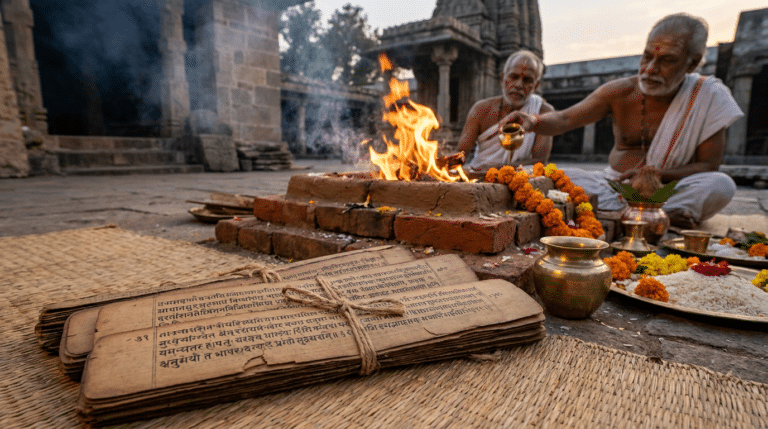
Human memory is powerful but vulnerable. A tradition preserved entirely through oral transmission can be disrupted when teachers die or communities disperse.
Manuscripts provided another layer of continuity.
Producing them required writing materials, skilled scribes, time and organizational support. Texts could then be copied and transported to other communities.
But copying did not create perfect duplication. Scribes could introduce mistakes, omit passages, add clarifications or adapt terminology. Surviving manuscripts therefore have to be compared carefully rather than treated as identical snapshots of an original text.
A deeper look: Translation was an intellectual technology
As Buddhism moved across Asia, teachings had to cross major linguistic and cultural boundaries.
Translators faced a problem more complicated than replacing one word with another. Philosophical concepts often have no exact equivalent. Technical terms carry associations from the intellectual tradition in which they developed.
Translation teams therefore had to decide how concepts should be represented in another language. They sometimes developed specialized vocabularies that later became standard within a new Buddhist tradition.
The result was not simply a copy of Indian Buddhism in another language. New intellectual environments emerged through translation.
Teachers and students created a network
Knowledge moved because people moved.
Students traveled to learn from particular teachers. Monks visited other monasteries. Pilgrims carried texts and stories. Scholars returned to their home regions after periods of study.
A major monastery could therefore function as one node in a much larger intellectual network.
This is why the history of Buddhist learning cannot be reconstructed by looking at buildings alone. The movement of people is part of the infrastructure.
A deeper look: Nalanda shows how large the system could become
Nalanda Mahavihara in present-day Bihar became one of the most famous Buddhist centers of learning in South Asia. It developed as a substantial monastic complex and attracted scholars and students from different regions.
Its significance lies partly in scale, but also in its place within wider networks of intellectual exchange. Knowledge could enter through visiting scholars and leave through students who later taught elsewhere.
Nalanda should not simply be described as a modern university transported into the ancient world. Its organization, purposes and social setting were different.
Yet the comparison can be useful if used carefully: like universities, large monastic centers could concentrate teachers, students, texts and specialized intellectual activity in one place.
A deeper look: Monasteries were economically embedded
Serious scholarship requires material support.
Monks needed food and shelter. Buildings needed maintenance. Manuscripts required materials. Large communities required systems for obtaining resources.
Monasteries could therefore receive support from rulers, merchants and lay communities. Donations of land or other resources could help sustain institutions over long periods.
This creates an important historical tension. Monasteries could be dedicated to religious and intellectual goals while simultaneously depending on economic and political relationships with the societies around them.
Knowledge and patronage were connected
Large intellectual institutions did not exist outside politics. Rulers could support monasteries for religious reasons, prestige, patronage or political relationships. Merchants and local communities could provide donations as well.
Support could encourage intellectual flourishing, but changing political conditions could also weaken institutions.
This helps explain why the history of knowledge is partly a history of infrastructure. Ideas require people and institutions capable of carrying them.
Medicine and other practical knowledge
Buddhist monastic communities sometimes engaged with practical subjects such as medicine. Monks traveled between regions and encountered different environments, languages and traditions.
It would be an exaggeration to claim that monasteries were comprehensive scientific universities. Their curricula varied, and religious study remained central.
But the broader point is important: intellectual life in a monastery could extend beyond ritual and doctrine because communities needed knowledge for teaching, interpreting texts, caring for people and interacting with the wider world.
Libraries were vulnerable systems
We tend to imagine libraries as permanent containers of knowledge. Ancient libraries were much more fragile.
Manuscripts could be damaged by moisture, insects, fire and repeated handling. Political violence could destroy entire collections. A text that survived in only one location could disappear if that community was disrupted.
Copying was therefore a form of redundancy.
Every additional manuscript increased the possibility that a work would survive somewhere else. At the same time, copying created textual variation, meaning that preservation and alteration happened together.
When a monastery disappeared, more than a building was lost
The destruction or decline of a major monastery could affect several forms of knowledge at once.
Manuscripts might disappear. Teachers could die or migrate. Students could scatter. Specialized traditions of interpretation could break. A local intellectual network could collapse.
This makes surviving manuscripts disproportionately valuable. They may preserve not only texts, but evidence of intellectual traditions that disappeared elsewhere.
Why monasteries could become cosmopolitan
A monastery connected to long-distance pilgrimage and scholarly networks could encounter people from very different regions.
Different languages might be spoken. Different interpretations of Buddhist teachings might be debated. Visitors could bring unfamiliar manuscripts, artistic conventions or intellectual questions.
Such environments could become unusually cosmopolitan for their time.
But cultural exchange was not automatic. Local communities selected, translated and reinterpreted what they encountered. Transmission was an active process.
A deeper look: The monastery as an information system
A useful modern analogy is to think of a major monastery as an information system—not because it functioned like a computer, but because it performed several tasks necessary for knowledge to persist.
It collected information through texts and teachers, stored it through manuscripts and memory, tested interpretations through debate, reproduced it through copying and teaching, and distributed it through travel.
Its tools were human rather than digital, but the underlying problem was familiar: how do you preserve knowledge accurately enough that another generation can receive it?
A deeper look: The deeper lesson
Ancient learning did not require a modern university campus.
Libraries, temples, courts, scholarly communities and monasteries could all become institutions of knowledge. Buddhist monasteries were particularly important because religious practice, education, manuscript culture and travel could operate within the same networks.
Calling every monastery a “university” would flatten important historical differences. Yet dismissing monasteries as purely religious retreats would be equally misleading.
In many periods, they were places where ideas were studied, arguments were tested, texts were translated, knowledge was copied and teachers were trained.
The most fascinating part is perhaps the fragility behind that achievement. An intellectual tradition may appear timeless when we encounter it in a surviving text, but someone had to copy that text, teach it, argue about it and carry it to the next generation.
Ancient monasteries were among the institutions that made that transmission possible.
Curiosity Publication by Aadvik Agastya
Sources & further reading
Have a question about this topic?
Join fellow Qurons on the Quron Forum to ask questions, challenge ideas, share discoveries and explore further.
Discuss on Quron Forum