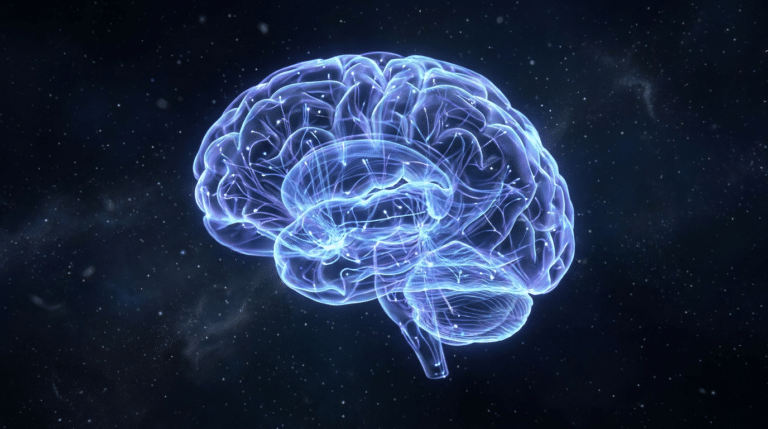
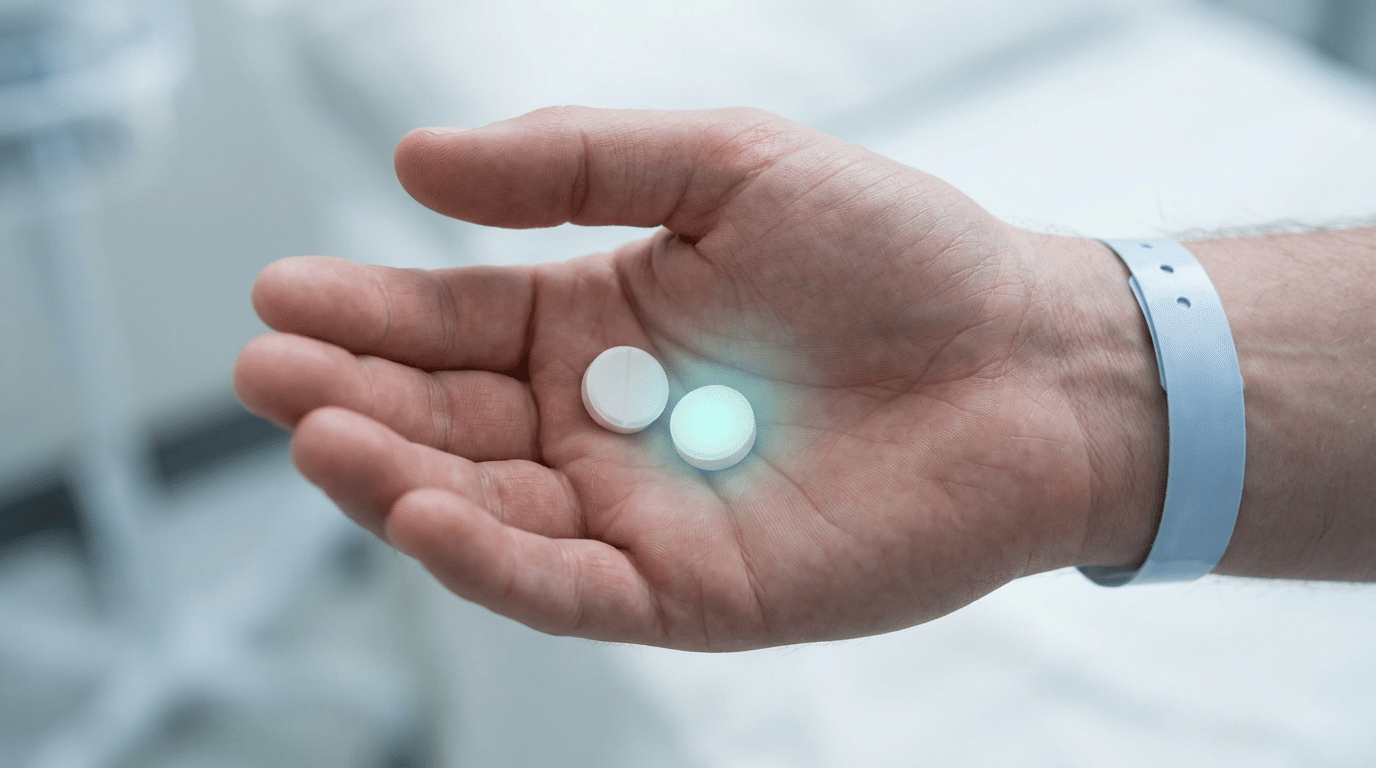
The placebo effect is often summarized as “the mind healing the body.” It is an attractive phrase, but it can create a misleading picture.
A placebo does not give the brain magical control over every disease. What researchers have found is more precise and, in some ways, more fascinating: expectation, learning and treatment context can change how the nervous system processes symptoms and can influence measurable aspects of physiology.
The effect is especially important in conditions such as pain, nausea and fatigue, where subjective experience is a major part of the outcome. Understanding placebo responses also explains why clinical trials need carefully designed comparison groups.
What Is a Placebo?
A placebo is an intervention that lacks the specific active ingredient or mechanism being tested in a treatment trial. A classic example is an inert pill designed to look like the active medication.
But the placebo effect is broader than a sugar pill.
People respond to the entire treatment environment. The clinician’s behavior, the appearance of a procedure, previous experiences, cultural expectations and information about what a treatment is supposed to do can all influence the response.
The “placebo” is therefore partly a context.
Why Context Can Change Symptoms
The brain does not simply receive information from the body like a passive measuring instrument.
It continuously interprets incoming signals in the context of previous experience and current expectations. If someone expects a treatment to reduce pain, that expectation can alter attention and the interpretation of bodily signals.
This does not mean the original physical signal disappears. It means the nervous system can change the way that signal contributes to conscious experience.
Pain Is the Classic Example
Pain is one of the most extensively studied areas of placebo research.
Suppose two people experience similar tissue injury. Their reported pain may still differ substantially because pain is influenced by attention, anxiety, expectation, previous experience and the nervous system’s modulation of incoming signals.
Placebo analgesia can activate or engage endogenous pain-control mechanisms involving pathways in the brain and spinal cord. Neurochemical systems associated with opioids and other signaling molecules can participate in these responses.
The important point is that the effect is not imaginary simply because expectation contributes to it. The experience of pain is itself a biological process.
Does a Placebo Reduce the Injury?
Usually, this is where popular explanations go too far.
A placebo may reduce someone’s experience of pain or other symptoms without repairing the underlying tissue damage.
If a person has a broken bone, an inactive pill does not make the fracture disappear. If a bacterial infection requires antibiotics, belief alone should not be treated as a substitute for antimicrobial treatment.
Placebo effects are therefore most useful for understanding symptoms and treatment experiences, not as a universal mechanism for curing disease.
Expectation Is a Biological Signal
Expectation can influence how the brain prepares for an event.
If you are told that a stimulus will hurt, attention may become more focused on threat. If you are told that a treatment should reduce pain, the same nervous system can approach the stimulus with a different prediction.
These predictions can influence perception and physiological responses.
This is one reason placebo research has become relevant to broader theories of perception: the brain appears to combine incoming sensory information with prior expectations rather than treating each sensation as an isolated data point.
Conditioning: The Body Can Learn From Treatment
Placebo responses are not driven only by conscious belief.
Learning can also play a role.
If a person repeatedly receives an active treatment and experiences improvement, the treatment environment can become associated with the expected physiological response. Later, elements of that environment may trigger some of the learned response even when the active drug is absent.
This is known as conditioning.
It provides another reason the placebo effect cannot be reduced to “positive thinking.” The nervous system learns associations through repeated experience.
The Power of the Treatment Ritual
Medical treatment is full of signals.
A clinician’s confidence, a white coat, a prescription, the appearance of a tablet, the complexity of a procedure and the explanation given before treatment all communicate information.
Those signals can change expectations.
This does not mean doctors should deceive patients. In fact, deception can damage trust. The research question is more subtle: how can legitimate therapeutic context support beneficial expectations while maintaining informed consent?
Open-Label Placebos
Researchers have even investigated “open-label” placebos, in which participants are explicitly told that the treatment is a placebo.
This challenges the simple idea that placebo responses require deception.
Some studies have reported benefits for particular symptoms even when participants knew they were receiving an inactive treatment. The mechanisms remain an active area of research, and results vary depending on the condition and study design.
The findings suggest that expectations, treatment rituals and learned responses may be more complicated than the assumption that a placebo works only because a patient falsely believes it is an active drug.
The Nocebo Effect: When Expectations Increase Symptoms
The same psychological and physiological systems can work in the opposite direction.
A nocebo response occurs when negative expectations contribute to unpleasant symptoms or increased symptom intensity.
If someone is warned repeatedly about a possible side effect, attention may become highly focused on bodily sensations associated with that side effect. Previous experiences can reinforce the expectation.
This matters clinically because negative expectations can influence treatment adherence and how people experience otherwise useful therapies.
Regression to the Mean
There is another reason people can feel better after receiving a placebo even when the placebo itself has little specific effect.
Symptoms often fluctuate.
People tend to seek treatment when symptoms are especially severe. Extreme measurements or episodes are statistically likely to move closer to a person’s average level when measured again, even without a meaningful intervention.
This is called regression to the mean.
Without a control group, it can easily be mistaken for treatment effectiveness.
Natural Recovery Can Look Like a Treatment Effect
Many illnesses improve naturally.
If someone develops a temporary infection, waits until symptoms become severe and then takes an inactive pill, improvement may occur afterward simply because the illness was already approaching its natural recovery phase.
Clinical research therefore needs comparison groups that allow investigators to separate natural history from treatment effects.
Why Randomized Controlled Trials Matter
Suppose 100 people take a new medication and 70 report improvement.
That number sounds impressive until we ask what would have happened without the active medication.
A randomized controlled trial assigns participants to different groups so researchers can compare outcomes. A placebo group helps estimate improvement associated with expectation, natural recovery and treatment context.
Blinding can further reduce the influence of expectations on participants and researchers.
The difference between the active-treatment group and the appropriate control group provides a better estimate of the treatment’s specific effect.
Placebo Response Versus Placebo Effect
Researchers sometimes distinguish between a broad placebo response and the specific placebo effect.
A person’s outcome after receiving a placebo can reflect many factors: natural recovery, regression to the mean, reporting changes, expectation, conditioning and other aspects of the treatment context.
The placebo effect in the narrower sense refers to changes attributable to the placebo-related contextual mechanisms beyond those other factors.
This distinction is one reason headlines about “the placebo effect” can oversimplify clinical evidence.
Which Symptoms Respond Most?
Placebo responses tend to be more apparent for subjective outcomes.
Pain, nausea, fatigue and perceived well-being all involve conscious experience and are therefore sensitive to changes in expectation and attention.
That does not mean objective biological measurements never change. Some placebo mechanisms can influence physiological processes. But the magnitude and reliability of these effects vary substantially by outcome.
Why Objective Disease Measures Are Different
If a treatment lowers a person’s pain score, the change can be clinically meaningful even if the underlying disease remains.
But if researchers are testing whether a drug eliminates a tumor, clears an infection or changes a specific biomarker, the placebo effect has a more limited role.
This is why clinical trials often include objective measures alongside patient-reported outcomes.
Is the Placebo Effect “All in the Mind”?
The phrase “all in the mind” suggests that mental experiences are somehow less biological than physical events.
That distinction does not hold up well.
Expectation is represented through neural activity. Attention changes information processing. Stress affects hormones and autonomic systems. Learning modifies neural circuits.
If expectations alter pain processing, the mechanism is occurring through the biology of the nervous system.
Can Belief Cure Serious Disease?
There is no scientific basis for treating the placebo effect as a universal cure.
Belief can influence symptoms and aspects of physiology, but it does not mean a person can consciously will away every infection, cancer or structural injury.
Claims that serious disease can be treated simply by changing one’s thoughts confuse symptom modulation with elimination of the underlying disease.
The Ethical Problem
Placebo research creates an important ethical question.
Doctors can potentially use treatment context, reassurance and expectation to support patients, but deliberately deceiving someone about receiving an active medication can undermine informed consent and trust.
Open-label placebo research is interesting partly because it asks whether some contextual benefits can be achieved without deception.
The long-term goal is not to trick patients. It is to understand how therapeutic relationships and expectations can become part of effective care while respecting autonomy.
Why the Effect Is Still Scientifically Important
The placebo effect reveals something fundamental about the relationship between brain and body.
Symptoms are not simply readouts generated at the end of a mechanical chain. The nervous system interprets signals, compares them with expectations and uses previous experience to shape conscious experience.
This does not make symptoms unreal. It means that the experience of the body is an active biological process.
The Bigger Picture
The placebo effect is not evidence that the mind can magically override biology.
It is evidence that expectation, learning, context and perception can become part of biology.
A pill can contain no active drug and still produce a meaningful response in some circumstances because treatment is never just chemistry. It is also information, expectation and experience.
That is why the placebo effect matters so much to modern medicine. Understanding it helps researchers design better trials, helps clinicians communicate more effectively and reminds us that the experience of illness is produced by an interaction between the body, the brain and the environment.
The most interesting lesson is not that the mind can heal everything. It is that the brain is part of the body’s response to what we expect will happen.
Curiosity Publication by Aadvik Agastya
Sources & further reading
- National Center for Complementary and Integrative Health — Placebo Effect
- Encyclopaedia Britannica — Placebo effect
Have a question about this topic?
Join fellow Qurons on the Quron Forum to ask questions, challenge ideas, share discoveries and explore further.
Discuss on Quron Forum