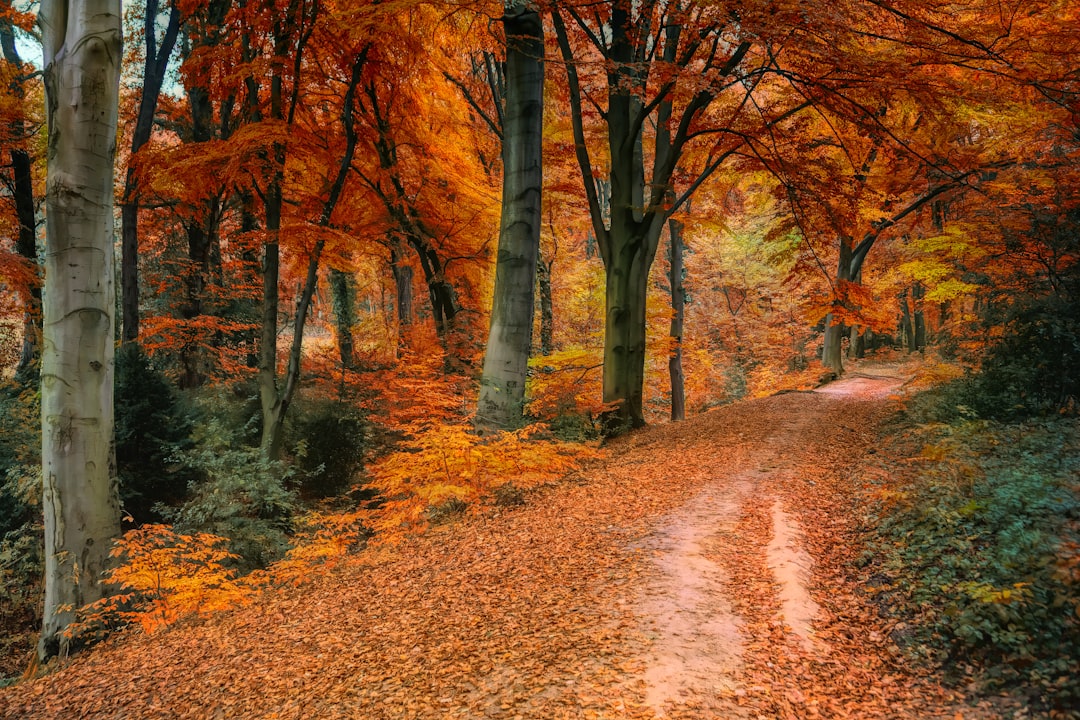
Every autumn, a familiar transformation begins. Green leaves turn yellow, orange, red or brown, sometimes within a matter of days, before eventually falling from the tree.
It looks like a simple change of color. Biologically, it is a carefully regulated transition in which a tree dismantles part of its photosynthetic machinery, recovers valuable nutrients and prepares its tissues for a season in which leaves may be more liability than asset.
And there is an especially interesting twist: yellow and orange are often revealed, while red is frequently produced.
Why leaves are green in the first place
The dominant green pigment in most leaves is chlorophyll. It absorbs light energy and helps drive photosynthesis, the process through which plants convert light energy into chemical energy.
Leaves also contain other pigments, especially carotenoids. These absorb and manage light within the photosynthetic apparatus, but during the growing season their yellow and orange colors are largely masked by the much greater visual dominance of chlorophyll.
As autumn approaches, the tree begins reducing its investment in the leaf. Chlorophyll breaks down and the green fades, allowing pigments that were already present to become visible.
Yellow and orange were largely there all along
Carotenoids are responsible for many of the yellow and orange shades seen in autumn foliage.
Unlike anthocyanins, which are often synthesized during autumn, carotenoids are generally already present in the leaf during the growing season. Their colors become obvious when chlorophyll declines.
This explains why a green leaf can seem to change into a yellow one without the tree suddenly manufacturing a completely new pigment. The color was there, hidden beneath the green.
So where does red come from?
Red and purple autumn foliage is commonly associated with anthocyanins, a class of pigments that can be synthesized during leaf senescence.
That makes red scientifically more puzzling than yellow.
The tree is approaching the end of the leaf’s useful life. Why would it spend energy making a pigment at precisely this stage?
Experiments have linked anthocyanin production with sugar accumulation in leaves. Cooler autumn conditions can reduce the movement of sugars away from leaves, and those sugars can be associated with increased anthocyanin production.
Why would a dying leaf need protection?
Leaf senescence is not an instantaneous shutdown. The photosynthetic machinery is dismantled progressively, and the leaf can remain metabolically active during part of this process.
Anthocyanins may help protect tissues from excess light and oxidative stress while the leaf is undergoing this transition. In that interpretation, red coloration could provide a temporary photoprotective function while the plant is recovering nutrients.
But protection is not necessarily the whole story.
The evolutionary mystery of red leaves
Scientists have proposed several explanations for autumn red coloration.
One possibility is that anthocyanins protect the leaf during senescence. Another influential hypothesis suggests that bright red or yellow colors could influence interactions between trees and insects, potentially acting as signals of leaf quality or defensive chemistry.
These ideas are not mutually exclusive, and their importance may differ among species. Reviews of autumn coloration have emphasized that the evolutionary function of red leaves remains an open problem rather than a question with one universally accepted answer.
Cool nights can make the colors brighter
Weather helps determine how spectacular autumn foliage becomes.
Sunny days provide energy for photosynthesis and can contribute to sugar accumulation. Cool nights can slow the movement of sugars out of leaves, conditions associated with stronger anthocyanin expression in some species. Experimental work on sugar maple has directly linked branch cooling with increased leaf sugars and anthocyanins.
That is why a sequence of bright days and cool nights can produce particularly vivid reds.
But there is no universal “perfect autumn.” Species differ, and drought, heat, excessive moisture, frost and other stresses can change the timing and intensity of coloration.
Why the same tree can look different from one year to the next
Autumn color is produced by a biological system responding to environmental conditions, not by a calendar alone.
Temperature, daylight, water availability, nutrient status and the timing of frost can all influence senescence and pigment production. A tree experiencing drought or another stress may change color earlier than expected. A wet or unusually warm autumn can produce a different display from a cool, sunny one.
Even different parts of the same tree can show different colors because leaves experience different light and microclimates.
The tree is not simply letting the leaf die
Perhaps the most important part of autumn happens after the colors appear.
Leaves contain valuable nutrients, particularly nitrogen and phosphorus. Before a leaf is abandoned, a tree can reclaim some of these resources and transport them into other tissues for storage or reuse.
Senescence is therefore partly a recycling operation.
The leaf that looks as though it is dying is simultaneously being dismantled for parts that the tree cannot afford to waste.
How does a tree actually detach a leaf?
Near the base of a leaf stalk, specialized tissues form what is called an abscission zone. As senescence progresses, the connection between leaf and branch is gradually weakened.
Water transport and nutrient movement change, protective layers develop, and eventually the leaf separates.
Research on sugar maple has found measurable biochemical differences among green, yellow and red leaves, including lower chlorophyll in senescing leaves and high anthocyanin concentrations specifically in red leaves.
Why do some trees turn red while others mostly turn yellow?
Different species use different pigment combinations and have different physiological strategies.
Some maples can produce striking reds. Aspens and birches commonly produce yellows. Oaks often develop brown, bronze or reddish shades. The final color is determined by which pigments remain, which are produced and how the chemistry of the leaf changes during senescence.
Even within one species, genetics and environmental conditions can alter the display.
What does brown mean?
Brown is often associated with later stages of senescence and tissue breakdown.
As cellular structures deteriorate, compounds such as tannins and oxidized phenolics can contribute to brown coloration. Brown therefore does not represent simply another version of the same pigment process that creates brilliant red foliage. It can indicate a more advanced stage of tissue deterioration.
Why doesn’t every leaf turn brilliant red?
Because producing anthocyanins has a cost, and not every species appears to gain enough benefit from doing so.
The evolutionary question is therefore not merely “What chemical makes the leaf red?” but “Why did natural selection preserve a system in which some plants invest in red pigments during senescence?”
That is harder to answer because the same visible color can emerge from different ecological circumstances. A protective function, a signal to insects, physiological stress or several effects at once may all contribute.
Autumn is a controlled shutdown
From a distance, a forest in autumn can look as though its leaves are simply changing color before dying.
At the molecular level, the sequence is much more organized.
- Day length and temperature change.
- Photosynthesis becomes less advantageous as conditions shift.
- Chlorophyll is dismantled.
- Carotenoids become visible.
- Some leaves synthesize anthocyanins.
- Valuable nutrients are recovered.
- An abscission layer develops.
- The leaf finally separates from the tree.
The brilliant landscape is therefore the visible surface of a carefully regulated physiological process.
The surprising role of sugar
One of the most interesting findings in autumn-leaf research is the relationship between carbohydrate accumulation and red coloration.
When temperatures fall, transport through the plant can change. If sugars accumulate within a leaf while its export is reduced, those sugars can contribute to the biochemical pathway leading to anthocyanin production. Experiments manipulating sugar transport in sugar maple have produced corresponding changes in red coloration.
This helps explain why a cold autumn can sometimes produce spectacular reds without meaning that cold itself is simply “turning leaves red.” The outcome emerges from several interacting physiological processes.
What scientists still do not completely understand
The basic chemistry of autumn color is well established. The evolutionary meaning of some of the colors is less certain.
Why did some plants evolve conspicuous red pigments while others rely mainly on pigments that were already present? How important is photoprotection in natural forests? Do insects consistently respond to color in ways that affect plant fitness? How do nutrient status and climate alter the balance?
Those questions matter because autumn coloration sits at the intersection of plant physiology, ecology and evolution.
More than a beautiful ending
Autumn foliage is often described as nature’s final display before winter. That is poetic, but biologically incomplete.
The colors are evidence of a tree actively reorganizing its resources. Green disappears because chlorophyll is being dismantled. Yellow and orange emerge because carotenoids remain visible. Red can appear because anthocyanins are synthesized under particular conditions. Valuable nutrients are reclaimed, and the leaf is eventually separated.
So when a forest turns gold and crimson, it is not simply becoming beautiful before it dies.
It is recycling, protecting, adapting and preparing.
What looks like a spectacular ending is actually part of the tree’s strategy for beginning again next year.
Why autumn color is also a climate story
Because pigment production and nutrient recovery respond to temperature, light and water, autumn foliage can reveal how strongly a tree is responding to its environment. A warm autumn can delay senescence in some species, while drought can accelerate it. That does not make leaf color a simple thermometer, but it does show why the timing of seasonal change can shift as local conditions change.
The visible color is an outcome, not a single switch. Day length provides a seasonal signal, while temperature, water status, sugars, nutrient availability and species-specific biology influence what happens afterward.
Why fallen leaves still matter
The tree’s recycling strategy continues after a leaf reaches the ground. The remaining organic material becomes part of the forest floor, where fungi, bacteria and soil organisms break it down and return nutrients to the ecosystem. Some of the carbon remains in soil, while other carbon eventually returns to the atmosphere through respiration and decomposition.
Autumn therefore connects two cycles at once: the tree recovers resources before the leaf falls, and the ecosystem recycles much of what remains afterward.
Curiosity Publication by Aadvik Agastya
Sources & further reading
- USDA Forest Service — Why Leaves Change Color
- USDA Forest Service — Autumn anthocyanins and branch cooling
- USDA Forest Service — Evolution of autumn colours
- USDA Forest Service — Red coloration and leaf senescence
Have a question about this topic?
Join fellow Qurons on the Quron Forum to ask questions, challenge ideas, share discoveries and explore further.
Discuss on Quron Forum