Suppose scientists announce that they have found “evidence of alien life.” What would that actually mean? It would probably not be a photograph of an alien organism. Life could leave chemical, geological or technological traces, and the central scientific problem would be distinguishing those traces from processes that do not involve biology.
Life is not the same thing as organic chemistry
Organic molecules are common throughout the Solar System. Carbon-containing compounds have been detected in meteorites and on planetary bodies, and many can form without life.
Finding an organic molecule is therefore evidence of interesting chemistry, not automatically evidence of biology.
Biosignatures require context
A biosignature is a feature that could be associated with life. A candidate becomes interesting when it is difficult to explain through known non-biological processes.
Oxygen illustrates the problem. On Earth, abundant atmospheric oxygen is strongly linked to photosynthetic life. On another planet, however, atmospheric chemistry driven by ultraviolet radiation, surface minerals or other processes could potentially produce oxygen without biology.
The real question is therefore not “Is oxygen present?” but “Can the planet’s complete environmental system produce this oxygen without life?”
Multiple clues are stronger than one
A robust life-detection claim would ideally combine several independent lines of evidence: atmospheric composition, surface chemistry, geological context, environmental stability and perhaps repeated observations showing that the signal behaves as expected.
The more independent observations converge on biology while plausible abiotic explanations fail, the stronger the inference becomes.
What would a fossil tell us?
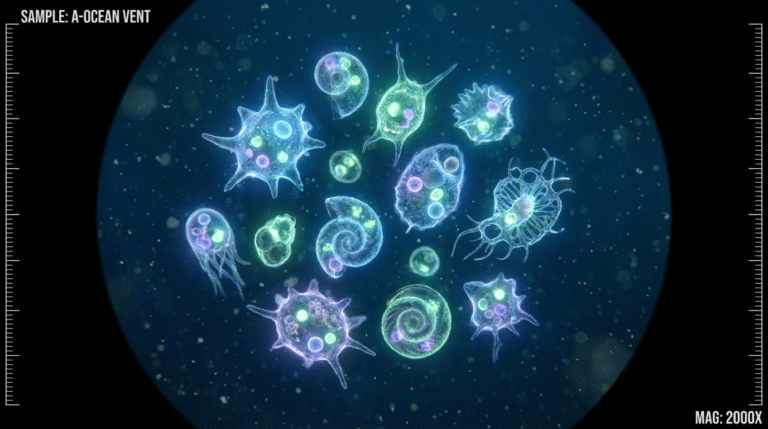
Microscopic structures preserved in rocks can sometimes resemble fossils. But minerals can create branching, layered or cell-like patterns without organisms.
A convincing fossil interpretation therefore needs morphology, chemistry, geological setting and evidence that known physical and chemical processes cannot easily reproduce the feature.
Technological evidence would be different
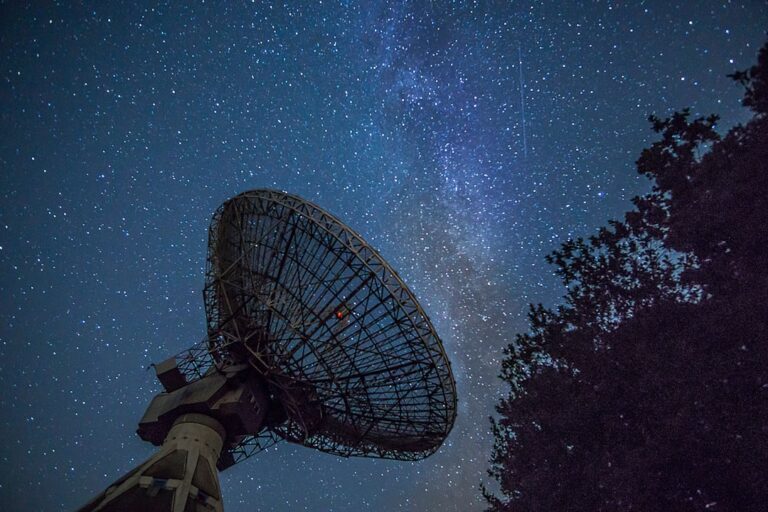
A technosignature would indicate technology rather than life in general. Examples might include a narrow-band electromagnetic signal with properties difficult to explain naturally, or an atmospheric chemical pattern that strongly suggests industrial activity.
Even an apparently artificial signal would require independent confirmation and careful elimination of human interference, instrumental effects and unusual natural sources.
Why Mars is difficult
Mars once had environments with liquid water at its surface, and its rocks preserve evidence of ancient rivers, lakes and chemical alteration. That makes it a major target for astrobiology.
But ancient habitability is not the same as ancient life. Researchers must distinguish conditions that could support organisms from evidence that organisms actually existed.
Why ocean worlds are especially interesting
Europa and Enceladus have strong evidence for subsurface water reservoirs, making them important targets for life searches. Their environments may provide water, chemistry and energy sources that could support microbial ecosystems.
Yet habitability remains a possibility until direct evidence of life is obtained.
Discovery would probably be gradual
Popular culture imagines extraterrestrial life arriving as one dramatic announcement. Science is more likely to produce a sequence of observations: an unusual measurement, a proposed explanation, independent follow-up observations, competing hypotheses and attempts to reproduce the result.
Confidence would increase as independent teams found consistent evidence and alternative explanations became increasingly difficult to sustain.
The standard is high for a reason
Finding life beyond Earth would transform biology and planetary science. Because the claim would be extraordinary, the evidence must be unusually resistant to error and alternative interpretation.
The high standard is not a demand for absolute philosophical certainty. It is a practical demand for evidence that remains persuasive after serious attempts to falsify it.
The search is already changing science
Even before discovering life, astrobiology is forcing researchers to define what life might look like outside Earth’s familiar environment. It also teaches scientists to separate intriguing chemistry from biological chemistry and unusual signals from reliable evidence.
The greatest discovery may eventually begin not with the words “we found life,” but with a much more cautious statement: “we found something that the known non-biological explanations cannot adequately explain.”
What Makes a Clue Scientifically Persuasive?
A possible sign of life is evaluated in context. Researchers ask whether the observation has a plausible biological explanation, whether the environment could support that explanation, and whether known non-biological processes can produce the same result.
This creates a chain of evidence. An atmospheric gas may be interesting, but the case becomes stronger if other measurements support it, the planet’s environment is compatible with biology, and geological or photochemical explanations fail to account for the observation.
False Positives Are Part of the Search
Volcanism, radiation, atmospheric reactions, mineral chemistry and impacts can create unusual compounds or structures. Studying these false positives is therefore essential rather than incidental.
The goal is not to find something strange. It is to find something strange that remains difficult to explain after serious investigation of ordinary natural processes.
Repeated Observations Matter
A single measurement can be affected by calibration problems, transient events, instrumental noise or statistical fluctuations. Repeated observations test whether a signal persists and whether it behaves as expected.
Independent confirmation is even more valuable. If different instruments or research teams detect compatible results, a local technical problem becomes a less satisfying explanation. Extraordinary claims become stronger when they survive independent attempts to reproduce them.
Would Finding a Microorganism Settle the Question?
Directly identifying a living organism would be powerful evidence, but scientists would still need to establish that it was genuinely extraterrestrial rather than contamination introduced by a spacecraft or laboratory.
This is why planetary-protection procedures matter. Samples from another world can be scientifically extraordinary, but the investigation must preserve the distinction between material originating there and material introduced by humans.
What About Intelligent Life?
The search for technological civilizations follows a different route. A candidate radio signal, laser pulse or other technosignature could reveal technology without revealing the organisms that created it.
Here too, artificiality must be demonstrated rather than assumed. Human interference, instrumental effects and unusual natural sources have to be investigated, and a promising signal would require precise follow-up and independent verification.
Why “We Found Life” Would Probably Be a Process
A major discovery would likely pass through detection, verification, characterization, competing explanations and independent replication. That may sound slower than a single dramatic announcement, but the process is what separates a durable discovery from an intriguing anomaly.
Even a confirmed biosignature would open more questions: Is the life microbial or complex? Is it active? How did it originate? Does it share chemistry with terrestrial life? The discovery of life would therefore be the beginning of a much larger scientific story.
Why Context Can Change the Meaning of a Signal
Imagine detecting a molecule associated with life on a distant planet. The molecule itself is only one piece of the puzzle. Scientists would also want to know the planet’s temperature, atmospheric composition, stellar environment and possible geological sources for the same chemistry.
The same observation can therefore have different implications in different environments. A convincing biosignature is not simply a molecule on a list; it is an observation embedded in a physical story that remains difficult to explain without biology.
Contamination Is a Special Problem
When spacecraft investigate another world, scientists must consider whether terrestrial material could have traveled with the mission. A biological-looking signal is meaningful only if researchers can establish where the material came from and whether the observation could have been introduced during construction, travel or analysis.
This is one reason evidence standards are demanding. The goal is not to make discovery impossible. It is to make the eventual claim robust enough that other researchers can examine the evidence and reach the same conclusion.
The Search Could Produce Surprises Before a Final Answer
Even if a candidate signal is eventually explained by a non-biological process, the investigation can still change science. An unfamiliar chemical pathway, unexpected geological process or new atmospheric behavior can reveal that another world works differently from our assumptions.
That is why the search for life is valuable even before the ultimate question is answered. Every serious candidate forces scientists to improve their understanding of what living systems could look like—and what nature can imitate.
Curiosity Publication by Aadvik Agastya
Explore More on Quropedia
- The Search for Alien Life Is Becoming a Search for Better Questions
- Biosignatures: What Evidence Could Reveal Life Beyond Earth?
- Technosignatures: What Would an Alien Civilization Actually Look Like?
Sources & further reading
Have a question about this topic?
Join fellow Qurons on the Quron Forum to ask questions, challenge ideas, share discoveries and explore further.
Discuss on Quron Forum