The search for alien life has traditionally been framed as a search for answers: Is anyone out there? Did someone send a signal? Can we find a planet like Earth?
Modern astrobiology reveals a harder problem. Before we can find an answer, we need to know what question can actually be tested.
“Life” is harder to define than it sounds
Earth gives scientists one confirmed example of life, but one example is not enough to establish which features are universal. Terrestrial organisms use familiar chemistry, genetic information, metabolism and cellular organization. Alien life could potentially follow a different evolutionary history.
This creates a methodological problem. If researchers search only for things that resemble Earth biology, they may be looking for one particular solution rather than life itself.
Finding water is not finding life
Liquid water is important because it is an excellent solvent and central to known biology. That makes water a powerful guide for selecting targets.
But a potentially habitable environment can remain lifeless. Conversely, environments that look hostile at the surface may contain subsurface habitats. Water is therefore evidence about habitability, not proof of biology.
Habitability is a chain of conditions
Researchers increasingly think in terms of environments rather than a single “Earth-like” property. A world may need a solvent, energy source, useful chemical elements and enough stability for complex chemistry to persist.
Mars, Europa and Enceladus illustrate different possibilities. Mars preserves evidence of ancient water and potentially habitable environments. Europa and Enceladus may contain subsurface oceans interacting with rock and other chemical sources of energy.
Biosignatures are clues, not automatic proof
A biosignature is an observable feature that could be associated with life. Examples may involve atmospheric gases, mineral patterns, organic chemistry or microscopic structures.
The problem is that biology does not have a monopoly on unusual chemistry. Oxygen can be produced without photosynthesis. Organic molecules can form without organisms. Minerals can create shapes that resemble fossils.
False positives are part of good science
A false positive is not simply a failure. It can reveal an overlooked natural process and make the next search more sophisticated.
Suppose an atmospheric gas appears promising. Researchers then ask whether stellar radiation, volcanism, surface chemistry or atmospheric escape could produce the same signal. Every plausible abiotic explanation that survives testing becomes part of the evidence assessment.
Technosignatures ask a different question
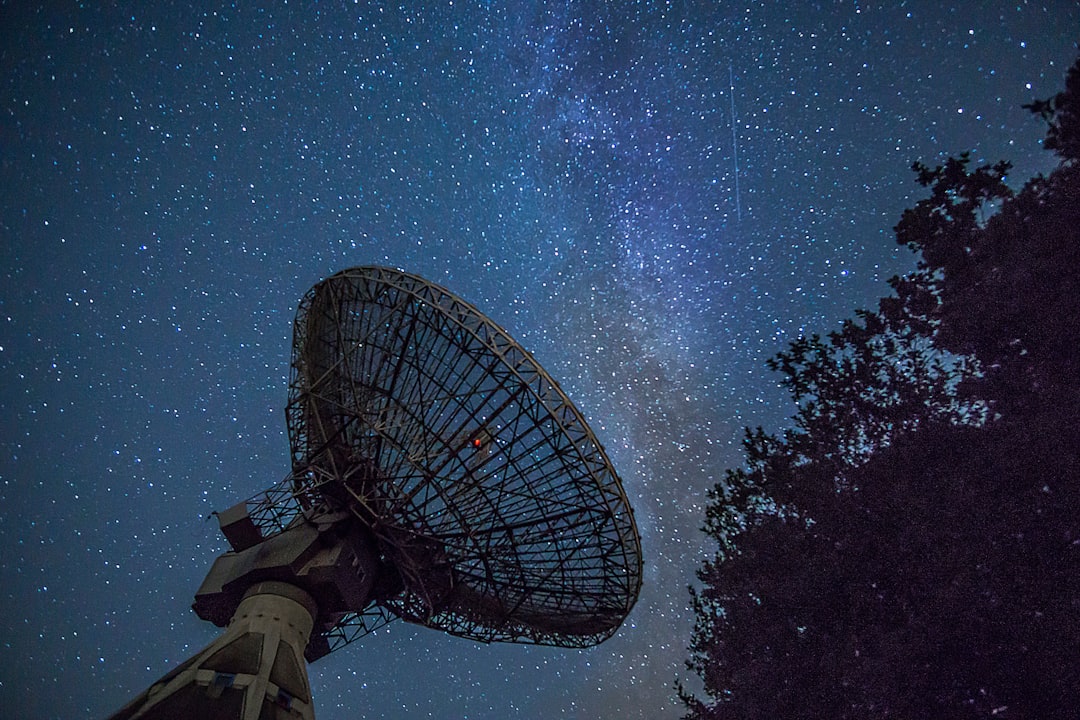
Not every search for extraterrestrial intelligence requires finding biology first. A technosignature would be evidence of technology or technological activity.
Radio observations, unusual electromagnetic signals and possible atmospheric industrial compounds are examples of broad technosignature concepts. But unusual does not mean artificial. Human interference, instruments and natural astrophysical sources must be ruled out.
Why the search is becoming more sophisticated
Modern telescopes can study exoplanet atmospheres, spacecraft can analyze planetary surfaces, and laboratory experiments can test how non-biological chemistry produces candidate biosignatures.
Instead of asking one enormous question—“Are we alone?”—scientists can divide the problem into smaller, testable questions.
What would strong evidence look like?
The strongest discovery would probably involve independent lines of evidence that converge. A candidate gas might be accompanied by another chemical imbalance, environmental conditions compatible with biology and repeated observations that match predictions.
The precise evidence would depend on the environment. There is no universal checklist that can be applied identically to a planet, an icy moon and a distant atmosphere.
What if alien life is unlike anything we expect?
This is one of the deepest challenges. The first alien organism may not fit familiar categories. It might live underground, beneath ice or in a chemical environment very different from Earth’s surface.
That possibility is why astrobiology combines biology with planetary science, chemistry, geology and atmospheric physics.
The search is also a search for better questions
The universe does not owe us an easy-to-recognize signal. The more scientists learn about planets and chemistry, the more carefully they can define what observations would actually change our minds.
Perhaps the most important step toward discovering life beyond Earth is therefore not building a bigger telescope. It is learning exactly what evidence would distinguish life from everything that can imitate it.
What Does It Actually Mean to Search for Life?
“Searching for alien life” is not one experiment. Scientists can search for environments where life could exist, chemical signatures associated with biology, structures that might preserve ancient organisms, or technological signals from intelligent civilizations. Each target requires a different evidentiary standard.
Mars: Ancient Habitability Is Not Ancient Life
Mars preserves river valleys, lake deposits and minerals formed in water, making it an important target for astrobiology. But evidence that an environment could support life is different from evidence that life actually existed there.
That distinction is central to the entire field. A promising environment narrows the search; it does not settle the biological question.
Ocean Worlds Change the Search
Europa and Enceladus are compelling for a different reason. Evidence points to subsurface water reservoirs, while their interiors may provide chemical ingredients and energy sources relevant to habitability.
Because those environments are hidden beneath ice, future investigations may depend on remote sensing, spacecraft measurements and eventually more direct sampling. Again, the goal is not merely to find water but to establish whether biology leaves a detectable trace.
Exoplanets Offer a Different Kind of Evidence
For planets around other stars, telescopes can sometimes analyze starlight passing through an atmosphere. Molecules such as oxygen, methane or other compounds can become scientifically interesting when considered alongside the planet’s temperature, atmosphere, star and geological context.
No single molecule automatically proves life. Stellar activity, atmospheric chemistry, clouds and surface processes can produce misleading signals. A credible biosignature would likely require multiple observations and a strong case against plausible non-biological explanations.
What Would Convince Scientists?
The strongest discovery would likely involve independent lines of evidence converging on the same explanation. Researchers would want to rule out contamination, instrumental artifacts, statistical fluctuations and known abiotic chemistry.
This is why confirmation can take time. The scientific process deliberately tries to break an exciting explanation before accepting it. If the evidence survives those attempts, confidence increases.
Life May Not Look Like Life on Earth
Earth provides the only confirmed example of life, so scientists risk making hidden assumptions when they search only for familiar biology. An organism elsewhere could use a different chemistry, energy source or environmental strategy.
Astrobiology therefore combines biology with geology, chemistry, planetary science and atmospheric physics. The search is becoming less about spotting something that looks like a terrestrial organism and more about identifying patterns that are difficult to explain without biology.
The Search Is Becoming More Sophisticated
Modern astrobiology increasingly builds an evidence chain: environment, chemistry, preservation, measurement, replication and independent confirmation. The deeper question is not simply whether life exists elsewhere, but how confidently an observation can distinguish life from a planet that merely has the right conditions for life.
Why Scientists Separate Habitability From Detectability
A planet can be biologically interesting without producing a signal that telescopes or spacecraft can easily detect. Life might exist in a protected subsurface environment, while the atmosphere above it shows little obvious evidence. Conversely, an atmosphere can contain an intriguing chemical signature even when no organism is present.
This creates two separate scientific questions: could life exist there, and could its presence be detected from where we are? The best targets are not necessarily the worlds that look most Earth-like. They are worlds where a plausible biological process could leave an observable trace.
Why Different Missions Answer Different Questions
Orbiters, landers, rovers, telescopes and sample-return missions each provide different kinds of evidence. An orbiter can survey a planet broadly, a rover can investigate local geology, and a laboratory on Earth can examine a returned sample at far greater resolution.
The search for life therefore works as a chain of investigations rather than a single instrument waiting for a yes-or-no signal. Each observation narrows possibilities, tests hypotheses and helps determine what should be investigated next.
Curiosity Publication by Aadvik Agastya
Explore More on Quropedia
- What Would Count as Evidence of Alien Life?
- Biosignatures: What Evidence Could Reveal Life Beyond Earth?
- Technosignatures: What Would an Alien Civilization Actually Look Like?
Sources & further reading
Have a question about this topic?
Join fellow Qurons on the Quron Forum to ask questions, challenge ideas, share discoveries and explore further.
Discuss on Quron Forum