In a laboratory, a sliver of wood can contain a date that no medieval chronicler ever wrote down. At L’Anse aux Meadows, on the northern tip of Newfoundland, archaeologists already knew that Norse voyagers had built turf-walled structures, worked iron and repaired boats centuries before Columbus. What they could not establish was a single indisputable calendar year when those visitors were there. The solution came from a violent event far beyond Earth—and from three pieces of timber whose outermost growth rings survived.
In a 2021 study published in Nature, researchers dated the cutting of all three pieces of wood to 1021 CE. They did not read a date scratched into the wood. They found a distinctive radiocarbon signal left by an extraordinary cosmic-particle event in 993 CE, then counted the annual rings from that marker to the tree’s bark edge. A burst of radiation had become a timestamp for human history.
That achievement raises a larger question: how can an invisible event in the sky mark forests across continents, survive for a millennium, and then help archaeologists settle an argument about the past? The answer also reveals why scientists remain cautious about what such ancient signals can—and cannot—tell us about solar storms.
The archaeological mystery was not whether Norse people reached America
The Newfoundland site was identified in 1960 through the work of Helge and Anne Stine Ingstad. Excavations revealed structures built with timber and turf, a forge and objects consistent with Norse woodworking and ironworking. UNESCO’s description of the World Heritage site identifies eight timber-framed turf structures, including dwellings and workshops. Parks Canada’s management plan describes evidence of iron smelting, nails and ship repair.
The site had therefore already overturned a simple version of the Atlantic-crossing story. Indigenous peoples had lived in North America for millennia; the Norse were not the first humans there. Nor was the question whether European sailors ever crossed the ocean before Columbus. The unresolved issue was when the Norse activity occurred, and whether a date could be fixed more tightly than the broad range suggested by archaeology and ordinary radiocarbon measurements.
The Icelandic Vinland sagas were written down long after the voyages they describe. They preserve important historical traditions, but are not contemporary logbooks. Material evidence and a calendar date would provide a different kind of anchor. That is where the trees entered the investigation.
Why ordinary radiocarbon dating leaves a blurred answer
Living plants take in carbon through photosynthesis. A tiny fraction is radioactive carbon-14, produced naturally when energetic particles interact with the atmosphere. Once a plant stops exchanging carbon with its surroundings, its carbon-14 gradually decays. Measuring the remaining fraction helps estimate when the material stopped being alive.
But a radiocarbon result is not a year printed on a label. The atmosphere’s carbon-14 concentration has changed over time, so scientists compare measurements against calibration curves built from independently dated materials. A measurement can correspond to a range of possible calendar dates. Contamination, sample history and the age of the sampled wood within a tree can introduce additional uncertainty.
For a settlement known broadly to belong to the eleventh century, a date range spanning decades is useful but cannot settle whether a particular tree was felled in 1005, 1021 or 1035. Even a beautifully preserved beam may have grown for many years before somebody cut it. The ideal evidence would combine an unmistakable calendar marker inside the tree with the last growth ring it formed.
The unexpected fingerprint: a sudden change in the atmosphere
In 2012, Fusa Miyake and colleagues reported something striking in annually resolved measurements of Japanese cedar rings: carbon-14 rose abruptly between 774 and 775 CE. Their Nature paper described an increase of about 12 parts per thousand in the measured radiocarbon signal—far beyond the variation they expected from ordinary solar modulation. It was evidence of an unusual increase in the production of cosmogenic isotopes, not a photograph of the event that produced it.
Researchers subsequently identified other abrupt radiocarbon excursions, including one around 993 CE. These signatures are now often called Miyake events. The mechanism matters: incoming energetic particles generate nuclear reactions in the atmosphere; some of the resulting carbon-14 joins atmospheric carbon dioxide; trees incorporate that carbon into wood as they grow. The tree is not registering sunlight the way a camera does. It is registering a change in the isotope composition of the carbon it absorbed.
Imagine an entire year’s paper supply receiving a microscopic but detectable watermark. The watermark is not visible on the surface, and every document looks ordinary until a laboratory measures it. If the watermark occurs in materials produced around the same time in distant places, it can align chronologies that were previously uncertain. A cosmogenic isotope spike plays a similar role for suitable annual tree-ring sequences.
A 2018 Nature Communications study traced globally coherent signatures associated with the 774 and 993 CE events across tree-ring records from five continents. That global reach is precisely what makes these markers so powerful for dating: the researcher does not need to find a particular historical inscription or a local volcanic ash layer.
How three pieces of wood produced the year 1021
The Newfoundland research team examined three wooden objects recovered from the Norse site. Each bore evidence of modification with metal tools, and each retained the outer edge of the tree, including the final growth ring. That combination was crucial. The objects were connected to human work at the site, and the researchers could count to the actual end of the tree’s life rather than to an arbitrary inner ring.
They measured radiocarbon across annual rings to identify the known atmospheric anomaly around 993 CE. From that reference point, they counted 28 subsequent growth rings to the bark edge. The result was the same in all three samples: the trees had been cut in 1021 CE. The convergence matters more than a single dramatic number. Independent samples reduced the chance that an unusual piece of old wood or an ambiguous ring sequence had misled the team.
One subtlety is easy to miss: 1021 is a securely dated year of Norse activity, not a proved year of first arrival. People may have reached the site earlier and remained for an interval. The wood does not say who first stepped ashore, how many voyages took place or how long every visitor stayed. The study supplies an unusually firm chronological point inside a larger, still partly uncertain history.
It also does not mean a solar storm struck Newfoundland in 1021. The atmospheric marker was from 993; the timber kept growing for 28 more annual rings. The event in the sky was the reference clock, not the archaeological activity itself.
Why the bark edge is almost as important as the radiation spike
Suppose a builder reused a 200-year-old beam. Radiocarbon measured in the center might indicate a much earlier date than the construction. Archaeologists call this the old-wood problem. A log without its outermost rings can also conceal years or decades between the sampled wood and the cutting event.
The Newfoundland samples were unusually helpful because their outer edges survived. The researchers considered whether the timber might have drifted to the site or been scavenged long after the trees died. The Nature paper argues that the preserved bark-edge geometry, the metal-tool modifications and the identical cutting year across the three objects make those alternatives highly unlikely. This is an inference from multiple observations, not an assumption that every ancient timber automatically dates a human activity.
There is another boundary worth preserving. The samples date cutting and support Norse presence in that year; they do not independently date the construction of every building at the settlement. Nor do they transform the later sagas into word-for-word eyewitness records. Good historical science often produces a precise answer to one question while leaving the more colourful questions unresolved.
Are Miyake events simply gigantic solar flares?
Extreme solar energetic-particle events are a leading explanation for the strongest radiocarbon excursions, and corresponding isotope signals in polar ice can strengthen that interpretation. But the precise physics of individual ancient events is still studied. It is too confident to translate every radiocarbon spike into a fully reconstructed solar flare with a known strength, duration and impact on technology.
The distinction is especially important because we do not observe the ancient particle flux directly. The atmosphere, ocean, biosphere and different tree species process carbon on different timescales. What a laboratory measures in wood is a filtered record of atmospheric production. Reconstructing the original event requires models and comparisons among independent archives.
A 2025 study in Global Biogeochemical Cycles investigated how tree physiology and carbon allocation influence the 774 and 993 CE signals. It found that different tree types can change how precisely the event’s timing and duration are inferred, even when a broad marker is recognisable. This is not a refutation of the Newfoundland date; it is a warning against treating every spike shape as a direct, unmodified recording of the sky.
More recently, a 2026 modelling study in Journal of Geophysical Research: Space Physics examined whether background solar-cycle and cosmic-ray variability could distort or imitate weaker event signatures. Its concern is primarily the identification of smaller candidate events, not the existence of the well-established large anomalies. In other words, the more researchers learn, the more carefully they separate a reliable chronological fingerprint from a speculative reconstruction of the original storm.
A time machine for archaeology—with conditions
The method is most effective when several conditions line up: an independently established global isotope marker, a sequence of individual annual rings, sufficient material for reliable measurements and an archaeological context that links the sample to a meaningful human action. Missing bark, reused timber or disturbed layers can turn an apparent exact date into a misleading one.
Consider two hypothetical finds. A wooden doorpost from a well-documented building retains its outermost ring, and a recognisable event marker lies 18 rings inside it. If the ring sequence and context are secure, the post can potentially yield an exact felling year. A charcoal fragment from a hearth, by contrast, may contain only a small section of an old tree. Even if it carries the same marker, the number of missing outer rings is unknown; the date of the fire remains less precise. The laboratory signal is only one part of the historical argument.
This also explains why the method matters beyond Viking history. Where suitable preserved timber exists, cosmogenic markers can tighten chronologies for settlements, buildings, trade routes and environmental changes. In places with strong traditions of timber architecture, annual ring sequences can link local historical timelines to events measured far away. The technique does not replace inscriptions, stratigraphy or written records; it gives them a potentially sharper clock.
What the discovery changes—and what it leaves untouched
For readers in India, the comparison is instructive. A securely dated inscription may identify a ruler’s regnal year; an archaeological layer may establish which objects are older than others; a radiocarbon spike may attach a surviving piece of wood to a single calendar year. These are different kinds of evidence. The most persuasive reconstruction emerges when they agree, not when one is promoted as a universal solution.
The Newfoundland case also resists a misleading triumphalist narrative. The Americas were already inhabited by diverse Indigenous societies with their own histories and knowledge. The Norse evidence concerns an early European crossing and an archaeologically documented camp, not the ‘discovery’ of an empty continent. The scientific breakthrough is the precision of the dating, not the erasure of earlier human presence.
For a related look at how our star affects modern technology, see QuroPedia’s explainer on solar flares and technological disruption. The distinction between an ancient isotope signal and a directly monitored modern solar event is exactly why the two stories belong together.
The final surprise: the past can record an event no one knew to look for
The people cutting timber in Newfoundland in 1021 did not know that trees had absorbed a distinctive atmospheric signal 28 years earlier. Fusa Miyake’s team did not set out in 2012 to date Norse woodworking across the Atlantic. Yet the two discoveries connected through the annual growth of trees.
That is the deeper lesson. Scientific evidence can travel between disciplines in ways its original investigators never anticipated. An anomaly in Japanese cedar became a global chronological reference; a piece of Newfoundland timber became a more precise historical witness. The impressive part is not that a cosmic storm ‘told’ archaeologists a story. It is that researchers learned exactly which narrow question the physical record could answer—and refused to make it answer more.
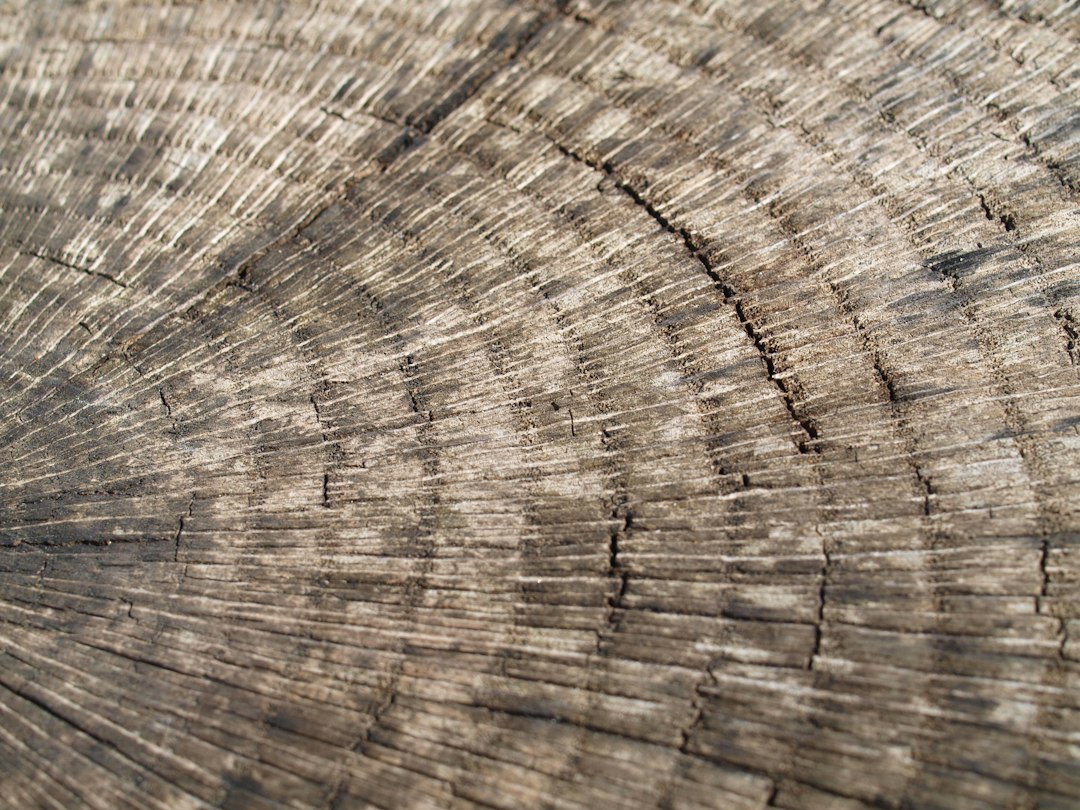
Featured image: an illustrative photograph of tree rings by Diane Helentjaris / Unsplash. It does not show timber examined in the Newfoundland study.
Sources and further reading
- Miyake, F. et al. (2012), “A signature of cosmic-ray increase in ad 774–775 from tree rings in Japan,” Nature — initial annual-ring discovery.
- Büntgen, U. et al. (2018), “Tree rings reveal globally coherent signature of cosmogenic radiocarbon events in 774 and 993 CE,” Nature Communications — intercontinental corroboration.
- Kuitems, M. et al. (2021 online; 2022 issue), “Evidence for European presence in the Americas in ad 1021,” Nature — three Newfoundland wood samples and cutting-year result.
- UNESCO World Heritage Centre, L’Anse aux Meadows and Parks Canada site management plan — archaeological setting and heritage interpretation.
- Walker, M. R. et al. (2025), “Reconstructing Annual Δ14C During Miyake Events Using Deciduous and Evergreen Trees,” Global Biogeochemical Cycles — tree physiology and signal uncertainty.
- Usoskin, I. et al. (2026), “Can Solar Cyclic Variability Mimic Extreme Solar Particle (Miyake) Events in Radiocarbon?” JGR: Space Physics — limits for identifying weaker signals.
Have a question about this topic?
Join fellow Qurons on the Quron Forum to ask questions, challenge ideas, share discoveries and explore further.
Discuss on Quron Forum