There is a phrase that has confused generations of Moon-watchers: the “dark side of the Moon.”
It sounds as if one half of the Moon permanently lives in darkness.
It does not.
The hemisphere we usually cannot see from Earth is better called the far side. It receives sunlight just as the near side does. The reason we normally see the same lunar hemisphere is a remarkable consequence of tidal evolution: the Moon is tidally locked to Earth.
Far side does not mean dark side
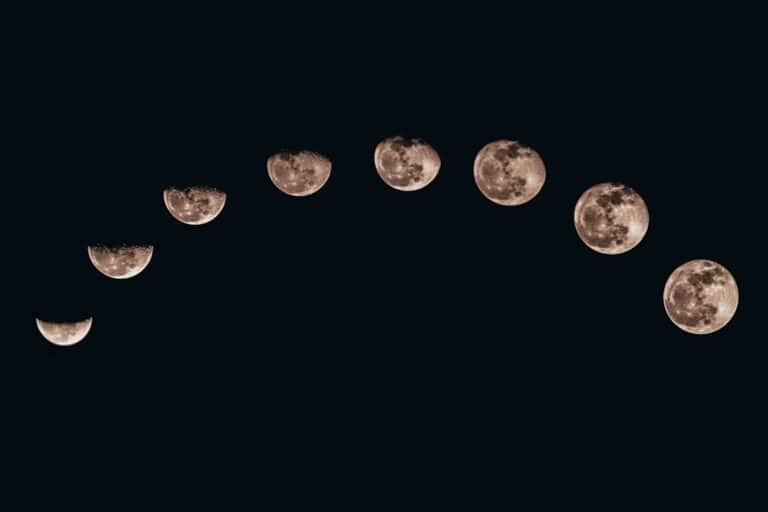
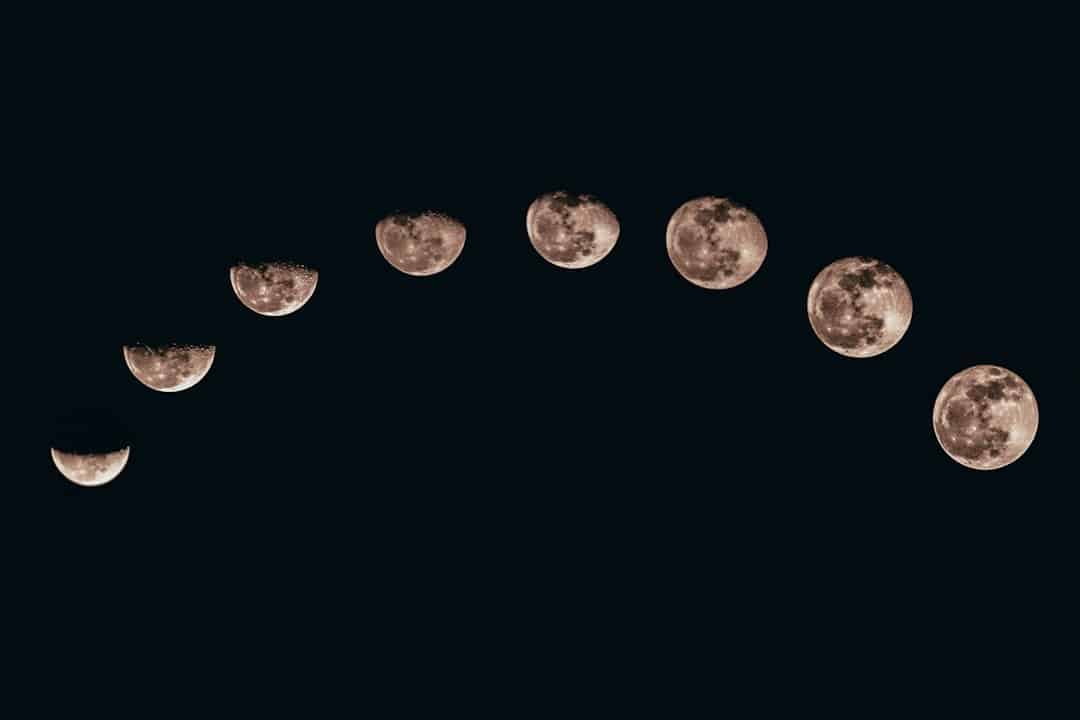
At any moment, roughly half of the Moon is illuminated by the Sun.
As the Moon orbits Earth, the illuminated portion we see changes, producing the lunar phases.
When the far side is facing the Sun, it can be in full daylight. When it is facing away from the Sun, it experiences lunar night.
The same is true for the near side.
Why do we always see nearly the same hemisphere?
The Moon rotates once on its axis in approximately the same time that it completes one orbit around Earth.
This is called synchronous rotation or tidal locking.
It can seem as if the Moon does not rotate because the same face remains pointed toward Earth. But that is exactly what rotation synchronized with orbital motion produces.
Imagine walking around a table while continuously turning your body so that you always face the table. You are rotating even though the same side of you remains directed toward the centre.
How did the Moon become tidally locked?
Early in its history, the Moon probably rotated at a different rate.
Earth’s gravity raised tidal bulges within the Moon. Because the Moon is not perfectly rigid, these deformations dissipated energy over immense periods of time.
That energy loss gradually changed the Moon’s rotation until one rotation took roughly the same amount of time as one orbit.
Tidal locking is therefore not an arbitrary coincidence. It is the long-term outcome of gravitational interaction and energy dissipation.
We can actually see more than half of the Moon
There is a subtle twist.
Although one hemisphere generally faces Earth, the Moon’s orbital speed and rotational speed are not perfectly uniform, and its orbit is slightly inclined.
This produces libration, an apparent wobble that allows observers on Earth to see slightly around the edges of the lunar surface over time.
Across repeated observations, about 59 percent of the Moon’s surface can be seen from Earth, rather than exactly 50 percent.
What did the far side look like when spacecraft first saw it?
Before spacecraft, no human observer had directly photographed the central regions of the far side.
A small amount could be glimpsed around the edges because of libration, but most remained unknown.
In 1959, the Soviet Luna 3 spacecraft returned the first photographs of the far side.
The images were crude by modern standards, but they revealed something unexpected: the far side looked substantially different from the familiar hemisphere.
The far side has more craters and fewer maria
From Earth, the Moon’s near side is dominated by dark plains known as maria, created when ancient impact basins were later filled by volcanic basalt.
The far side has a much higher density of craters and far fewer large maria.
This asymmetry is one of lunar science’s enduring questions.
Why are there fewer dark plains on the far side?
One important clue is that the lunar crust is generally thicker on the far side.
Large impacts on the Moon excavated enormous basins. On the near side, some basins penetrated deeply enough or fractured the crust in ways that allowed basaltic lava to rise and fill them.
The far side’s thicker crust made similar volcanic flooding less common.
But crustal thickness is not the whole explanation. Scientists also investigate differences in heat-producing elements, thermal evolution and the Moon’s early history.
The Moon is not perfectly symmetrical
The near and far sides differ in more than crater density.
They have different crustal thicknesses, distributions of radioactive elements and volcanic histories.
These differences preserve clues about how the Moon formed and cooled.
Because the Moon has no active plate tectonics like Earth, some ancient differences remain preserved for billions of years.
Why the far side is scientifically valuable
The far side has a special advantage for radio astronomy.
Earth is surrounded by radio transmissions from communications systems, satellites and other technology. The Moon can block those signals.
A radio telescope on the far side could therefore observe some low-frequency wavelengths in an exceptionally quiet radio environment.
Such observations could potentially probe phenomena from the early universe that are difficult to study from Earth.
Could the far side be a better observatory?
Potentially, yes.
Its radio quietness is particularly interesting for low-frequency astronomy. A lunar observatory would not automatically solve every problem—spacecraft operations, power, communication and construction would still be difficult—but the environment offers a unique scientific advantage.
The Moon could therefore serve not just as an object of study but as an astronomical platform.
Is the far side colder?
Not simply because it is the far side.
Every location on the Moon experiences roughly two-week periods of lunar daylight and lunar night.
Surface temperatures can swing dramatically between those conditions because the Moon has almost no atmosphere to distribute heat.
A location on the near side can therefore be just as cold during lunar night as a location on the far side.
Is there a permanent dark side?
Not on the ordinary lunar surface.
There are permanently shadowed regions near the lunar poles where sunlight never reaches the floors of some deep craters. These are real regions of persistent darkness.
But they are not the same thing as the Moon’s far side.
“Far side” is a geographical description. “Permanently shadowed region” describes a lighting condition.
Why the far side became important for exploration
Spacecraft have now mapped the entire lunar surface at high resolution.
Modern missions can measure topography, mineral composition, radiation environment and other properties that were impossible to study from Earth.
The far side has also become important for mission planning because of its distinctive terrain and its potential value for future scientific instruments.
What about the Chinese Chang’e missions?
China’s lunar exploration programme has demonstrated the practical importance of the far side.
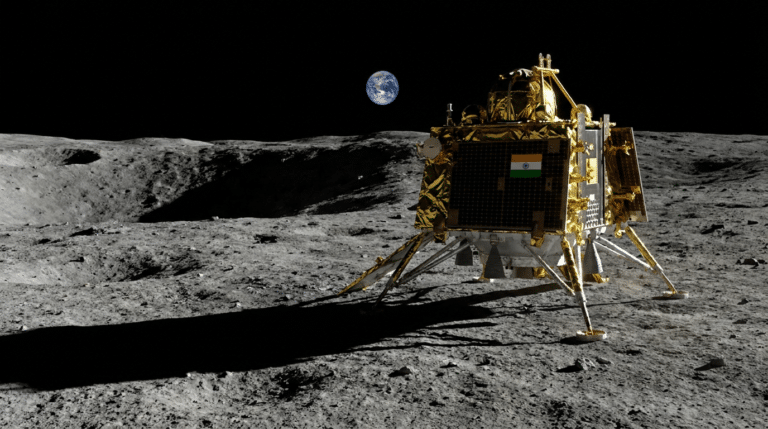
The Chang’e 4 mission achieved the first soft landing on the lunar far side in 2019.
Because the Moon blocks direct radio communication between a far-side lander and Earth, China used the Queqiao relay satellite to maintain communications.
The mission demonstrated one of the fundamental engineering challenges of working on the far side: the very feature that makes it scientifically attractive also makes direct communication difficult.
Does the far side contain anything mysterious?
It contains mysteries in the scientific sense, but not evidence that it is a hidden civilization or an artificial construction.
Its unusual geology, ancient impact history and crustal asymmetry are genuine research questions.
Science does not need the far side to contain something supernatural to make it extraordinary.
Why the phrase “dark side” survived
The phrase is evocative.
It suggests a hidden hemisphere that humanity could never see, which made it perfect for songs, stories and science fiction.
But the scientific reality is more interesting.
The far side is illuminated by the same Sun, has its own geological history and contains terrain that was completely unknown to humanity until the space age.
The Moon was never hiding in darkness
For centuries, the far side represented a genuine physical unknown.
Today we have mapped it, photographed it, landed spacecraft on it and begun considering whether its radio environment could help us study the universe.
The most useful correction is therefore simple:
The Moon does not have a dark side.
It has a near side, a far side, days, nights, permanently shadowed polar regions and a complex history shaped by gravity, impacts and volcanic activity.
The part that was once hidden is no longer mysterious because it is dark.
It is fascinating because it is different.
Tidal locking is a story about energy, not stillness
It is tempting to imagine tidal locking as though Earth simply “held” one side of the Moon in place. The actual process is more physical.
Gravity produces tidal deformation, and internal friction dissipates mechanical energy as heat. Over enormous spans of time, this interaction changes rotational motion. The Moon eventually reached a state in which its rotation period matched its orbital period.
The important point is that the Moon is still moving. It spins, orbits Earth and travels through space. Tidal locking is a stable relationship between two motions, not the absence of motion.
The near side and far side were not born identical
The difference between the two hemispheres is one of the most important clues to the Moon’s early history.
The near side has extensive mare deposits, while the far side is dominated by older, more heavily cratered highlands. The crust is generally thicker on the far side, and the distribution of heat-producing elements is also asymmetric.
Scientists continue to debate how all of these differences developed together. Explanations involve the Moon’s early thermal evolution, giant impacts, crustal formation and the distribution of radioactive elements. There is not one universally sufficient explanation for every observed asymmetry.
The far side was a genuine scientific unknown
Before the space age, the far side was inaccessible to direct observation from Earth. Astronomers could infer some of its properties from gravitational measurements and the small amount of surface visible through libration, but most of the hemisphere was physically hidden.
Luna 3’s 1959 photographs changed that. Their quality was poor by modern standards, yet they immediately revealed that the far side did not simply mirror the familiar face.
Later orbiters transformed those first glimpses into detailed global maps, allowing scientists to connect topography, mineral composition and impact history across the entire Moon.
Why the far side is quieter in radio wavelengths
Earth’s technological environment produces radio interference across many frequencies. Even when astronomers carefully choose observing sites, satellites, aircraft, communications systems and terrestrial transmitters can complicate measurements.
The Moon’s far side has a natural shield: the bulk of the Moon blocks many radio signals originating from Earth.
This makes the far side especially interesting for low-frequency radio astronomy. Such observations could potentially investigate periods of cosmic history that are difficult to observe from the ground because Earth’s ionosphere and human radio activity interfere with the relevant signals.
But a lunar radio telescope would be difficult
Scientific advantage does not automatically mean engineering simplicity.
A far-side observatory would need power through long lunar nights or an alternative energy strategy, reliable communications through relay infrastructure, protection from the harsh surface environment and methods for deploying or constructing instruments.
In other words, the far side offers an unusually quiet radio environment precisely because it is isolated. The same isolation creates operational problems.
Permanent darkness is a different phenomenon
The confusion between the far side and permanent darkness is especially persistent because both ideas involve something hidden from ordinary view.
A permanently shadowed region is created by local topography and the geometry of sunlight, particularly near the lunar poles. Some crater floors can remain in shadow for extremely long periods.
These regions are scientifically important because extremely cold conditions can preserve volatile substances, including water ice. They are therefore different from the far side both geographically and physically.
What the far side tells us about lunar history
The far side is effectively an archive of ancient processes. Its heavily cratered terrain preserves evidence of impacts that occurred billions of years ago, while its crustal structure records how the early Moon cooled and differentiated.
Because the Moon lacks Earth’s active plate-tectonic recycling, ancient surfaces can remain recognizable for extraordinary lengths of time. The far side is therefore not merely the “back” of the Moon. It is one of the best places to investigate the early history of a rocky planetary body.
The deeper mystery is why the Moon has two faces
The most interesting question is not why we cannot see the far side from Earth. Tidal locking explains that.
The deeper question is why the two hemispheres developed such different geological characters.
Every crater, mare and variation in crustal composition is part of that history. Future missions can test competing explanations by measuring rock composition, heat flow, topography and the distribution of elements across the lunar surface.
The phrase “dark side” makes the Moon sound as though it has a hidden half. The scientific reality is stranger: the hidden hemisphere is illuminated, active in the sense of geological history, and full of evidence about the Moon’s earliest chapters.
Curiosity Publication by Aadvik Agastya
Sources & further reading
Have a question about this topic?
Join fellow Qurons on the Quron Forum to ask questions, challenge ideas, share discoveries and explore further.
Discuss on Quron Forum