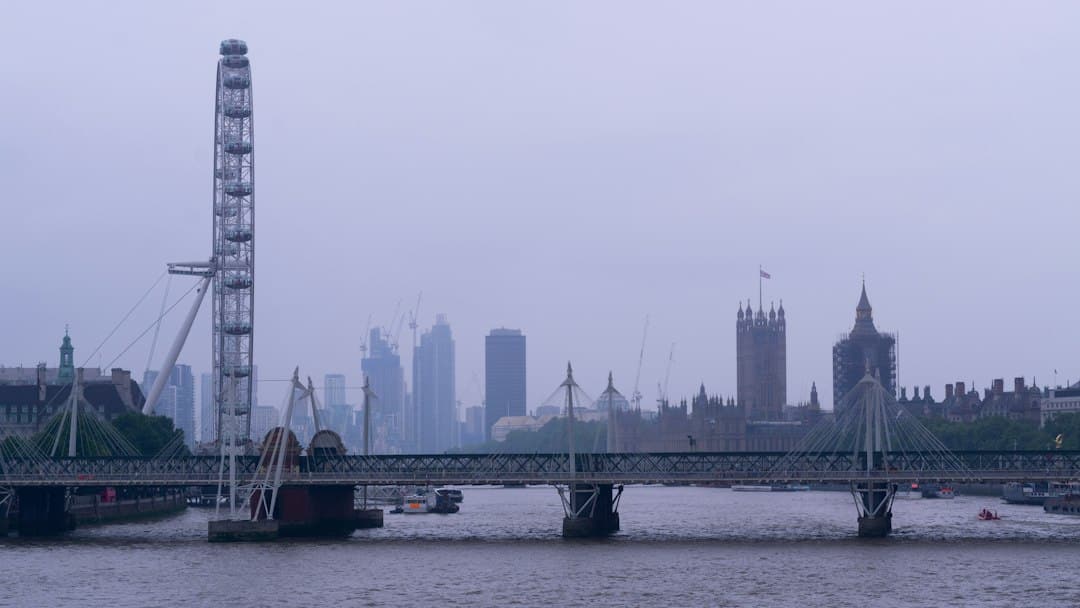
In December 1952, London disappeared beneath a thick blanket of polluted air.
Visibility collapsed. Streets became difficult to navigate. People struggled to breathe. Hospitals and doctors dealt with a surge in illness, and thousands of excess deaths were eventually associated with the episode.
The event became known as the Great Smog of 1952.
It was not simply a very foggy week.
It was a demonstration of how human emissions, atmospheric physics and weather can combine to turn ordinary pollution into a public-health disaster.
London already had a smoke problem
Long before December 1952, London had a serious air-pollution burden.
Coal was central to everyday life. Households burned coal for heating, industries depended on it, and power generation also produced combustion emissions.
Coal burning releases a mixture of pollutants, including particulate matter and sulfur dioxide. The exact composition depends on the fuel and combustion conditions.
Under ordinary weather conditions, winds and atmospheric turbulence help dilute and transport pollutants.
London’s pollution could therefore be severe without producing a catastrophe every day.
Then the atmosphere stopped dispersing it
In early December 1952, a period of cold weather encouraged increased coal burning.
At the same time, a persistent high-pressure weather pattern contributed to very stable atmospheric conditions.
A temperature inversion developed.
Normally, air near the ground can warm and rise, allowing pollutants to mix vertically. During an inversion, relatively warmer air sits above colder air near the surface, suppressing vertical movement.
The result was effectively a lid over the city.
Pollution released at ground level accumulated near the people producing and breathing it.
Why the fog became so dense
London was already prone to winter fog because of its climate and geography.
During the Great Smog, however, the fog interacted with a large pollution load.
Smoke particles provided surfaces on which atmospheric chemical processes could occur, while sulfur dioxide and other combustion products contributed to the chemical complexity of the polluted air.
The result was a dense mixture of moisture, particles and gaseous pollutants that persisted because the atmosphere was unable to disperse it effectively.
It was more than “fog”
The word smog combines the ideas of smoke and fog, and the distinction matters.
Ordinary fog consists primarily of tiny water droplets suspended in air.
The Great Smog contained those droplets but also large quantities of combustion-related pollution.
Modern understanding of air pollution emphasizes that the health effects of a polluted atmosphere depend not only on the visibility of the air but on the concentration, size and chemical properties of the pollutants people inhale.
Why sulfur dioxide mattered
Coal combustion can release sulfur dioxide into the atmosphere.
Sulfur dioxide irritates the respiratory system and can contribute to the formation of secondary particulate pollution and acidic compounds through atmospheric chemistry.
Under stagnant, humid conditions, such processes can increase the burden of harmful pollution near the ground.
The Great Smog therefore involved an interaction between emissions and atmospheric chemistry rather than a single poisonous substance.
Why particles are dangerous
Airborne particles differ in size.
Some larger particles are filtered relatively efficiently by the upper respiratory system. Smaller particles can penetrate deeper into the lungs.
Fine particulate pollution is associated with respiratory and cardiovascular harm because particles and their associated chemicals can trigger inflammation and other physiological responses.
During an extreme pollution episode, exposure can become especially dangerous for people whose respiratory or cardiovascular systems are already vulnerable.
Who was most at risk?
Older adults, young children and people with pre-existing respiratory or cardiovascular conditions can be particularly vulnerable to severe air pollution.
But an extreme episode can affect much broader sections of the population.
Exposure depends on where people live, how much time they spend outdoors, building conditions, occupation and the concentration of pollutants in the air they breathe.
What did people experience?
Contemporary accounts describe extraordinarily poor visibility.
Transport systems were disrupted. People struggled to move through the city, and some indoor environments were also affected because the pollution entered buildings.
The most serious consequence was health.
Respiratory symptoms increased, and mortality rose substantially during and after the episode.
How many people died?
The exact number depends on how researchers define the period and calculate excess mortality.
Early estimates focused on deaths during the smog itself. Later epidemiological analyses found that the health effects continued beyond the most visible days of pollution.
Modern estimates generally place the number of excess deaths associated with the episode in the thousands, with some analyses estimating substantially more than the figures initially reported.
The methodological differences matter, but they do not change the central conclusion: the Great Smog caused a major and measurable public-health crisis.
Why excess mortality is harder to count than it sounds
There is no label on a death certificate saying “Great Smog” in every case.
People who die during an air-pollution episode may already have serious illnesses. Researchers therefore compare observed deaths with an estimate of how many would normally have been expected.
The difference is called excess mortality.
That requires assumptions about baseline mortality, seasonal patterns and the duration of the health effect.
Different methods can therefore produce different numbers without meaning that the underlying disaster is disputed.
The city did not become dangerous because of one factory
The scale of the event came from a distributed pollution system.
Millions of individual combustion sources and larger industrial sources contributed emissions. The atmosphere then concentrated those pollutants under unusual meteorological conditions.
This is an important lesson for environmental science.
A pollution disaster can emerge from many individually ordinary emissions sources if the physical environment prevents them from dispersing.
Why geography mattered
London’s urban form and location influenced how pollutants were distributed.
Buildings, streets and the surrounding landscape can affect local airflow, while the broader weather system determines how air moves across a region.
The same quantity of emissions can therefore produce different concentrations depending on atmospheric circulation.
Why the smog lasted for days
The high-pressure conditions persisted.
As long as the atmosphere remained stable, pollution continued to accumulate faster than it could disperse.
Residents also continued to burn fuel because temperatures remained low.
The disaster was therefore a feedback between weather and human activity: cold weather increased emissions, while stagnant air trapped them.
When did the air finally clear?
The episode ended when weather conditions changed and the atmosphere regained the ability to disperse the accumulated pollution.
Once stronger air movement and mixing returned, pollutant concentrations fell.
This contrast reveals the physical mechanism clearly.
The pollution had not suddenly become less toxic. The atmosphere had changed from a trap back into a dispersive system.
The disaster changed how pollution was understood
The Great Smog helped transform air pollution from an accepted feature of industrial life into a public-health issue requiring government intervention.
Scientific and political pressure increased for controls on smoke and sulfur emissions.
The UK passed the Clean Air Act of 1956, which introduced measures including smoke-control areas and restrictions on smoky fuels.
The legislation did not eliminate pollution immediately, but it represented a major shift in environmental policy.
Why the Clean Air Act mattered
The policy response reflected a new understanding: pollution was not simply an unavoidable inconvenience of industrialization.
It was a preventable exposure that could be reduced through changes in fuel, combustion technology, industrial controls and urban regulation.
Over time, cleaner fuels and stronger emission controls contributed to major reductions in some forms of urban smoke pollution in Britain.
The Great Smog was not the last air-pollution disaster
London’s experience belongs to a much larger history of severe air pollution episodes around the world.
Different cities have experienced pollution emergencies involving industrial emissions, vehicle exhaust, wildfire smoke, dust, temperature inversions and other factors.
The exact pollutants vary, but the underlying principle remains: emissions interact with atmospheric conditions.
Why weather still matters today
Modern air-quality forecasts combine emission information with weather models.
Wind speed, atmospheric stability, temperature structure, humidity and precipitation all affect pollutant concentrations.
A city can therefore experience poor air quality even when emissions have not suddenly increased, simply because atmospheric conditions are unfavorable for dispersion.
The larger scientific lesson
The Great Smog demonstrates why environmental problems cannot be understood by looking at emissions alone.
Pollution is a physical system.
What a city emits matters.
What the atmosphere does with those emissions matters too.
And what people breathe depends on the interaction between the two.
The deeper lesson
The Great Smog was not caused by one villainous factory or one strange weather event.
It emerged from an interaction between a high pollution burden and an atmosphere that temporarily prevented that pollution from dispersing.
That combination transformed ordinary winter smoke into a mass public-health emergency.
The tragedy also changed policy because it made an invisible environmental problem impossible to ignore.
The most enduring lesson is therefore not simply that London once disappeared into a poisonous fog.
It is that the atmosphere is part of the pollution story.
What we release into the air, the weather above us and the way pollutants chemically transform can combine to determine whether a city experiences ordinary background pollution—or a disaster.
Curiosity Publication by Aadvik Agastya
Sources & further reading
Have a question about this topic?
Join fellow Qurons on the Quron Forum to ask questions, challenge ideas, share discoveries and explore further.
Discuss on Quron Forum