What if the universe you experience is not the fundamental level of reality at all?
Imagine a civilization so technologically advanced that it could construct an artificial world containing enormous numbers of conscious observers. If such simulated worlds were possible, and if they could contain beings with experiences like ours, a strange question follows: how would we know that we are not inside one?
This is the simulation hypothesis. It has become a popular idea in science fiction and internet culture, but its serious philosophical form is more subtle. It is not a scientific discovery, and there is no accepted observation showing that our universe is simulated. Its best-known formulation is a probabilistic argument about future civilizations, computation and conscious observers.
What exactly is being proposed?
The hypothesis is often presented as “our universe is running on a computer.” That image is useful as an analogy, but it can also be misleading.
The deeper claim is that what we regard as physical reality could be an artificial environment generated by a more fundamental level of reality. The entities generating it might use computation, or something unlike any technology we currently understand. The important distinction is between the reality experienced by observers and the underlying reality, if one exists.
For the argument to become interesting, however, the simulated observers must actually be conscious. A digital world containing only unconscious information processing would not automatically create a population of simulated people having experiences.
Nick Bostrom’s famous trilemma
In 2003, philosopher Nick Bostrom published a paper that made the modern simulation argument famous. His reasoning does not simply say “advanced computers could simulate universes, therefore we are simulated.” Instead, he presents a trilemma involving three possibilities.
Very roughly, at least one of the following must be true:
- civilizations like ours almost always become extinct or otherwise fail before reaching the technological ability to run enormous numbers of ancestor simulations;
- advanced civilizations that do reach that stage have little interest in or little ability to run large numbers of such simulations; or
- if technologically mature civilizations can and do run huge numbers of conscious ancestor simulations, simulated observers could vastly outnumber observers living in the original civilization.
The third possibility produces the famous statistical intuition: if simulated observers vastly outnumber non-simulated observers, then an observer selected from the entire population might have reason to consider being simulated.
It is not the same as saying “we are probably simulated”
This distinction is crucial. Bostrom’s argument is conditional. It depends on assumptions about civilization survival, technological capability, motivation, computation and the possibility of creating conscious simulations.
If almost every technological civilization destroys itself before reaching the necessary stage, the number of simulations could remain tiny. If advanced civilizations do not run ancestor simulations, the population advantage disappears. If consciousness cannot be implemented computationally, the argument changes fundamentally.
The conclusion therefore does not follow from the existence of computers alone.
The numbers matter
Suppose a hypothetical civilization creates a million conscious simulations and each simulation contains billions of observers. The simulated population would enormously exceed the population of the original civilization.
But this numerical argument works only if the simulated observers count as genuine observers. It is not enough to reproduce the external behavior of a human being. The philosophical problem is whether a computational process can have subjective experience.
That is why the simulation hypothesis is closely connected to the philosophy of mind.
Could consciousness be simulated?
There is no scientific consensus on what physical or computational conditions are sufficient for consciousness. Some theories emphasize information processing, global availability, recurrent neural activity or integrated causal structure. Other philosophical positions dispute whether functional organization alone is enough.
If a sufficiently detailed computational model of a brain produced genuine conscious experience, then simulated observers could in principle exist. But that “if” is doing enormous work.
We currently have no experimentally established method for taking an arbitrary computational system and determining whether it possesses subjective experience.
What would a simulated universe look like?
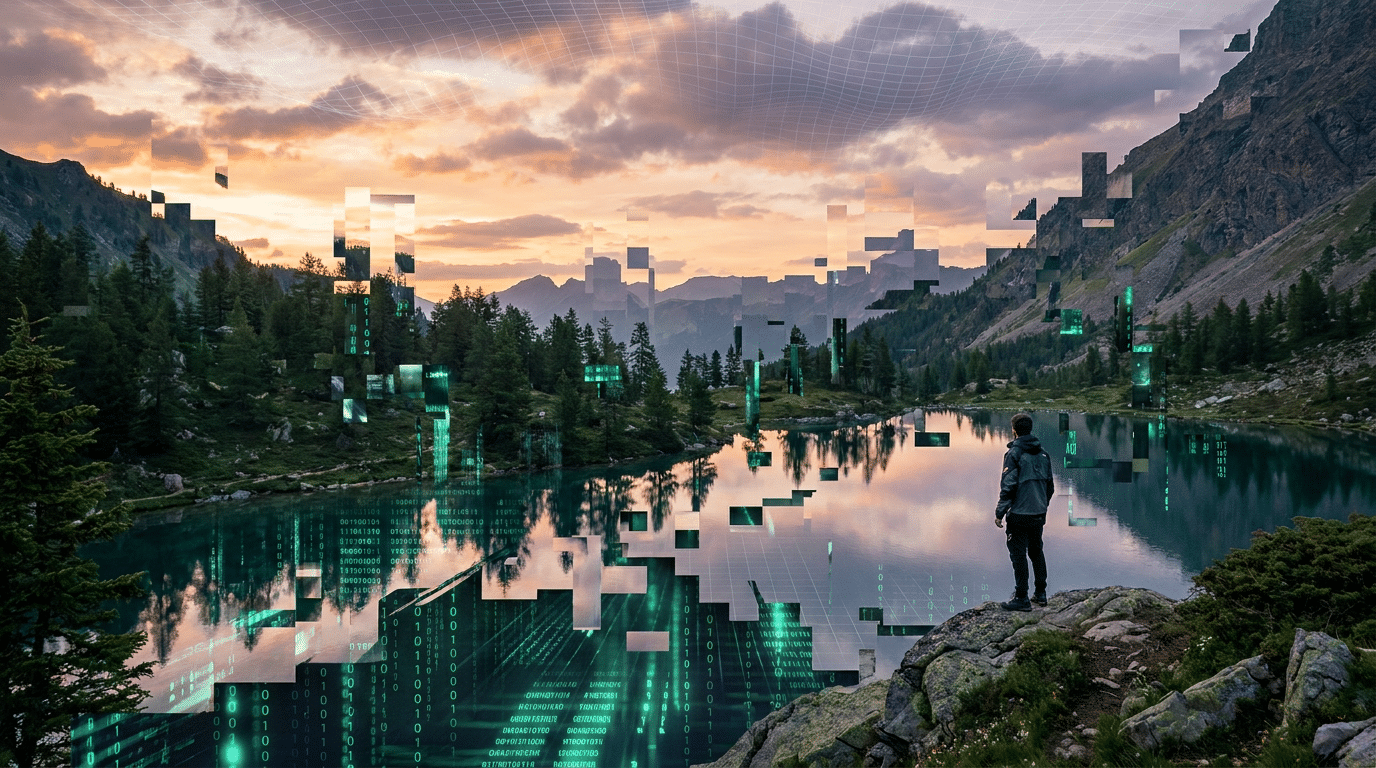
Popular discussions often imagine pixels, a finite resolution or a visible “computer grid.” But there is no reason a hypothetical simulator would have to resemble a computer program in the way a human video game does.
A simulation could reproduce the laws of physics at a level that makes its internal observers unable to see the underlying machinery. If every experiment available to an observer produced the same results as a non-simulated universe, then the distinction could be empirically inaccessible.
The important question is therefore not whether we can imagine a simulation, but whether simulation would produce observable differences.
Could physics reveal a computational grid?
Various speculative proposals have suggested looking for signs that spacetime has a discrete structure, perhaps through unusual high-energy effects or departures from expected symmetries.
But finding that nature has a smallest scale would not automatically demonstrate a simulation. Modern physics already contains fundamental scales and theories in which spacetime may have a non-classical structure.
Likewise, failing to find a grid would not disprove every conceivable simulation. A simulator could use an underlying architecture entirely unlike the one imagined by the proposal.
The testability problem
A scientific hypothesis becomes especially powerful when it makes predictions that distinguish it from competing explanations.
Consider a hypothetical claim that our universe is simulated but that the simulation perfectly reproduces every observable law. If every possible observation is compatible with both the simulated and non-simulated descriptions, then an experiment cannot choose between them.
That creates a serious testability problem. A claim that can accommodate every possible observation is difficult to turn into an empirical theory.
What if the simulators deliberately leave clues?
One could imagine a simulator intentionally inserting detectable anomalies. In that case, the hypothesis could generate empirical predictions—but only after specifying what kind of anomaly should exist and why.
Without a principled reason for expecting a particular signature, searching for arbitrary “glitches” risks confusing unusual observations with evidence for a preferred explanation.
The burden would be the same as in other areas of science: define the prediction in advance and determine whether the observed result is more likely under the proposed model than under alternatives.
Why computational limits do not settle the question
Another popular argument says that a universe containing enormous amounts of information would require impossibly large computational resources. But this assumes we know what resources a simulator would have, what level of detail it would need to calculate, and whether its underlying physics resembles ours.
A simulation need not calculate every possible state explicitly if the underlying system has efficient rules for generating observable outcomes. More importantly, we have no independent knowledge of the physical resources available at a hypothetical higher level of reality.
Consequently, statements such as “the universe is too complicated to simulate” are not decisive without a specific model of what simulation means.
The observer-selection problem
The simulation argument also raises a subtle statistical issue: which observers are we supposed to count?
Should every conscious being count equally? Should observers in simulations containing copied civilizations count separately? What if simulations contain nested simulations? What if simulated observers are created in enormous numbers but exist for only short periods?
These questions are part of a broader family of problems involving anthropic reasoning—reasoning that takes into account the fact that the argument is being made by an observer who necessarily exists somewhere within the relevant population.
Nested simulations make the intuition even stranger
If one civilization can create conscious simulations, those simulated civilizations might eventually create simulations of their own.
In principle, that could produce several levels of reality: a base civilization, its simulations, simulations created within those simulations, and so on.
But this scenario immediately introduces resource constraints. Each level would need enough physical or computational capacity to support the next. It also returns us to the unresolved question of whether simulated consciousness is possible at all.
The argument is connected to an ancient philosophical problem
The simulation hypothesis sounds modern because it uses computers. The underlying question is much older.
Philosophers have long asked whether our perceptions provide direct access to reality. Plato’s cave, Descartes’ method of radical doubt and later skeptical arguments all explore versions of the problem.
The modern simulation story changes the mechanism: instead of an evil demon deceiving us, perhaps an advanced civilization has constructed our environment. But the epistemological challenge is similar: what can an observer establish from observations made entirely inside a system?
Does science assume that the world is “real”?
Science does not normally begin by proving metaphysical claims about ultimate reality. It builds models that make successful predictions about observations.
If two hypotheses produce exactly the same observable predictions, science has little empirical basis for choosing between them. This is why the simulation hypothesis is not automatically more scientific simply because it uses the language of computation.
A model can be philosophically interesting without being experimentally confirmed.
Could we ever prove that we are not simulated?
That may be even harder than proving that we are.
If a sufficiently sophisticated simulation can reproduce every observation available to its inhabitants, then no internal experiment could distinguish it from a non-simulated universe. In that case, the claim becomes a metaphysical possibility rather than a conventional scientific hypothesis.
But that does not mean every simulation claim is equally plausible. Specific models can be assessed according to their assumptions, internal consistency and predictions.
Why the idea remains useful
The simulation hypothesis is valuable as a thought experiment because it separates several questions that are often confused.
What exists? This is a question about ontology.
What can we observe? This is an empirical question.
What can observations establish? This is an epistemological question.
What would make an observer conscious? This is a question about the philosophy and science of mind.
Changing one answer does not automatically determine the others.
So, are we living in a simulation?
There is currently no confirmed scientific evidence that the universe is a computer simulation. The simulation hypothesis remains a philosophical proposal built around conditional assumptions about advanced civilizations, computation and consciousness.
It could become more scientifically interesting if a well-defined model generated observations that ordinary physical theories could not explain. Until then, the strongest part of the idea is not a supposed glitch in reality but the question it forces us to ask.
How much of what we call “reality” is established by observation, and how much depends on assumptions about what lies beyond what observation can reach?
That question existed long before computers. The simulation hypothesis simply gives an ancient mystery a modern machine.
What the simulation argument actually claims
The simulation hypothesis is often presented as a claim that we can prove we are living inside a computer. That is stronger than the philosophical argument supports. The influential version associated with Nick Bostrom is a trilemma: either civilizations capable of creating enormous numbers of realistic ancestor simulations rarely reach that stage, or they rarely choose to run such simulations, or simulated observers could vastly outnumber observers in the original physical world.
The argument is therefore conditional. It does not identify a hidden programmer, demonstrate that our universe is artificial, or provide an experiment that has established the hypothesis. Its force comes from asking what follows if certain assumptions about future technology and conscious simulation are granted.
Why computing power alone does not settle the question
A common intuition is that sufficiently powerful computers could eventually reproduce an entire universe. But the difficulty is not simply the number of calculations required. A complete physical description may involve enormous information, quantum effects, and questions about what level of detail must actually be simulated.
A simulation also does not necessarily need to reproduce every microscopic detail if its observers can never measure those details. That observation leads to an important distinction between simulating a universe and simulating the experiences or accessible environment of observers inside it.
Could we test whether reality is simulated?
Proposed tests have included looking for computational limits, unusual patterns in physical constants, or artifacts that might arise from a particular implementation. The problem is that almost any observation could be incorporated into a sufficiently flexible simulation model.
A scientific hypothesis becomes difficult to test when every possible result can be explained after the fact. A simulated universe could, in principle, be designed to behave exactly like an apparently non-simulated one. That makes the hypothesis substantially different from ordinary physical theories that make specific predictions before observations are made.
The deeper question is about probability and assumptions
The most interesting part of the simulation debate is therefore not the image of humans trapped inside a cosmic computer. It is the question of how probability should be assigned when we know almost nothing about the technological capabilities, motives and population sizes of hypothetical future civilizations.
Change those assumptions and the conclusion changes. The simulation hypothesis is consequently best treated as a philosophical thought experiment about consciousness, computation, probability and the limits of inference—not as an established description of the universe.
Curiosity Publication by Aadvik Agastya
Sources & further reading
- Nick Bostrom — Are You Living in a Computer Simulation?
- Stanford Encyclopedia of Philosophy — Skepticism
- Stanford Encyclopedia of Philosophy — Ethics of Artificial Intelligence
Have a question about this topic?
Join fellow Qurons on the Quron Forum to ask questions, challenge ideas, share discoveries and explore further.
Discuss on Quron Forum