Imagine waking up inside a laboratory.
You remember your childhood. You recognize your family. You can see the room around you, feel the floor beneath your feet and hear a machine humming nearby.
Everything feels completely ordinary.
Now imagine that none of it is happening in the way you think.
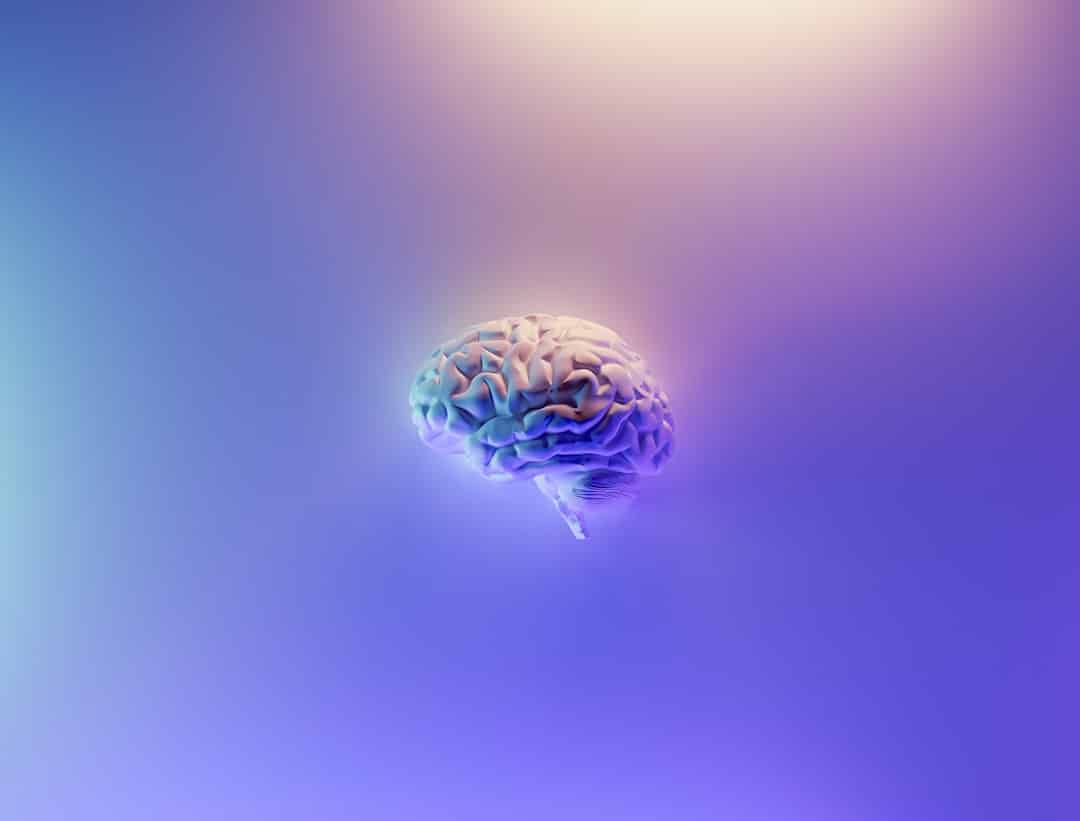
Your brain has been removed from your body and placed in a container of nutrients. A sophisticated computer is connected to your nervous system and sends signals to your brain that reproduce the experiences of an ordinary life.
You still see a room.
You still hear the machine.
You still feel the floor.
But there is no room, machine or floor in the external world corresponding to those experiences.
How could you know?
This is the Brain in a Vat, one of philosophy’s most famous skeptical thought experiments.
The basic thought experiment
The scenario asks us to imagine a biological brain maintained outside a body and connected to a computer capable of stimulating its neurons in precisely the ways required to generate normal experiences.
If the stimulation were sufficiently sophisticated, the brain could receive signals corresponding to sight, sound, touch, taste and other sensations.
From inside the experience, the world could appear completely normal.
The thought experiment therefore asks whether perception provides genuine evidence about an external world—or merely evidence about the experiences occurring inside our minds.
Why perception matters so much
Almost everything we know about the ordinary world arrives through some form of sensory interaction.
We see a tree because light reaches our eyes and the nervous system processes the resulting signals.
We hear a voice because pressure variations in the air stimulate the auditory system.
We feel an object because physical interactions activate receptors in the body.
The brain in the vat scenario does not deny that these experiences occur. It questions whether the experiences guarantee the existence of the external objects we believe cause them.
The skeptical challenge
Suppose the brain has exactly the same experiences whether it is sitting inside a normal human body or inside a vat connected to a supercomputer.
Then the experiences alone appear insufficient to distinguish the two situations.
This creates a problem for absolute certainty.
If every piece of evidence available to you could be produced by either the ordinary world or the artificial scenario, how could that evidence prove which situation you are actually in?
Descartes and the evil demon
The brain in a vat is a modern version of an older philosophical strategy.
In his Meditations, René Descartes considered the possibility that a powerful deceiver could systematically manipulate his experiences.
His purpose was not simply to tell a spooky story. He wanted to identify what could remain certain even if ordinary sensory beliefs were placed under radical doubt.
Descartes eventually focused on the fact that doubting itself involves thinking.
The later history of philosophy has debated exactly what follows from this insight, but the method is important: construct a scenario in which ordinary evidence becomes unreliable and then ask what knowledge remains possible.
Is the brain in a vat the same as the simulation hypothesis?
They are related but not identical.
In the brain-in-a-vat scenario, there is still a biological brain whose experiences are being artificially generated.
A simulation hypothesis may instead propose that the entire apparent physical universe—including our bodies and brains—is implemented within some underlying computational system.
Both scenarios challenge the relationship between appearance and external reality, but they make different assumptions about what exists beneath experience.
Why the thought experiment is so powerful
The scenario does not need to be technologically feasible today.
Its philosophical force comes from asking whether there is a logical gap between having an experience and knowing what caused it.
If two radically different external situations could generate exactly the same experiences, then experience alone might not determine which external situation is true.
The thought experiment therefore attacks a particular kind of certainty: certainty that depends entirely on the assumption that perception directly reveals an external world.
But does it prove that we are brains in vats?
No.
This is one of the most important distinctions.
Showing that a skeptical scenario is logically conceivable does not establish that it is actually true.
The argument is designed to challenge the certainty of a belief, not to provide evidence for its opposite.
There is an enormous difference between saying “I cannot rule out this possibility with absolute logical certainty” and saying “therefore this possibility is probably what is happening.”
Could science rule it out?
This question becomes difficult because the thought experiment is designed to make ordinary observations compatible with the deception.
Suppose scientists build an experiment and obtain a result.
The skeptical scenario can simply say that the computer generating the experiences also generated the experimental result.
If every possible observation is compatible with the hypothesis, then no ordinary experiment can distinguish the hypothesis from its alternatives.
This is one reason philosophers distinguish between a hypothesis that is difficult to falsify and one that makes useful empirical predictions.
Putnam’s twist
Philosopher Hilary Putnam famously examined the brain-in-a-vat scenario using ideas about the relationship between words and the external world.
His argument is subtle, but it introduces an important complication: if a brain had always been a brain in a vat, could it meaningfully refer to actual brains and vats in the external world using the same words?
Putnam used this issue to challenge certain forms of radical skepticism.
The idea is connected to semantic externalism: the meaning and reference of our thoughts and words may depend partly on our relationships with the environment rather than being determined entirely by internal states.
Why language creates a surprising problem
Imagine a brain that has never encountered a real tree.
Its experiences of “trees” are generated entirely by the simulation.
When the brain says “tree,” what exactly does that word refer to?
If meaning depends partly on causal interaction with real trees, then the skeptical scenario may undermine the very assumptions required to formulate the claim that “I am a brain in a vat” in the ordinary way.
This does not make skepticism disappear, but it shows that the problem is deeper than simply asking whether the senses can be fooled.
Epistemic closure makes skepticism harder
Another issue concerns what philosophers call epistemic closure.
Suppose you know that you are sitting in a room. You also know that if you are sitting in the room, then you are not a brain floating in a vat somewhere else.
It may seem that knowing the first statement should allow you to know the second.
Radical skepticism challenges this chain by questioning whether you know the first statement in the required sense at all.
These debates show that skepticism is not merely about sensory illusions. It concerns the logical relationships between different kinds of knowledge.
Why ordinary evidence still matters
In everyday life, we do not demand absolute certainty.
If a tree falls in a forest, multiple people can observe it. Instruments can record it. Its physical effects can be measured. Other objects can interact with it.
Science builds knowledge through this web of consistency.
A scientific theory becomes trustworthy not because it has been proved immune to every logically imaginable skeptical scenario, but because it successfully explains observations, makes predictions and survives attempts to disprove it.
The vat scenario versus ordinary deception
There is a useful difference between being fooled by one illusion and being fooled about everything.
If someone creates a hologram of a chair, other evidence can expose the deception. You can touch the chair, move around it, measure it and ask someone else to inspect it.
The brain-in-a-vat scenario is much more radical. It imagines a system capable of controlling every relevant source of evidence simultaneously.
That is why it cannot be defeated simply by checking another sense.
What if other people are real?
Another everyday source of confidence is agreement with other observers.
If several people report seeing the same mountain, it is reasonable to treat that agreement as evidence that the mountain exists independently of any one person’s perception.
But a sufficiently comprehensive skeptical scenario can imagine that other people’s apparent responses are also generated by the same system.
Again, this does not prove the skeptical scenario. It simply shows how extreme the hypothesis has to become to undermine ordinary evidence.
Why science does not normally worry about brains in vats
Science operates under methodological assumptions that make investigation possible.
Researchers assume that observations can be repeated, that instruments provide information about physical processes, and that independent investigators can compare results.
These assumptions are not necessarily claims of metaphysical certainty.
They are practical commitments that allow models of the world to be tested.
If a skeptical hypothesis predicts exactly the same observations as ordinary reality, it provides little reason to replace the ordinary model with the skeptical one.
Does the thought experiment threaten realism?
It depends on what kind of realism is meant.
Scientific realism generally holds that successful scientific theories give us reason to believe that at least some aspects of the unobserved world are real.
Radical skepticism challenges whether experience can establish that external reality exists exactly as we think it does.
But skepticism does not automatically imply that science is useless.
One can acknowledge philosophical uncertainty about ultimate reality while still accepting that physical models reliably predict observations and support technology.
Why absolute certainty may be the wrong standard
The brain-in-a-vat scenario becomes overwhelming only if knowledge requires absolute certainty.
But much of human knowledge does not work that way.
We trust a bridge because engineering models, measurements, materials science and repeated experience converge on the conclusion that it will support a load.
We trust a medical instrument because it produces repeatable measurements under controlled conditions.
We trust astronomy because independent observations from different instruments fit coherent physical models.
None of these requires proving that no logically imaginable deception exists.
The deeper question: what counts as reality?
The Brain in a Vat does not establish that reality is fake.
It asks a more uncomfortable question: what would count as proof that reality is real if every possible piece of evidence could itself be generated by a sufficiently powerful deception?
There may be no experiment capable of answering that question if the hypothetical deceiver is defined as being able to control every possible observation.
But that does not leave us with nothing.
It shifts the goal of knowledge from impossible absolute certainty toward something more practical and more scientific: models that remain coherent, make successful predictions, survive independent tests and continue to work when new evidence arrives.
Perhaps the strangest lesson of the vat is that the problem is not simply whether our senses can be fooled.
It is that knowing something and being absolutely unable to doubt it may be two different achievements.
Curiosity Publication by Aadvik Agastya
Sources & further reading
- Stanford Encyclopedia of Philosophy — Epistemic Skepticism
- Stanford Encyclopedia of Philosophy — Brain in a Vat
Have a question about this topic?
Join fellow Qurons on the Quron Forum to ask questions, challenge ideas, share discoveries and explore further.
Discuss on Quron Forum