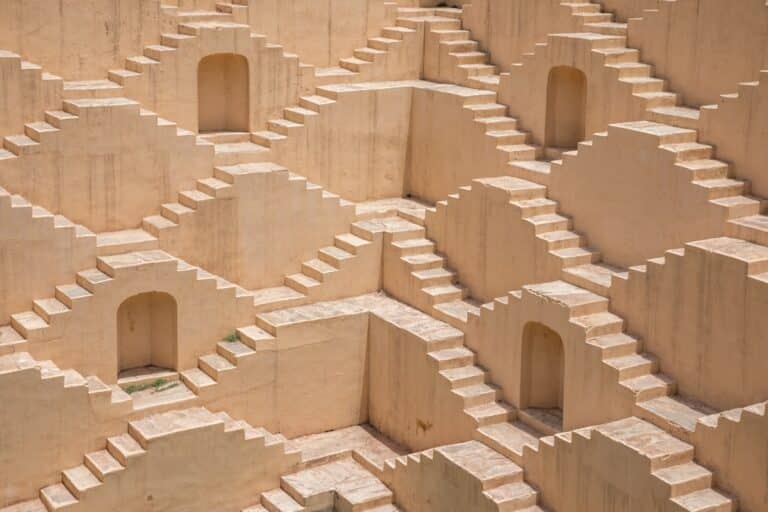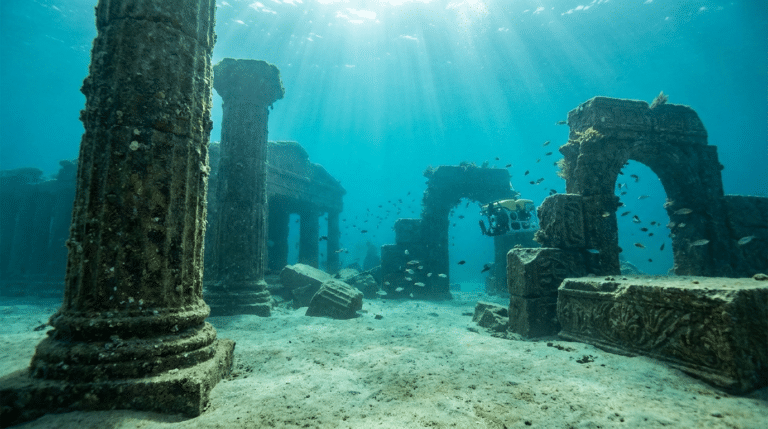

Some Roman structures have survived for nearly two thousand years, including concrete structures exposed to seawater. That durability has led to a popular question: did the Romans possess a secret concrete recipe that modern engineers somehow lost?
The real story is more interesting.
Roman concrete was not a single magical formula. Its performance depended on the materials used, how they were combined, how the concrete was placed and the environment in which it aged.
Roman concrete was different from modern Portland cement
Roman builders commonly used a binder based on lime and volcanic materials, along with aggregates such as stone and rubble.
In some regions, volcanic ash known as pozzolana was particularly valuable because it could react with lime and water to form durable cementitious compounds.
The exact recipe varied by location and application. There was no universal Roman concrete mix.
Seawater sometimes helped
One of the most surprising findings from modern research is that certain Roman marine concretes developed minerals over time that contributed to their durability.
In structures exposed to seawater, chemical reactions could continue within the concrete. Rather than simply degrading the material, some reactions produced new mineral phases that helped reinforce parts of the structure.
This does not mean seawater makes all concrete stronger. Modern Portland-cement structures can be damaged by chloride penetration and other processes. Roman marine concrete was chemically different.
Scientists can now watch the concrete change
Researchers have used microscopy, spectroscopy and other techniques to study ancient samples at very small scales.
They have found evidence of minerals and chemical processes that developed long after the concrete was first poured.
This changes the way we think about durability. A material can continue to evolve chemically after construction, and in some cases that evolution can help maintain its structure.
Why volcanic ash mattered
Volcanic ash is rich in reactive minerals. When suitable volcanic material is mixed with lime and water, it can participate in reactions that produce a strong hydraulic binder.
Roman builders learned through experience which local materials worked well.
That knowledge was empirical. They did not need modern chemistry to discover that a particular ash made a durable mortar. Generations of construction experience could reveal what worked.
Ancient concrete was not indestructible
It is important not to romanticize the material.
Many Roman concrete structures have deteriorated. Durability varied dramatically depending on composition and environment. Some structures were protected from weather or water; others were exposed to conditions that accelerated damage.
The surviving examples can also create a preservation bias: we naturally study the impressive structures that remain.
Why the Pantheon is often mentioned
The Pantheon’s enormous concrete dome is one of the best-known examples of Roman concrete engineering. Its survival demonstrates sophisticated control over materials and structural design.
Builders reduced the weight of the dome toward the top by changing aggregate materials and thickness. The concrete was therefore part of a larger engineering system rather than a miracle material acting alone.
Roman engineers solved problems differently
Modern engineers optimize materials using controlled industrial processes and precise specifications. Roman builders worked with local materials and practical knowledge.
Their methods were less standardized but could be remarkably effective.
That distinction matters when researchers investigate ancient technology. The goal is not always to rediscover a lost recipe. It is often to understand the design principles that made the technology work.
Could modern concrete learn from Rome?
Researchers are investigating whether some Roman-inspired chemical processes could contribute to more durable modern cement and lower environmental impact.
That does not mean replacing modern concrete with ancient recipes. Modern structures have very different requirements, and cement production has a large carbon footprint.
Ancient materials can nevertheless provide ideas for new materials.
The deeper lesson
Roman concrete seems mysterious only if we imagine technology as a sequence of inventions that either exist or disappear.
In reality, materials knowledge can be distributed across generations, environments and construction traditions.
The Romans did not possess a secret technology that defied physics. They developed a sophisticated practical understanding of materials available to them.
And the most fascinating part may be that their concrete did not simply survive despite chemistry.
In some environments, it survived partly because of it.
Hot mixing may have changed how Roman concrete behaved
Recent research has drawn attention to a technique called hot mixing, in which quicklime could be incorporated into the concrete mixture. The resulting high-temperature chemistry may have produced distinctive lime inclusions.
Researchers have proposed that some of these features could contribute to self-healing behavior when cracks form and water enters the material. The exact importance of the process varies by composition and construction context, so it should not be treated as a universal explanation for Roman durability.
Marine concrete was a special case
Concrete exposed to seawater experienced chemical reactions different from those in dry structures. Certain mineral transformations could strengthen parts of the material over time.
This is especially interesting because modern concrete often treats water and salt exposure as major durability challenges. The comparison is useful precisely because Roman concrete had a different chemical system.
Structure mattered as much as material
The Pantheon’s survival cannot be explained by concrete chemistry alone. Its dome was carefully designed so that the structure became lighter toward the top, while the thickness and aggregate composition changed.
Roman engineering therefore combined materials science with geometry and load management.
Why surviving Roman concrete can mislead us
Archaeologists naturally study spectacular structures that survived. Countless ordinary Roman buildings disappeared, collapsed or were reused.
This creates a preservation bias. The most durable examples are the ones most likely to enter the modern record, making Roman concrete appear uniformly exceptional.
There was no single Roman “recipe”
Roman builders used different aggregates and volcanic materials depending on location and purpose. Concrete used in a harbor structure did not necessarily have the same composition as concrete used in a wall or dome.
Understanding ancient technology therefore requires identifying the specific material and environment rather than searching for one lost formula.
Why modern engineers care
Roman concrete research is not simply an archaeological curiosity. If researchers understand how ancient mineral reactions improved durability, some of those principles could inspire modern low-carbon cement technologies.
But ancient chemistry cannot simply be copied into modern infrastructure. Modern structures have different strength, curing, reinforcement and regulatory requirements.
The bigger lesson about technology
Ancient engineering was based on accumulated observation. Roman builders could learn that particular materials performed well without knowing the molecular mechanisms behind the result.
Modern science can reverse the direction of discovery: it can analyze an old material at microscopic scales, identify why it worked and then ask whether the underlying principle can be redesigned for present-day needs.
The mystery of Roman concrete is therefore not that the Romans knew a secret we forgot.
It is that practical experience sometimes reaches solutions before theory explains them.
The real story is more interesting because there was probably no single secret recipe.
Roman concrete was a family of materials whose performance depended on the binder, aggregate, water, construction method and environment. Builders were working with local volcanic materials, limestone, rubble and other resources, and they adapted mixtures to particular jobs.
Modern researchers can now examine those materials at microscopic scales and reconstruct some of the chemical processes that continued long after construction. What emerges is not evidence of technology that violated the laws of materials science, but an example of empirical engineering whose mechanisms were only understood much later.
Roman concrete was not modern concrete
Modern Portland cement concrete is based on a manufactured cement whose composition and processing are tightly controlled. Roman concrete generally relied on a different binder system involving lime and reactive volcanic materials, often combined with aggregates such as stone or rubble.
One important material was pozzolanic volcanic ash. When suitably reactive volcanic material interacts with lime and water, chemical reactions can produce cementitious compounds capable of binding aggregates together.
The crucial word is suitably. Not every volcanic ash has the same chemistry, and not every Roman structure used the same materials. Local geology mattered.
That means “Roman concrete” should not be imagined as one standardized industrial product. A harbor installation, a wall, a foundation and a monumental dome could have different requirements and different compositions.
Romans could discover chemistry without knowing the chemistry
Roman builders did not have modern concepts of chemical bonding, mineral phases or materials characterization. Yet they could learn from repeated experience.
If a particular volcanic material produced mortar that survived damp conditions, builders could recognize its usefulness. If a particular aggregate performed poorly, practical experience could discourage its use.
This is an important distinction between knowing that something works and knowing why it works. Human technologies often develop through experimentation long before science provides a molecular explanation.
Ancient builders also inherited knowledge through craftspeople and construction traditions. Such knowledge can be difficult to reconstruct because the written record rarely captures every practical decision made at a building site.
Why seawater makes the story extraordinary
One of the most intriguing cases involves Roman marine concrete. Some ancient harbor structures have survived for centuries in environments that can be highly aggressive to modern construction materials.
Modern seawater exposure can create serious durability problems. Salts can penetrate concrete, affect reinforcement and contribute to deterioration. So why did some Roman marine concretes behave differently?
The answer involves chemistry rather than a simple claim that “seawater makes Roman concrete stronger.”
In certain Roman marine materials, seawater participated in chemical reactions that produced new mineral phases. Researchers have identified minerals and microstructures that developed within the concrete over long periods.
Those reactions occurred because the Roman binder was chemically different from modern Portland cement. The comparison is therefore valuable precisely because the two materials are not equivalent.
The concrete could continue changing after it was built
We often imagine construction as a process that ends when a material hardens. Roman concrete demonstrates that this is not always the best way to think about materials.
After placement, water can move through microscopic spaces. Minerals can dissolve, migrate and recrystallize. New phases can form. The result can be a material whose internal structure changes over decades or centuries.
Some of those changes may be harmful. Others may stabilize the material. The balance depends on composition and environment.
This is one reason ancient concrete cannot be understood from a recipe alone. A material is also a chemical system interacting with its surroundings.
Hot mixing and the mystery of lime clasts
Another line of research concerns so-called hot mixing. In some Roman construction methods, quicklime may have been incorporated directly into mixtures, producing elevated temperatures during preparation.
Microscopic examination of Roman concrete has identified distinctive lime-rich inclusions. Researchers have proposed that these inclusions could contribute to a form of self-healing when cracks allow water to enter.
The idea is compelling, but it needs to be described carefully. Not every Roman concrete sample necessarily formed or behaved in the same way, and the presence of lime inclusions alone does not prove that a structure possessed unlimited self-healing ability.
The more defensible conclusion is that ancient mixing practices may have created chemical features with consequences for long-term durability.
Self-healing does not mean “never cracks”
The phrase “self-healing concrete” can easily become exaggerated. Materials research uses the term for specific mechanisms in which damage can partially close or become less consequential under particular conditions.
A Roman structure that experiences a small crack and undergoes mineral precipitation is not equivalent to a modern material that repairs every structural failure automatically.
Ancient concrete could and did deteriorate. The interesting question is why some forms of deterioration were slowed or partially counteracted in certain environments.
The Pantheon shows why material is only half the story
The Pantheon is frequently cited as evidence of Roman concrete’s extraordinary durability, but its survival cannot be reduced to the chemistry of its concrete.
The dome was an integrated structural system. Its geometry distributes loads, and the builders reduced weight toward the upper portions by changing the composition and density of the concrete and by varying thickness.
In other words, Roman engineering combined material selection with structural design.
A very durable material can still fail if it is badly loaded. Conversely, an intelligently designed structure can survive for a long time even when individual materials are not extraordinary. The Pantheon is important because these principles operated together.
Aggregate was part of the engineering strategy
Concrete is not just cement. The aggregate occupies much of the volume and strongly influences density, thermal behavior and mechanical performance.
Roman builders could select different aggregates according to the task. Lightweight materials could reduce the mass of a structure, while other stones could provide different physical characteristics.
That flexibility helped builders create structures in which material properties changed with location. The dome of the Pantheon is a famous example of this broader principle: the material itself was part of the structural design.
Why seawater did not simply destroy everything
The phrase “Roman concrete survives underwater” can hide an important selection effect. Not every ancient marine structure survived intact, and not every composition responded favorably to seawater.
What researchers are studying are particular examples whose chemistry and environmental histories can be reconstructed.
That is scientifically more useful than treating survival as proof of a universal Roman formula. The question becomes: under what combination of ingredients and conditions did this material remain stable?
That question can be tested using mineralogical analysis, microscopy and other techniques.
Ancient concrete was not universally superior
It would be misleading to turn the Roman example into a simple contest between ancient and modern technology.
Modern Portland cement concrete is engineered for applications and standards that Roman builders never faced. Modern structures can be reinforced with steel, designed for enormous loads, manufactured with controlled specifications and adapted to highly predictable performance requirements.
Roman concrete also had limitations. Many ordinary Roman structures disappeared. Some surviving concrete is damaged, fractured or altered.
The archaeological record is therefore biased toward what endured long enough to be studied.
Preservation bias changes the question
If a civilization builds millions of structures and only a small fraction survive, modern observers naturally encounter the survivors disproportionately.
That creates a subtle illusion. We may compare the best-preserved Roman structures with average modern structures and conclude that ancient concrete was universally better.
A more useful approach is to ask what characteristics increased survival in particular structures and environments, then compare those mechanisms with modern materials science.
Why did Roman knowledge disappear or change?
It is tempting to imagine that Roman concrete technology was completely lost after the Roman Empire declined. The historical reality is more complicated.
Construction traditions changed, local materials changed, political institutions changed and different building priorities emerged. Knowledge does not have to vanish completely to become less common or be adapted into another technological tradition.
Some ancient techniques survived in modified forms, while others became less important as builders adopted new materials and methods.
Technology is therefore not simply a list of inventions that humanity either remembers or forgets. It is a system of practices embedded in economies, supply chains and skilled labor.
Can modern engineers borrow the principle?
Researchers are interested in Roman concrete partly because cement production today has a substantial environmental footprint. If ancient chemistry reveals ways to create durable binders with lower energy requirements or longer service lives, those principles could be worth investigating.
But translating an ancient mechanism into modern construction is not as simple as copying the old recipe.
Modern infrastructure has requirements for strength, curing time, reinforcement compatibility, durability, quality control and regulatory certification. A material that performs beautifully in a Roman harbor is not automatically suitable for a bridge, high-rise building or reinforced concrete foundation.
The productive question is therefore not “Can we use Roman concrete again?” It is “What underlying chemical or structural principles can be redesigned for modern needs?”
Science can explain an ancient practical discovery
This is perhaps the most fascinating aspect of Roman concrete research.
An ancient builder could observe that a material survived. A modern scientist can take a sample, examine its microstructure, identify minerals, reconstruct chemical reactions and test whether those mechanisms can be reproduced.
The direction of knowledge has effectively reversed. Ancient experience generated a working material without molecular theory; modern science can use that material as an experimental record.
The bigger mystery is not the recipe
Roman concrete seems mysterious when we imagine technology as a secret formula. The evidence points toward something more subtle: materials performance emerges from a relationship between ingredients, construction methods, structure and environment.
The Romans did not need to understand atoms to discover useful combinations of minerals. They needed observation, skilled labor and traditions capable of transmitting practical knowledge.
Modern science adds something different: the ability to identify the microscopic processes behind that accumulated experience and test whether they can be deliberately engineered.
So the enduring lesson of Roman concrete is not that modern civilization forgot a magical ingredient. It is that practical experimentation can produce sophisticated solutions long before the underlying science is understood.
And sometimes, nearly two thousand years later, the material itself still contains the evidence.
Curiosity Publication by Aadvik Agastya
Sources & further reading
Have a question about this topic?
Join fellow Qurons on the Quron Forum to ask questions, challenge ideas, share discoveries and explore further.
Discuss on Quron Forum