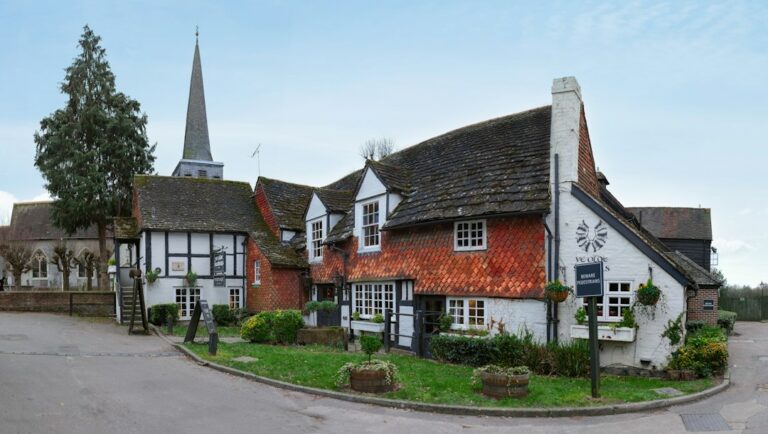

Off the coast of Nova Scotia lies a small island that has attracted treasure hunters for more than two centuries.
Its name is Oak Island.
The legend begins with a mysterious depression, continues through shafts, tunnels, flooding and alleged discoveries, and eventually expands into stories involving pirates, royal treasure, religious relics, lost manuscripts and famous historical figures.
What makes Oak Island unusual is not simply the possibility that something was buried there.
It is the way uncertainty itself became part of the mystery.
Every strange feature can appear to be a clue. Every failed excavation can suggest that the real chamber is deeper. Every unexplained object can become evidence for a larger theory.
To understand Oak Island, it helps to separate three different things: what was actually observed, what later excavators reported, and what generations of treasure hunters inferred from those reports.
How did the Oak Island story begin?
The traditional story places the beginning in 1795, when teenagers or young men exploring the island reportedly noticed an unusual depression in an area that later became known as the Money Pit.
Later accounts described signs that suggested deliberate digging or construction.
Excavation followed.
The deeper the search went, the more elaborate the story became.
Reports circulated about wooden platforms, layers, flooding and other features that appeared unusual enough to encourage the idea that someone had intentionally constructed a hidden chamber.
The difficulty is that much of the early story was recorded or repeated after the events themselves, and later excavations changed the site.
Why the Money Pit became so famous
The idea of a buried chamber beneath Oak Island was irresistible.
A hidden room containing valuable objects would explain the unusual digging. A deliberately constructed shaft would explain the layers. A flooded excavation would suggest a sophisticated defensive system.
But each of those interpretations depends on how the underlying observations are understood.
For example, a wooden structure underground can result from deliberate construction, but timber can also enter archaeological contexts through many other processes. Water entering a shaft can indicate engineered drainage, but it can also arise naturally when excavation intersects permeable layers or groundwater pathways.
The difference between an observation and its interpretation is crucial.
Why flooding made excavation so difficult
Oak Island is surrounded by the Atlantic and contains complex geology.
When excavators dig below the water table, groundwater can enter shafts. On a small island, interactions between the excavation, surrounding sediments and groundwater can create difficult conditions.
Treasure hunters interpreted some episodes of flooding as evidence of an engineered flood tunnel designed to protect a hidden chamber.
That interpretation became one of the central elements of the legend.
But the existence of flooding alone does not prove that a human-built tunnel caused it.
Determining the origin of a subterranean water flow requires geological evidence, mapping and careful examination of the surrounding strata.
What is a “booby trap”?
Oak Island stories often describe elaborate flood systems designed to prevent anyone from reaching the treasure.
In popular accounts, discovering water underground becomes evidence that the original builders anticipated treasure hunters centuries in advance.
The problem is circular reasoning.
If every obstacle is interpreted as proof of deliberate engineering, the theory becomes difficult to falsify. A flooded shaft supports the theory. A dry shaft can also be explained as a failed section of the system. A collapse can indicate a hidden chamber or simply unstable ground.
A strong archaeological interpretation has to allow evidence to count against it as well as for it.
What treasure has been proposed?
The list is remarkably long.
Theories have suggested pirate treasure, Spanish or French valuables, British military material, the lost jewels of historical figures, religious objects, manuscripts and even artifacts associated with medieval voyages.
Some versions of the legend connect the island to the Knights Templar or other secretive historical groups.
Such theories are attractive because they give the physical mystery a historical narrative.
But an association with a famous organization is not evidence that the organization used Oak Island. A plausible story needs independent documentation, datable material, archaeological context and a credible route by which the objects could have reached the island.
Could pirates have buried treasure there?
Pirates did bury or conceal valuables in some historical contexts, so the general idea is not physically impossible.
But “pirates sometimes buried treasure” is not evidence that a particular pirate buried treasure on Oak Island.
To establish such a connection, researchers would need evidence linking a specific deposit to a specific historical period and activity.
The distinction is small in wording but enormous in historical reasoning.
What about the alleged artifacts?
Over the decades, various objects have been reported or claimed as clues.
Coins, tools, fragments of material and unusual stones have all entered the story.
The evidentiary value of an object depends heavily on provenance.
Where exactly was it found? Was the excavation documented? Was the layer undisturbed? Was the object examined independently? Can it be dated? Could it have entered the location through later human activity?
Once a site has been repeatedly excavated and disturbed, answering these questions becomes much harder.
Archaeology depends on context
An artifact by itself can be interesting.
An artifact found in a sealed, datable archaeological layer can be enormously informative.
Context tells researchers what other materials were nearby, what layer the object came from, how it relates to structures and whether the deposit was disturbed.
Repeated treasure hunting can destroy precisely the information archaeologists need most.
This creates an unfortunate paradox: the desire to find the treasure can make it harder to reconstruct the history of the site.
Why early reports are difficult to evaluate
Many famous Oak Island details come through layers of retelling.
A story may begin as an observation, become a newspaper report, then appear in a later book and eventually be repeated as established fact.
Each retelling can add details or remove uncertainty.
Historians therefore have to ask not only “What does the story say?” but “When was this claim first recorded, by whom, and how close was that source to the original event?”
The famous curse
One of the most dramatic elements of the Oak Island legend is the supposed curse predicting that a certain number of people must die before the treasure can be found.
The curse has become part of the island’s folklore, but folklore is not archaeological evidence.
Such stories can develop naturally around dangerous excavations. Collapses, accidents and deaths can then be incorporated into a narrative that appears to confirm the original legend.
The existence of tragedy around a treasure hunt does not establish that an ancient curse caused it.
Why the mystery survives failed searches
Oak Island has an unusual psychological structure.
Suppose an excavation finds nothing.
That can be interpreted as evidence that the treasure was never there—or as evidence that the team simply missed the chamber.
If a shaft collapses, it can be treated as a geological accident or as evidence that someone deliberately designed the site to resist excavation.
If water appears, it can be natural groundwater or an engineered flood system.
This flexibility allows the central theory to survive many outcomes.
For a mystery to become scientifically testable, however, there must be observations that would genuinely weaken the hypothesis.
The island itself is geologically interesting
Even without treasure, Oak Island provides an interesting environment for understanding coastal geology.
Its sediments, groundwater, bedrock and relationship with the surrounding sea all affect how underground excavations behave.
Understanding the geology is therefore essential before interpreting every shaft or flooded cavity as evidence of deliberate construction.
Natural processes can create structures and pathways that look surprisingly organized when encountered in an artificial excavation.
Could humans really have constructed elaborate underground works?
Of course they could.
People have built mines, wells, tunnels, drainage systems and storage chambers for thousands of years.
The question is not whether underground engineering was possible. It is whether there is evidence that a particular engineering system existed at Oak Island, who built it, when it was built and why.
Those questions require more than an unusual hole in the ground.
What evidence would solve the mystery?
A decisive discovery would ideally have a clear archaeological context.
For example, a sealed structure containing datable material associated with a historically identifiable group would be much stronger evidence than an isolated object recovered from disturbed soil.
Likewise, an engineered water system could be established more convincingly through geological mapping, physical remains of construction and evidence showing that the system was deliberately designed to function as a trap.
The best evidence would reduce the number of possible explanations rather than simply adding another clue to the legend.
Why the treasure itself may not be the most interesting question
Treasure stories tend to encourage a binary outcome: either the treasure is found or it is not.
But Oak Island is also a case study in how historical mysteries are constructed.
An ambiguous observation becomes a clue. A clue becomes a theory. The theory determines what future explorers notice. Later discoveries are then interpreted through the theory.
Over generations, the story becomes larger than the original evidence.
The deeper mystery
Oak Island may contain something.
It may contain evidence of past human activity, construction, storage or other events that have not yet been fully understood.
But “something is buried here” is a much smaller claim than “the island contains a legendary treasure placed there by a famous historical organization.”
The second claim requires a chain of evidence that the first does not.
That distinction is what makes Oak Island so fascinating.
The mystery is not simply about what might be buried underground.
It is about how easily human beings can turn incomplete evidence into a story—and how difficult it can become to separate the original discovery from everything later generations wanted it to mean.
Perhaps the final treasure of Oak Island will one day be a physical object.
Until then, the island remains something almost as interesting: a place where archaeology, geology, folklore and human expectation have been digging into one another for more than two centuries.
Curiosity Publication by Aadvik Agastya
Sources & further reading
Have a question about this topic?
Join fellow Qurons on the Quron Forum to ask questions, challenge ideas, share discoveries and explore further.
Discuss on Quron Forum