At 11:16 p.m. on August 15, 1977, a radio telescope in Ohio detected something unusual.
The signal was strong, narrow-band and brief. It appeared to rise and fall in a pattern consistent with the telescope’s beam sweeping across a fixed point in the sky. When astronomer Jerry Ehman examined the computer printout the following day, he saw the sequence 6EQUJ5 and wrote “Wow!” beside it.
That handwritten reaction gave the event its name.
Almost five decades later, the Wow! Signal remains one of the most famous unexplained events in the search for extraterrestrial intelligence. But its real significance is more subtle than the popular story suggests. The signal has never been independently redetected, and the SETI Institute explicitly says that no confirmed extraterrestrial signal has yet been received.
What was actually detected?
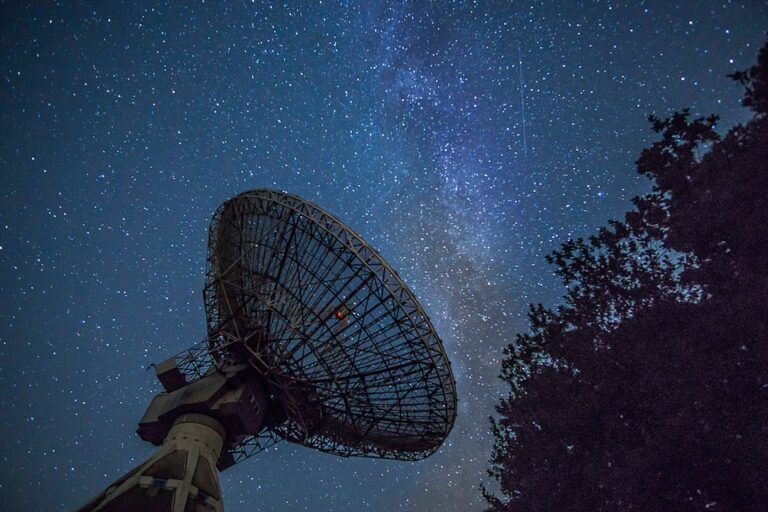
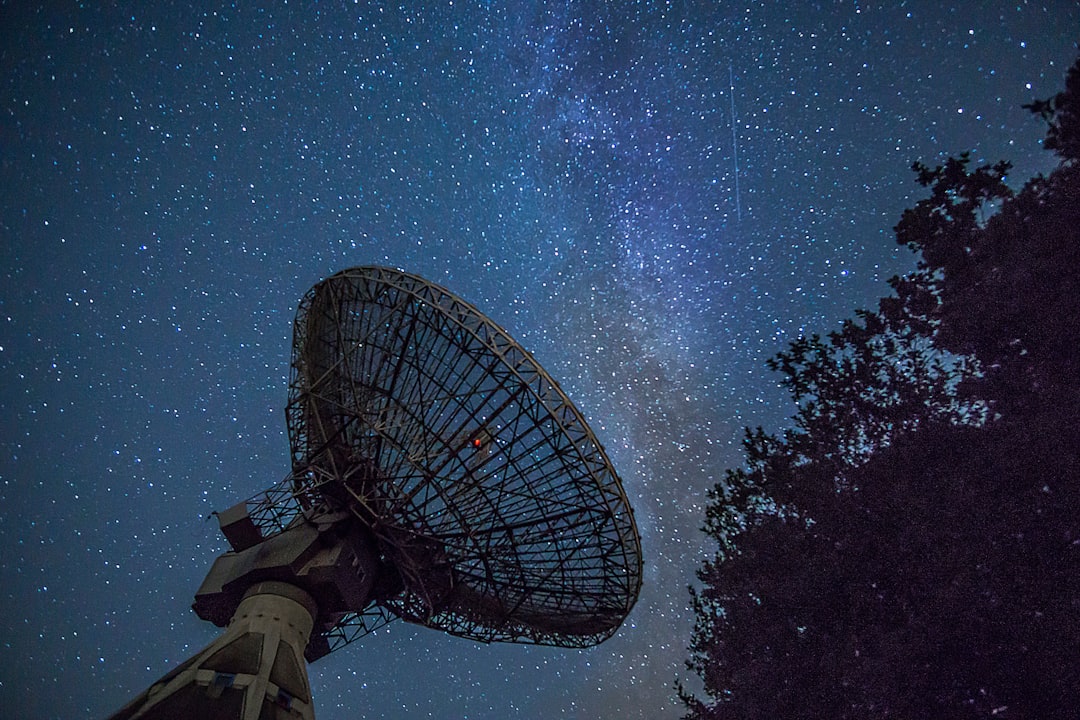
The event came from the Big Ear radio telescope operated by Ohio State University. During a routine sky survey, the instrument recorded an unusually strong radio signal near the 21-centimeter hydrogen line, around 1420 MHz.
The printed characters did not spell a message. “6EQUJ5” was simply a compact representation of changing signal intensity across successive time intervals. The letters were part of a coding system used to represent stronger values.
The signal lasted a little over a minute.
That short duration is important because the telescope was scanning the sky rather than staring continuously at one point. The rise and fall of the signal resembled what would be expected as a fixed celestial source moved through the telescope’s beam because of Earth’s rotation.
Why did scientists take it seriously?
The signal had several characteristics that made it interesting for SETI researchers.
First, it was narrow-band. SETI searches often pay special attention to narrow-band radio signals because many natural astrophysical sources produce broader emissions, while a technologically generated transmission could, in principle, concentrate energy into a narrow frequency range.
Second, its apparent movement through the telescope’s beam was consistent with a source in the sky rather than a simple local transmitter sitting nearby.
Third, it was unusually strong compared with the background noise.
But these features made the signal interesting, not proven extraterrestrial.
The biggest problem: it happened once
This is where the mystery becomes scientifically frustrating.
A convincing extraterrestrial signal would need to survive independent checks. Astronomers would want another telescope to detect it. Ideally, the signal would recur or behave in a way that could be predicted and tested.
The Wow! Signal never gave researchers that opportunity.
Follow-up observations did not reproduce it. The original event could not be subjected to the kind of repeated testing that would turn an intriguing observation into a confirmed discovery.
The SETI Institute makes the standard explicit: an unexplained signal is not enough. A candidate needs confirmation.
Was it aliens?
There is no evidence that allows us to answer yes.
The signal had characteristics that were compatible with some expectations for an artificial transmission, which is why it became famous. But compatibility is not identification.
A natural phenomenon can be rare without being impossible. Instrumental effects, interference, transient astrophysical events and other explanations must be considered. In recent years, researchers have explored natural explanations involving transient radio emissions, including the possibility of unusual activity involving hydrogen clouds.
These ideas remain part of an ongoing scientific discussion rather than a definitive solution.
Why the hydrogen line matters
The frequency near 1420 MHz is associated with neutral hydrogen, the most abundant element in the universe.
That makes the frequency especially interesting in SETI discussions. It is a recognizable cosmic reference point and lies in a relatively useful part of the radio spectrum for astronomical observations.
But a signal occurring near this frequency does not automatically mean that an alien civilization chose it.
This distinction is easy to lose in popular accounts. A frequency can be scientifically interesting without being an intentional beacon.
What the Wow! Signal did—and did not—tell us
It did tell us that a remarkably strong, unusual radio event was recorded during a sky survey in 1977.
It did not tell us that an extraterrestrial civilization transmitted a message.
It did not contain a decipherable sentence. It did not repeat. It did not provide a confirmed source. It did not give astronomers enough information to establish a technological origin.
That may sound disappointing, but it is actually a valuable lesson in how scientific discovery works.
Why one observation can be both exciting and insufficient
Science does not require an observation to be boring before it can be taken seriously. The Wow! Signal is a good example of the opposite.
A single strange observation can be exactly what motivates researchers to look harder. It can expose gaps in instruments, models or assumptions. It can generate new hypotheses.
But science also has a memory. Once an observation is made, others must be able to test it.
That is why the inability to reproduce the Wow! Signal is not a minor technical footnote. It is the central limitation of the case.
The mystery may be more valuable than the answer
There is a temptation to divide the story into two possibilities: “aliens” or “nothing.” Reality is more complicated.
The signal could eventually turn out to have a natural explanation. It could prove to have been an unusual interaction between astrophysical objects and radio waves. It could be traced to an observational or interference effect that has not been fully reconstructed. Or it could remain unexplained because the event was too brief to reproduce.
Each possibility teaches something different.
If it was natural, we learn more about the radio universe. If it was instrumental, we learn about the limits of historical observations. If it were ever shown to be technological, it would transform our understanding of life beyond Earth.
What would it take to solve the mystery?
The ideal answer would be another detection that could be independently verified and connected to the same region of sky. Modern instruments can observe far more efficiently than the equipment available in 1977, and coordinated observations can rapidly test promising candidates.
That is the real evolution of SETI: not simply listening for something strange, but designing observations that can distinguish a genuine signal from every plausible alternative.
The question behind the Wow!
The enduring fascination of the Wow! Signal comes from the uncomfortable space between evidence and possibility.
We have evidence that something unusual was recorded.
We do not have evidence sufficient to identify its cause.
And because the signal never returned, the universe never gave us the second piece of information we needed most.
Maybe the Wow! Signal was the whisper of a distant civilization. Maybe it was a rare natural event. Maybe it was something we have not yet imagined.
For now, the scientifically honest answer is simpler: we don’t know.
And sometimes, a mystery becomes truly interesting only when we are precise about what the evidence can—and cannot—say.
Why the signal’s shape mattered
The signal did not simply appear as a constant radio tone. Its measured strength rose and fell in a way that broadly matched the telescope’s beam pattern as Earth rotated. That made an astronomical source plausible and helped distinguish the event from some forms of persistent local interference.
But a pattern consistent with a celestial source is not the same as proof of an extraterrestrial transmitter. Several different physical processes can produce unusual radio events, and the historical data were not sufficient to identify the source uniquely.
Why the lack of a second detection matters so much
Repetition is powerful because it allows prediction. If a source can be located, researchers can return to it, observe it with other instruments and test whether the signal appears again. A repeating signal can also reveal periodicity, frequency drift or other properties that help establish its origin.
The Wow! Signal provided none of those opportunities. Its one-time nature leaves researchers with an unusually interesting observation but a weak basis for identifying its cause.
What modern SETI would do differently
Contemporary searches can use multiple telescopes, much larger datasets and automated systems capable of flagging unusual signals quickly. A promising candidate can potentially be checked by independent observatories before the event disappears.
This is an important lesson from the 1977 event: the value of a candidate signal depends not only on how strange it looks, but on whether scientists can build a chain of independent observations around it.
The mystery is scientifically useful
An unresolved observation is not the same thing as evidence for aliens. But it can still be valuable. The Wow! Signal continues to remind researchers that rare events can challenge detection systems and expose assumptions about what a technologically produced signal should look like.
Curiosity Publication by Aadvik Agastya
Sources & further reading
- SETI Institute — The Wow! Signal
- SETI Institute — FAQ: confirmed extraterrestrial signals
- SETI Institute — Recent discussion of possible natural explanations
Have a question about this topic?
Join fellow Qurons on the Quron Forum to ask questions, challenge ideas, share discoveries and explore further.
Discuss on Quron Forum