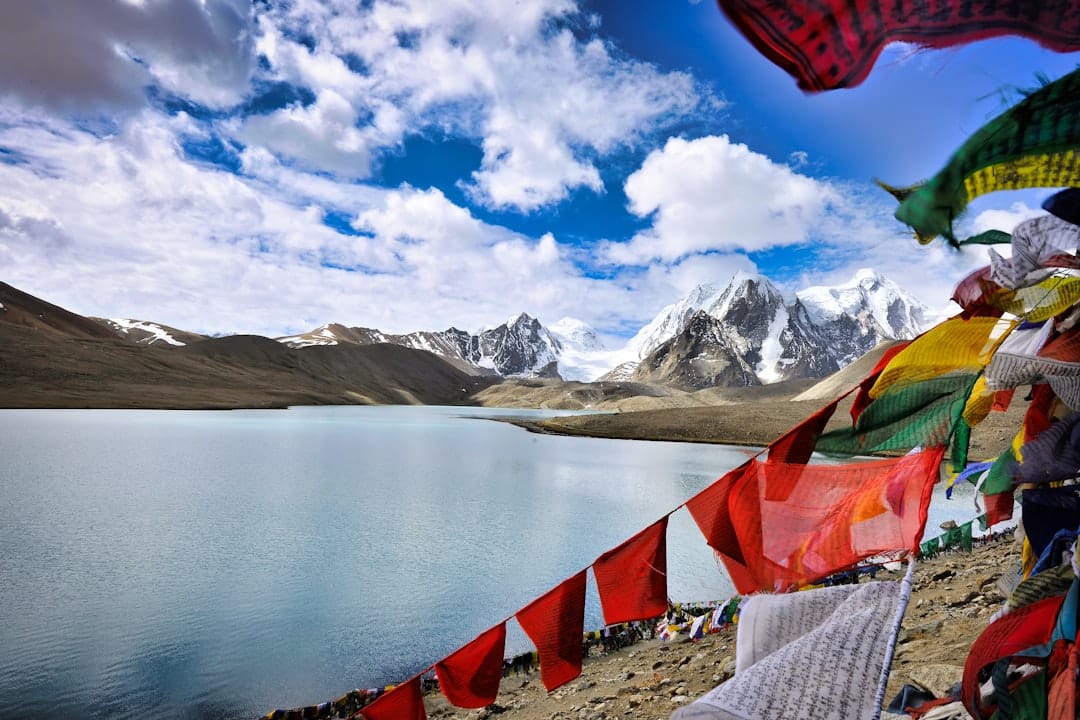
High in the Himalayas, at an elevation of more than 5,000 meters, lies a small lake surrounded by one of the world’s most difficult landscapes.
For decades, Roopkund in Uttarakhand became famous for something unsettling: human skeletal remains scattered around its shores.
The obvious question was irresistible.
What killed them?
For much of the twentieth century, the remains were treated as though they belonged to one mysterious catastrophe. Stories developed around a sudden storm, disease, warfare and other dramatic possibilities.
Modern genetic and chronological research changed the question.
The remains do not appear to represent one group that died together. Instead, evidence points to multiple individuals from different populations and, importantly, deaths separated by substantial periods of time.
Why is Roopkund so unusual?
Roopkund is a small, high-altitude lake in the Indian Himalayas.
The environment is harsh. Snow and ice cover the area seasonally, temperatures can fall dramatically and travel at such elevation is physically demanding.
The remote location also means that human remains can be exposed, preserved and re-covered by changing snow and ice conditions.
When modern observers first encountered large numbers of bones around the lake, the landscape naturally suggested a disaster.
The simplest story: one catastrophe
If dozens of skeletons are found together, the human mind naturally searches for one event that could explain them all.
A sudden storm is an obvious candidate.
An avalanche could also produce mass casualties. So could an epidemic, armed conflict or another disaster.
The attraction of a single explanation is understandable.
The problem is that archaeology does not have to obey narrative simplicity.
Radiocarbon dating changed the timeline
Radiocarbon dating provides a way to estimate when organic material died, within the limits of the method and the sample.
At Roopkund, dating evidence showed that the remains did not all come from one narrow period.
Some individuals lived and died roughly a millennium ago, while others were much more recent.
This is one of the most important discoveries at the site.
If people died at different times, then the entire collection cannot be explained by one event.
Ancient DNA changed the story again
A major genomic study published in 2019 analyzed DNA from a large set of Roopkund remains.
The researchers found substantial genetic diversity.
Some individuals had ancestry associated with South Asian populations, while another group showed genetic connections to populations around the eastern Mediterranean.
The study also identified chronological differences among the individuals.
This was a major shift in interpretation.
The lake was not simply the grave of one isolated community.
What does ancestry actually tell us?
Genetic ancestry can tell researchers about population relationships and biological history.
It does not automatically tell us why an individual traveled to Roopkund, what they were doing there or how they died.
A person with ancestry from a distant region could have migrated, traveled, joined a pilgrimage, lived locally for generations or arrived through another historical route.
Genetics narrows some possibilities while leaving others open.
Could the different groups have arrived centuries apart?
Yes.
The combination of genetic and radiocarbon evidence is consistent with the idea that Roopkund accumulated remains through multiple episodes.
This means the lake should not necessarily be treated as a single disaster scene.
Instead, it may be better understood as a location that repeatedly received human remains over time.
Why would people travel to such a difficult place?
The location itself is one of the great questions.
High Himalayan landscapes can appear almost impossibly hostile to modern travelers, yet mountains have long been incorporated into cultural and religious geographies.
Routes can lead to sacred places, seasonal settlements, trade corridors or other destinations that have meaning within particular communities.
Roopkund lies within a region associated with Himalayan pilgrimage traditions and routes.
That makes travel and pilgrimage plausible possibilities for at least some individuals.
But ancestry alone cannot prove the purpose of any particular journey.
The famous hailstorm theory
One of the best-known explanations is that travelers were caught in a severe hailstorm.
The theory gained attention partly because some skulls and bones show injuries that have been discussed as potentially consistent with impacts from large hailstones.
A sudden storm in exposed high-altitude terrain could certainly be dangerous.
But the theory has a major limitation.
Even if a hailstorm killed some individuals, it cannot explain why the remains include people who died in different periods.
What can bone injuries actually tell us?
Trauma recorded in skeletal remains can provide evidence about what happened to an individual.
But interpreting trauma is complicated.
A bone lesion may have multiple possible causes, and not every injury occurred at the time of death.
Researchers therefore need to consider the location, shape and healing status of an injury alongside the person’s age, sex, chronology and archaeological context.
A dramatic skull injury is evidence that something happened to that individual. It is not automatically evidence that every skeleton at the site experienced the same event.
Could avalanches explain the remains?
High-altitude Himalayan terrain can experience avalanches and rockfall.
Such events can kill travelers and move bodies or bones.
But an avalanche explanation would also need to fit the chronology and distribution of the remains.
If individuals died centuries apart, no single avalanche can account for the complete assemblage.
Could disease have been responsible?
Historical travelers can die from infectious disease, altitude-related illness, exposure and other causes.
A disease outbreak could potentially kill multiple people in a group.
But again, the chronological diversity of Roopkund makes a single epidemic an inadequate explanation for all the remains.
Different groups could have experienced different causes of death.
What about warfare?
Violence is another possibility sometimes proposed for unusual concentrations of remains.
But a convincing warfare interpretation would require patterns of trauma, weapons or other archaeological evidence that specifically support violent conflict.
The available evidence does not justify turning the entire site into a battlefield simply because the skeletons look mysterious.
The importance of sampling
Ancient-DNA studies do not necessarily analyze every individual who ever died at a site.
Researchers work with available samples, and preservation conditions can differ from bone to bone.
This means the genetic groups identified in a study should be interpreted as evidence about the sampled remains rather than an automatic inventory of every person represented at the lake.
That distinction matters when reconstructing a complex site.
Why the environment can preserve and reveal remains
Roopkund’s seasonal snow and ice can alternately cover and expose material.
Cold conditions can slow some forms of decomposition, while exposure can also damage bones over time.
Snow movement, water, freeze-thaw cycles and physical disturbance can alter the distribution of remains.
The landscape is therefore not a static archaeological container.
Could people have returned repeatedly?
One possibility raised by the evidence is that different groups visited the area over long periods.
If the lake or its surrounding route had cultural significance, repeated travel could gradually create an accumulation of remains.
That would produce a very different story from a single expedition disappearing overnight.
At present, the evidence supports the broader conclusion of multiple episodes more strongly than it identifies a precise reason for every visit.
Why the original mystery was so compelling
The human brain prefers coherent stories.
A lake surrounded by skeletons invites a beginning, a catastrophe and an ending.
One storm. One community. One terrible night.
Science often makes such stories harder.
The more evidence researchers obtain, the more complicated the narrative can become.
What modern science has actually solved
The strongest contribution of genetics and dating is not that they have identified one killer.
They have shown that the premise of the original mystery was too simple.
The remains do not all belong to one homogeneous group that died at one moment.
That finding eliminates an entire class of single-event explanations.
What remains unknown
Several important questions remain open.
Why did each group travel to the area? What happened to the individuals represented by the different genetic populations? Which deaths were caused by weather, illness, accidents or other factors?
Did some people die during journeys that had religious significance? Did others die under completely unrelated circumstances?
The existing evidence does not provide a complete answer.
The deeper mystery
Roopkund demonstrates how a scientific discovery can make a mystery larger rather than smaller.
The old question was:
What killed everyone at Roopkund?
Modern evidence suggests that this may be the wrong question.
There may never have been one “everyone.”
There may have been multiple groups, arriving in different periods, for reasons that were not identical, with different outcomes.
The lake may therefore represent not one forgotten catastrophe but a series of human encounters with an extreme landscape.
That story is less tidy than the legend of one deadly storm.
But it is also more revealing.
The skeletons of Roopkund do not simply tell us how people died.
They remind us that the same place can collect different human stories across centuries—and that sometimes the first mystery is not the answer, but the question itself.
Curiosity Publication by Aadvik Agastya
Sources & further reading
Have a question about this topic?
Join fellow Qurons on the Quron Forum to ask questions, challenge ideas, share discoveries and explore further.
Discuss on Quron Forum