
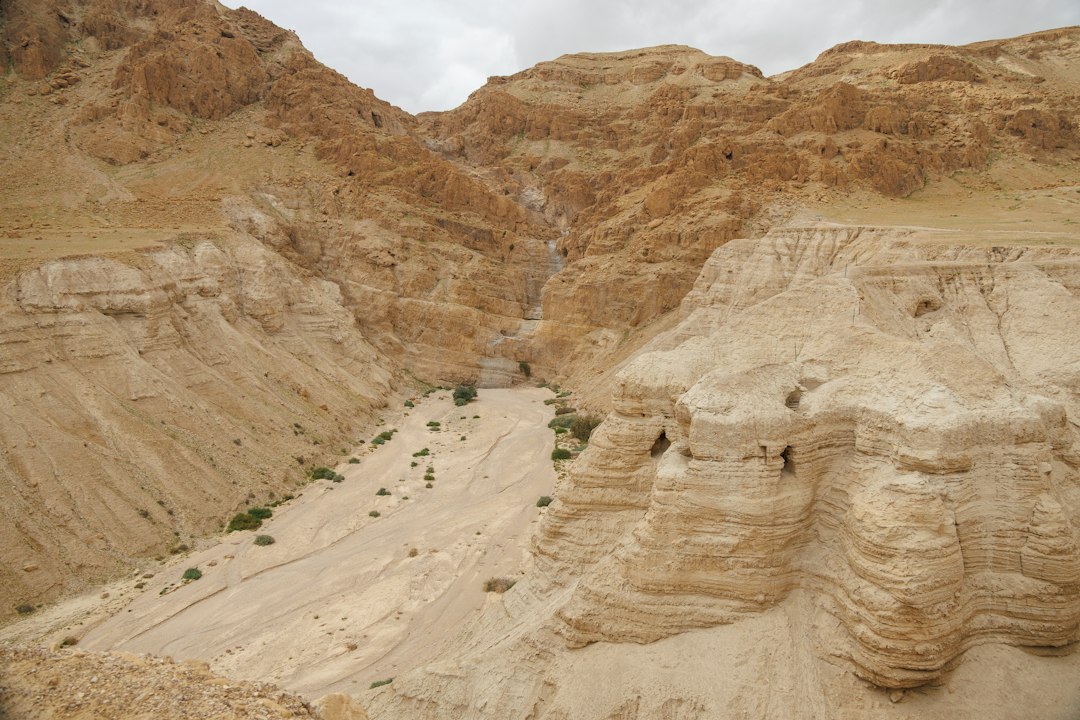
Mars is cold, dry and hostile today, but its surface contains channels, valleys, minerals and sediments that indicate water once moved across the planet.
That matters because where there was persistent liquid water, there may once have been environments capable of supporting life.
Ancient Mars was not simply a smaller Earth
Evidence suggests that early Mars had rivers, lakes and perhaps long-lived bodies of water. The planet also had a thicker atmosphere in its distant past.
But scientists are still reconstructing how warm and wet Mars actually was and for how long.
Riverbeds are geological evidence
Water flowing across a landscape erodes channels and transports sediment.
Orbital spacecraft have mapped valley networks and ancient deltas that preserve the geometry of those processes.
Some deposits are particularly valuable because deltas can concentrate sediments carried by water.
Perseverance is looking at an ancient lake environment
NASA’s Perseverance rover has been exploring Jezero Crater, where orbital observations identified an ancient river delta and lake system.
Rocks in such environments can preserve chemical and physical evidence of past conditions.
Water does not equal life
This distinction is crucial.
Water is one of the requirements for life as we understand it, but a wet environment can remain sterile. Mars may have had water without ever developing life.
What happened to the water?
Mars lost much of its atmosphere and became colder and drier. Today, water is present mostly as ice and in small amounts of vapor and possibly subsurface liquid environments.
The exact history of atmospheric loss is still being studied.
Why ancient riverbeds are so valuable
They preserve evidence of environmental conditions that no longer exist at the surface.
Instead of asking whether Mars is habitable today, scientists can ask whether particular environments were habitable billions of years ago.
The deeper question
Ancient water on Mars does not prove life existed there.
It tells us something more precise: Mars once had environments that deserve to be investigated for signs of past habitability and, potentially, ancient life.
The search is therefore not simply for water.
It is for what water left behind.
Why deltas are especially valuable on Mars
A river delta forms where flowing water slows and deposits sediment. That makes a delta an archive of material transported from a surrounding landscape.
If ancient Martian deltas preserve organic molecules or other chemical signatures, they may concentrate evidence that would be more difficult to find elsewhere.
Jezero Crater is a natural laboratory
Orbital observations identified an ancient river-delta system in Jezero Crater, which is why NASA’s Perseverance rover selected the area for detailed exploration.
The rover studies rocks in their geological context rather than treating isolated samples as disconnected objects.
What water tells us about habitability
Scientists want to know not merely whether water existed but whether it persisted long enough, at suitable temperatures and with chemistry compatible with life.
Different minerals can preserve evidence about acidity, oxidation and the conditions under which sediments formed.
Ancient Mars may have had changing environments
Mars was not necessarily uniformly warm and wet. Climate models and geological evidence suggest a complicated history involving different environments and periods of greater and lesser water availability.
That means habitability may have been local and temporary rather than global and permanent.
What would a biosignature look like?
A promising biosignature would need to be difficult to explain through known non-biological chemistry. Researchers therefore combine mineralogy, organic chemistry, geological context and environmental history.
One unusual molecule would rarely be enough.
Riverbeds preserve a vanished planet
The most important feature of ancient Martian rivers is that they are evidence of processes that no longer operate in the same way on the surface.
They allow scientists to reconstruct a period when Mars had a more active hydrological cycle—and to ask whether that world ever became biologically active.
What Riverbeds Tell Us About Ancient Mars
Mars is cold, dry and thin-aired today, yet its surface preserves geological features that are difficult to explain without substantial amounts of flowing water in the past. Valley networks, channels, deltas and ancient lake basins indicate that parts of Mars once experienced a more active hydrological environment. The important scientific question is not simply whether water existed, but how long it persisted, where it flowed and whether the conditions could have supported life.
Valley networks are geological records
Many Martian valleys branch in ways that resemble networks formed by flowing water. Their shapes, tributaries and relationship to surrounding terrain allow planetary geologists to distinguish them from some volcanic or purely tectonic features. The presence of these networks indicates that water once interacted with the Martian surface at a scale far beyond isolated transient puddles.
Deltas and ancient lakes
Some craters contain deposits interpreted as ancient deltas, where sediment carried by flowing water accumulated when a river entered a standing body of water. Jezero crater, explored by NASA’s Perseverance rover, is an important example. Rocks and sedimentary structures there preserve information about the water that once entered and occupied the basin.
Where did the water come from?
Several mechanisms may have contributed to ancient Martian water: precipitation, groundwater discharge, melting of ice and episodic climate changes. Mars likely did not have one simple climate throughout its history. Different geological periods may have experienced different combinations of atmospheric density, volcanic activity, orbital conditions and surface temperature.
The climate problem
One of the major scientific puzzles is how Mars could have sustained liquid water under a young Sun that was less luminous than today. A thicker atmosphere, greenhouse warming or episodic heating could have helped, but models must also match geological evidence. The existence of river valleys demonstrates that flowing water occurred; it does not by itself determine exactly how warm or wet the planet was.
Water does not automatically mean life
Liquid water is one of the conditions considered important for life as we know it, but it is not proof that life ever existed. Scientists also need suitable chemistry, energy sources and sufficient stability. Ancient Martian environments may have been habitable for periods of time without ever becoming inhabited.
Why sediments matter to the search for life
Sedimentary rocks can preserve chemical and physical traces from ancient environments. This makes former lakebeds especially interesting to astrobiologists. Perseverance is examining rocks for potential biosignatures and collecting samples intended for future analysis. A promising chemical feature must still be tested against non-biological explanations before it can be considered evidence of ancient life.
Mars changed dramatically
The riverbeds also reveal that Mars was not always the world we see today. Over geological time its atmosphere thinned, its surface became colder and stable liquid water became much less common. The transition from a wetter ancient Mars to today’s dry landscape is part of the central planetary story and helps scientists understand how terrestrial planets evolve.
The question the riverbeds cannot answer alone
Ancient channels establish that water once flowed. They do not tell us whether life emerged. That distinction is crucial because the search for life on Mars requires moving from planetary climate history to specific evidence preserved in rocks. The riverbeds identify some of the places where that evidence might survive.
“Wet Mars” may describe several different Marses
The geological record does not necessarily describe one continuously warm and wet planet. Different valley networks, lake deposits and mineral assemblages formed at different times. Some environments may have contained water for long periods, while others may have been brief or episodic.
This matters because habitability depends on duration as well as existence. A short-lived flow can reshape a landscape without providing a stable environment for life to establish or persist. Researchers therefore try to determine the age and sequence of deposits rather than treating every water-related feature as evidence from the same period.
Minerals preserve chemistry, not just moisture
Water can alter rocks chemically. Certain minerals form or transform under particular conditions of acidity, oxidation and water availability. By identifying those minerals, scientists can infer aspects of the environment in which they formed.
A rock can therefore act as a chemical archive. It may record whether water interacted with it, what kinds of reactions occurred and whether the environment changed over time. This is one reason sedimentary and altered rocks are so important to the search for ancient habitability.
The next step is not simply finding more riverbeds
Orbital mapping has already established that ancient water was widespread in parts of Mars. The harder question is what happened inside those environments. Did they contain persistent chemical energy sources? Did organic compounds survive? Did any biological system ever develop?
Those questions require increasingly detailed measurements of individual rocks and, potentially, laboratory analysis of carefully selected samples on Earth. The riverbeds tell us where to look; they do not by themselves provide the final answer.
Riverbeds are geological archives
An ancient river channel on Mars is valuable because water leaves recognizable signatures. Channels can carve terrain, deposit sediments and create networks whose geometry differs from many volcanic or purely wind-driven features. Researchers compare these landforms with terrestrial analogues while remembering that Martian gravity, atmosphere and climate were different.
Habitability is not evidence of life
Ancient water strengthens the case that some Martian environments were potentially habitable, but habitability is not evidence that life actually existed. To establish ancient life, scientists would need evidence distinguishing biological activity from geological and chemical processes.
Why sedimentary rocks are especially interesting
Fine sediments can bury and preserve chemical or structural evidence. On Earth, some biosignatures survive because material becomes isolated from later alteration. Mars offers the possibility that ancient deposits preserved information long after the surface became colder and drier. The challenge is selecting samples whose geological history can be reconstructed well enough to interpret a possible signal.
Mars became dry through a complex history
It is tempting to describe Mars as a once-Earth-like planet that simply lost its water. The real history is more complicated. Water availability varied across time and location, while volcanic activity, atmospheric loss, impacts and climate changes influenced the surface. Ancient riverbeds therefore represent episodes within a changing planetary system rather than proof of one continuous warm period.
The next step is better evidence
New rover observations can narrow the range of possible histories. The long-term goal is to connect landforms, mineralogy, atmospheric evidence and eventually returned samples into a coherent geological sequence. That is how an intriguing riverbed becomes a testable story about ancient Mars.
Curiosity Publication by Aadvik Agastya
Sources & further reading
Have a question about this topic?
Join fellow Qurons on the Quron Forum to ask questions, challenge ideas, share discoveries and explore further.
Discuss on Quron Forum