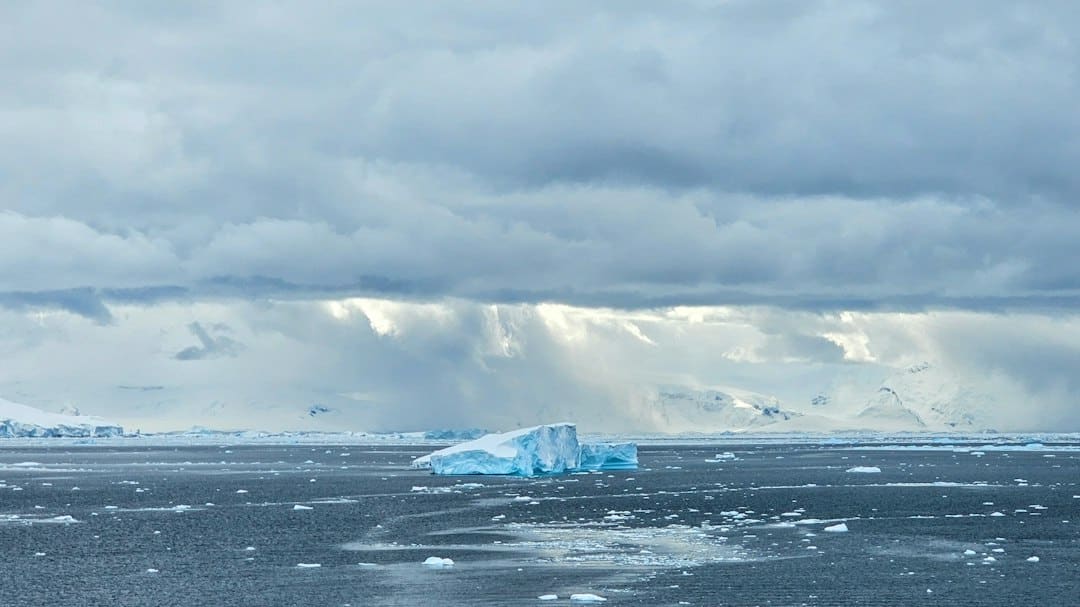
Europa looks like a frozen world. Its surface is covered in ice, crisscrossed by ridges and fractures.
But beneath that ice may be a global ocean containing more liquid water than Earth’s surface oceans.
That possibility makes Europa one of the most compelling places in the Solar System to investigate for environments that could support life.
What is under the ice?
Measurements of Europa’s magnetic environment, gravity and surface geology support the presence of a salty subsurface ocean beneath an ice shell.
The exact depth and structure of the ocean remain uncertain.
Where does the energy come from?
Europa orbits Jupiter in a gravitationally complex environment. Tidal forces flex the moon as it moves through Jupiter’s gravitational field and interacts with neighboring moons.
This flexing can generate internal heat.
Water and energy are not enough
Life requires more than liquid water. It also needs suitable chemistry and an energy source that can drive chemical reactions.
Europa’s ocean may interact with the rocky interior, potentially providing chemical gradients of interest to astrobiologists.
The surface can preserve clues
Material from the ocean may occasionally reach the surface through cracks or plumes, although the existence and behavior of plumes remain an active research topic.
If surface material contains salts or organic molecules originating from the ocean, spacecraft may be able to study it without drilling through kilometers of ice.
Europa Clipper will investigate
NASA’s Europa Clipper mission is designed to study Europa’s surface, interior and atmosphere during repeated flybys.
It is not a life-detection mission in the simple sense. Its goal is to determine whether Europa has conditions suitable for life and to characterize the ocean and ice shell.
Could anything live there?
We do not know.
Earth’s deep ocean contains ecosystems that depend on chemical energy rather than sunlight, showing that life can exist in environments very different from the surface world.
That makes Europa scientifically plausible as a habitat—but plausibility is not evidence of life.
The deeper mystery
Europa forces us to expand our idea of where a habitable world can exist.
A planet does not need a warm surface under a blue sky to contain an environment of interest.
It may only need liquid water, chemistry, energy and enough time.
Europa may be hiding all four beneath an ice shell.
Why Europa Is Different From an Ordinary Frozen World
Europa’s importance comes from the possibility that liquid water exists beneath its ice. Jupiter’s enormous gravity repeatedly deforms the moon as Europa moves through its orbit. That tidal flexing can generate internal heat, helping prevent the subsurface ocean from freezing solid.
Water Is Necessary, Not Sufficient
Finding an ocean would not automatically mean finding life. Biology also needs usable energy, chemically useful ingredients and an environment that remains suitable for long enough. Europa is interesting because several of those ingredients may coexist: water, chemical gradients and an interior that could interact with the ocean through geological processes.
The Ice Makes the Search Hard
Europa’s ocean is hidden beneath a thick shell. Scientists therefore have to study the surface for indirect clues. Spectroscopy can reveal surface materials, spacecraft can measure gravity and magnetic effects, and plume or particle observations—if confirmed and characterized—could potentially provide access to material originating from below.
Europa Clipper and the Evidence Problem
NASA’s Europa Clipper mission is designed to investigate whether Europa has conditions suitable for life. Its instruments can examine the moon’s surface, atmosphere and interior environment. Even strong evidence for an ocean’s chemistry would still be different from detecting life itself. Distinguishing biological signatures from abiotic chemistry will be one of the hardest parts of the problem.
Europa therefore changes the question from “Is there life there?” to a more scientifically useful sequence: Is there a habitable environment? Can material and energy move through it? What chemistry is present? And what observation would genuinely distinguish biology from geology?
Why Europa Is One of the Solar System’s Most Interesting Oceans
Europa looks like an icy moon, but beneath its frozen surface may be a global saltwater ocean. That possibility makes Europa important to astrobiology because liquid water, chemical ingredients and an energy source are among the conditions scientists consider when evaluating whether an environment could support life. None of this means that life has been detected there. Europa is compelling because several potentially habitable ingredients may coexist.
Evidence for a hidden ocean
Scientists have several lines of evidence for a subsurface ocean. Europa’s induced magnetic response is consistent with a conductive layer beneath the ice, and its surface geology shows features that are difficult to explain without a mobile interior layer. Tidal deformation also provides clues about how the moon responds to Jupiter’s enormous gravitational field.
Jupiter keeps Europa internally active
Europa follows an orbit that is not perfectly circular, and gravitational interactions with Jupiter and neighboring moons create changing tidal forces. Those forces flex Europa’s interior and can generate heat. This tidal heating may help keep water from freezing completely and could maintain geological activity beneath the surface.
The ice shell is a barrier and a window
The ocean is separated from space by an ice shell whose thickness and structure remain subjects of investigation. Cracks, ridges, chaotic terrain and other surface features may record interactions between the ice and the ocean below. The surface therefore acts as an indirect archive of an environment that cannot currently be sampled by simply looking through the ice.
Water is necessary, but not sufficient
Liquid water alone does not establish habitability. Life also requires usable chemical energy and suitable elements and conditions. Europa may receive energy from tidal heating and chemical interactions between water and rock. The precise availability and distribution of those energy sources remain important questions.
Could Europa have the chemistry life needs?
Europa’s surface contains compounds produced or modified by interactions with Jupiter’s radiation environment. Some surface material may also be transported downward through geological processes, while material from the ocean could potentially reach or influence the surface. Understanding that exchange is central to determining whether surface observations can tell us anything about the hidden ocean’s chemistry.
What would evidence of life look like?
A compelling discovery would need to distinguish biological activity from abiotic chemistry. A single organic molecule would not be enough because organic compounds can form without biology. Researchers would look for combinations of chemical, geological and possibly morphological evidence that are difficult to explain through known non-biological processes.
Europa Clipper’s role
NASA’s Europa Clipper mission is designed to conduct repeated close flybys of Europa and study its surface, interior and environment. It is not a mission designed simply to land and declare whether life exists. Instead, its instruments will characterize the moon’s ice shell, chemistry, geology and possible ocean-related activity, improving our ability to evaluate its habitability.
The great uncertainty
The most important unknown is not merely whether Europa contains an ocean, but how that ocean interacts with rock, ice and energy sources. A world can contain enormous amounts of water and still be biologically sterile. Europa’s value to science is that it offers a natural laboratory for testing how potentially habitable environments arise away from Earth.
Europa’s ocean may be connected to its rocky interior
For astrobiologists, the most interesting possibility is not simply that Europa has water. It is that water may interact chemically with rock beneath the ice. On Earth, interactions between water and minerals can create chemical gradients that microorganisms exploit as energy sources.
Europa’s internal chemistry is still uncertain, so researchers cannot assume that an Earth-like ecosystem exists there. The goal is to determine whether the moon provides the ingredients and energy pathways that could make biology chemically plausible.
The ice shell is part of the story
Europa’s ice is not merely a lid covering the interesting material below. Its thickness, movement and interaction with the ocean affect how heat and chemicals are transported.
Surface fractures may record stresses produced by tides and internal activity. Studying those patterns can therefore provide indirect information about what is happening beneath the surface.
Could the ocean be hostile to life?
Absolutely. Liquid water alone does not establish habitability. Temperature, salinity, acidity, radiation environment, nutrient availability and energy sources all matter.
Europa’s surface is exposed to intense radiation from Jupiter’s environment, but the subsurface ocean would be shielded by the ice. This contrast is one reason scientists distinguish between surface conditions and the potentially very different environment below.
Why a future sample would be transformative
If material from Europa’s ocean could eventually be sampled and shown to contain compelling chemical or biological signatures, researchers would gain a direct window into a second potentially habitable environment. Until then, the scientifically justified conclusion is more modest: Europa appears to possess several ingredients that make it an important target for investigating habitability.
Curiosity Publication by Aadvik Agastya
Sources & further reading
Have a question about this topic?
Join fellow Qurons on the Quron Forum to ask questions, challenge ideas, share discoveries and explore further.
Discuss on Quron Forum