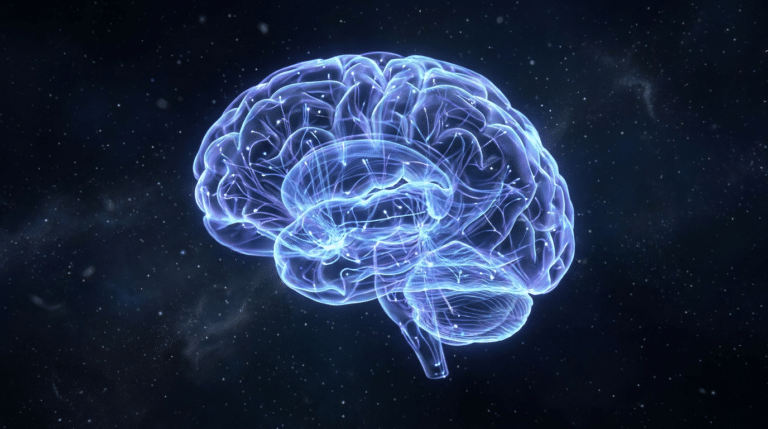

Yoga is often introduced to the modern world as a system of stretching, exercise and relaxation. That description captures one part of contemporary yoga, but it leaves out much of the tradition’s intellectual history.
Across Indian traditions, yoga has referred to disciplined practices involving attention, meditation, breath regulation, ethical conduct, bodily practices and, in several philosophical systems, liberation. Modern neuroscience has begun investigating some of the practices that fall under this broad umbrella.
The resulting conversation is fascinating—but it is also easy to overstate. Scientific research can investigate changes in stress, attention, autonomic physiology, pain, sleep and brain activity. It cannot, by measuring a brain scan, establish every philosophical claim made by an ancient yoga tradition.
Yoga Was Never Just One Exercise System
The history of yoga is long and diverse. Early Indian texts use the language of disciplined practice in different ways, and later traditions developed increasingly systematic approaches to meditation and mental training.
The Yoga Sutras associated with Patanjali are especially influential in discussions of classical yoga. The text presents an eight-part path commonly described through concepts including ethical restraints, observances, posture, breath regulation, withdrawal of the senses, concentration, meditation and deep absorption.
Physical posture is therefore present, but it is not the whole system. In many modern settings, yoga classes understandably focus on asana because posture can be taught and practiced physically. Historically, however, yoga encompassed a much broader discipline of body, breath and mind.
Classical Yoga and Modern Yoga Are Not Identical
Modern yoga has developed through interactions among Indian traditions, teachers, institutions and global physical-culture movements. Contemporary classes may combine postures, breathing, relaxation and meditation in ways that differ substantially from the practices described in older texts.
This distinction matters for scientific research. When a study reports that a particular yoga program reduced stress, the finding applies to the intervention that was actually tested—not automatically to every practice historically called yoga.
The same principle applies in reverse. A modern clinical study of yoga cannot be used to prove that every philosophical proposition associated with classical yoga has been scientifically demonstrated.
What Can Science Actually Measure?
Scientific research becomes possible when a practice is translated into observable variables.
Researchers can measure heart rate, blood pressure, breathing patterns, cortisol or other physiological markers, sleep measures, pain ratings, mood, attention and aspects of cognitive performance. Brain-imaging techniques can also examine changes in patterns of neural activity or connectivity.
These measurements allow specific questions to be tested. Does a defined breathing exercise change autonomic activity? Does a structured yoga program affect perceived stress? Does regular practice alter sleep quality? Are changes in attention detectable under controlled conditions?
Those are empirical questions. They are different from asking whether consciousness is fundamentally separate from the brain or whether meditation produces liberation in the philosophical sense.
Why Stress Is Such an Important Research Area
Stress provides a useful bridge between subjective experience and measurable physiology.
When people experience stress, multiple systems interact. The autonomic nervous system changes cardiovascular and respiratory activity, while endocrine responses help the body respond to perceived demands. Attention can become focused on threat, and prolonged stress can affect sleep, mood and behavior.
Yoga practices can influence several of these pathways at once. Physical activity can affect mood and bodily regulation. Slow breathing can alter respiratory and cardiovascular rhythms. Relaxation and attention practices can change how a person responds to internal sensations and stressful thoughts.
Clinical studies have reported reductions in perceived stress and improvements in aspects of well-being for some yoga interventions. But effect sizes vary, and study quality differs. Expectations, instructor interaction, physical activity and social support can all contribute to the observed outcome.
Why Breathing Is Scientifically Interesting
Breathing is unusual because it is both automatic and voluntarily controllable.
Changing breathing rate and depth can influence carbon-dioxide levels, respiratory rhythms and interactions between the respiratory and cardiovascular systems. Slow, controlled breathing can also influence autonomic regulation and subjective arousal.
This provides a plausible physiological pathway through which some breath-focused practices can produce a feeling of calm. It does not require a supernatural explanation, although the subjective experience may be meaningful within a practitioner’s spiritual framework.
Different breathing techniques are also not interchangeable. Their effects depend on rate, depth, duration, posture and individual characteristics. Claims about “breathwork” should therefore be tied to the specific technique being studied.
What Happens in the Brain During Meditation?
Meditation is another major area of research, although “meditation” covers many different practices.
Focused-attention meditation asks practitioners to maintain attention on a chosen object and return when distraction occurs. Open-monitoring practices involve observing thoughts, sensations and other experiences without immediately reacting to them. Other traditions use visualization, mantra repetition, compassion practices or inquiry.
Brain-imaging research has reported differences in activity and connectivity involving networks associated with attention, self-referential processing and emotional regulation. But brain imaging is an indirect window into mental processes. A change in activity in a particular network does not translate into a single simple psychological or spiritual meaning.
Can Yoga Change the Brain?
Some studies have reported structural or functional differences in the brains of experienced meditators or yoga practitioners. Such findings are interesting, but they raise a fundamental methodological question: did the practice cause the difference?
People who choose to meditate or practice yoga may differ from non-practitioners in many ways before they begin. They may exercise more, sleep differently, have different health habits or possess particular personality traits.
This is why randomized controlled trials and longitudinal studies are especially valuable. If participants are assigned to an intervention and measured before and after it, researchers can better isolate changes associated with the intervention. Even then, blinding is often difficult in behavioral studies, and expectation effects can remain important.
The Placebo and Expectation Problem
Expectations are not simply a nuisance in mind-body research. They are part of the mechanism by which people experience many interventions.
A person who expects yoga to reduce stress may approach a class differently, pay greater attention to relaxation and interpret normal fluctuations in mood through that expectation. The social environment of a class can also contribute to the experience.
That does not mean every reported benefit is “just placebo.” Physical movement, breathing, sleep changes and attention training can have genuine physiological and psychological effects. The challenge is separating these components and estimating how much each contributes.
What Does the Clinical Evidence Suggest?
Research has investigated yoga for a range of conditions and outcomes, including stress, anxiety symptoms, chronic pain, sleep and aspects of physical function. Some reviews find promising benefits, while also emphasizing differences in study quality and intervention design.
The strongest conclusions are usually narrower than popular headlines. Evidence that a structured program can improve a particular outcome does not mean yoga is a cure for every condition.
Yoga also varies in physical intensity. A gentle breathing-and-meditation program is not physiologically equivalent to a vigorous posture sequence. Safety therefore depends on the practice, the individual’s health and the way the program is taught.
Ancient Claims and Modern Evidence Are Different Categories
It is tempting to say that modern neuroscience has finally “proved” ancient yoga.
That statement is too broad.
Suppose a study finds that a breathing practice reduces physiological arousal. That provides evidence about the effect of that breathing practice. It does not establish an ancient philosophical claim about the ultimate nature of reality.
Similarly, if meditation changes activity in a brain network associated with self-referential processing, the finding can illuminate how the practice affects cognition. It does not by itself establish a metaphysical theory of the self.
Scientific evidence and philosophical reasoning can interact, but they should not be treated as interchangeable forms of proof.
Where the Two Traditions Genuinely Meet
The most interesting connection between yoga and neuroscience is methodological.
Yoga traditions developed practices designed to alter attention and mental experience through disciplined repetition. Modern science has developed instruments and experimental methods capable of measuring some consequences of those practices.
An ancient practitioner might ask, “What happens when attention is trained in this way?” A modern researcher can ask a related empirical question: “What measurable changes occur in cognition, physiology or neural activity when people perform this practice repeatedly?”
The questions are not identical, but they can illuminate different aspects of the same human experience.
Why Consciousness Remains a Harder Question
Neuroscience can investigate correlations between brain activity and conscious experience, but consciousness raises questions that extend beyond simply locating active brain regions.
Why should particular neural processes be accompanied by subjective experience at all? How does a distributed physical system produce the unified feeling of being a self? These remain active philosophical and scientific questions.
Yoga traditions have their own theories of consciousness and selfhood, but these should be studied as philosophical systems rather than treated as experimental results.
A More Careful Way to Think About “Ancient Wisdom”
Calling yoga “ancient wisdom” can be meaningful, but it can also hide the diversity of the historical tradition.
There was no single ancient yoga manual containing everything modern practitioners do. Practices evolved, interacted and were interpreted differently across schools and periods.
The more interesting historical picture is therefore not that ancient India somehow possessed modern neuroscience in disguised form. It is that Indian traditions developed sophisticated methods of attention, contemplation and bodily discipline long before modern experimental psychology existed.
Modern science can investigate selected consequences of those practices without needing to claim that the ancient traditions anticipated every contemporary scientific concept.
The Bigger Picture
Yoga sits in a rare space where physical practice, mental training and philosophical inquiry overlap.
Modern research suggests that some practices associated with yoga and meditation can affect measurable aspects of physiology, stress, attention and subjective well-being. The evidence is promising in several areas but varies in strength, and specific claims should always be tied to the particular intervention and study design.
At the same time, the philosophical questions that motivated many yoga traditions—What is the self? Why do we suffer? Can attention be transformed? What is consciousness?—remain larger than any single experiment.
Perhaps that is what makes yoga particularly interesting to modern science. It is not an ancient laboratory manual waiting to be decoded. It is a long-running human experiment in disciplined attention and self-observation, now encountering a scientific tradition with tools capable of measuring some of what happens when people practice it.
Curiosity Publication by Aadvik Agastya
Sources & further reading
- National Center for Complementary and Integrative Health — Yoga
- NIH/PubMed Central — Yoga and neuroscience research
Have a question about this topic?
Join fellow Qurons on the Quron Forum to ask questions, challenge ideas, share discoveries and explore further.
Discuss on Quron Forum