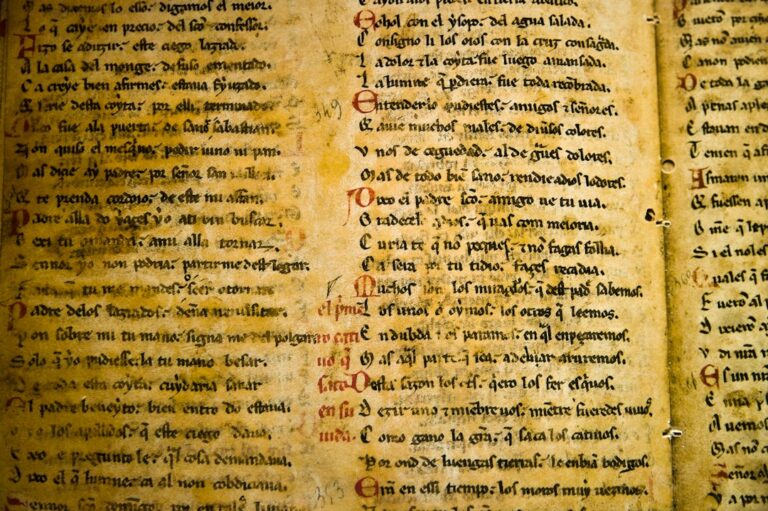
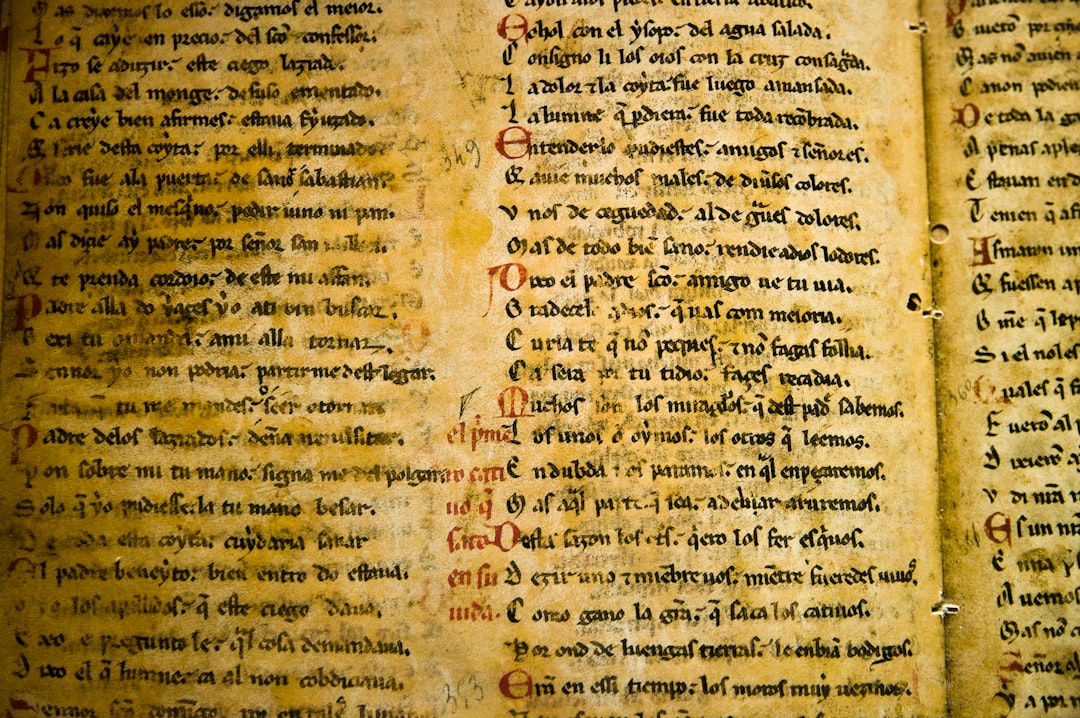
Imagine discovering a centuries-old manuscript filled with strange illustrations and written in a script nobody can reliably read.
That is the puzzle of the Voynich Manuscript.
The richly illustrated book contains unfamiliar plants, astronomical diagrams, bathing scenes and other images alongside hundreds of pages of mysterious writing.
What is known about the manuscript?
Radiocarbon dating places the parchment in the early fifteenth century. The manuscript therefore appears to be genuinely old, even though its author and purpose remain uncertain.
It is named after Wilfrid Voynich, the bookseller who acquired it in the early twentieth century.
The writing is the real mystery
The text uses a consistent script with repeated symbols and word-like patterns.
That has encouraged attempts to treat it as a real language, cipher, invented script or elaborate hoax.
Why hasn’t cryptography solved it?
Traditional ciphers usually leave statistical fingerprints. Researchers have compared symbol frequencies, repeated sequences and word structures with known languages and cryptographic systems.
Some analyses find patterns that look language-like. Others emphasize unusual statistical properties that complicate straightforward interpretation.
Could it be a forgotten language?
Possible, but there is no accepted identification.
A genuine language normally produces patterns that can be compared with related languages, writing systems or known names. The Voynich manuscript has resisted these connections.
Could the manuscript be a deliberate construction?
A sophisticated fake is possible in principle, but the manuscript’s age does not support a modern forgery.
That does not automatically prove that its writing carries meaningful information. A historical manuscript could contain invented or nonsensical text.
The illustrations provide clues—but not answers
The drawings show plants, zodiac-like symbols, astronomical forms and biological-looking diagrams. Some resemble recognizable objects; others do not.
Researchers have proposed medical, botanical, alchemical and astronomical interpretations.
None has produced a consensus decipherment.
Why the mystery has resisted resolution
The manuscript contains enough structure to look meaningful but not enough external evidence to identify its code or language.
Every proposed solution must explain the entire manuscript rather than a handful of selected passages.
The deeper mystery
The Voynich Manuscript is a perfect example of the difference between finding a pattern and understanding it.
We can measure its symbols, date its parchment and study its images.
What we cannot yet do reliably is connect those observations to a meaning.
The book exists.
The writing is real.
The message, if there is one, remains out of reach.
What We Know About the Voynich Manuscript
The Voynich Manuscript is famous because its text has resisted a generally accepted decipherment. But its mystery is not simply that nobody can read it. The manuscript is a physical object with a traceable modern history, distinctive illustrations and a writing system that can be studied statistically. The difficult question is what the writing represents and whether it encodes a language, a constructed system, a cipher or something else.
A medieval object with a modern mystery
Radiocarbon dating has placed the parchment in the early fifteenth century, establishing that the physical manuscript is genuinely old. That does not automatically establish when every page was written or where it was produced. The manuscript has also passed through several known owners and collections in more recent centuries, creating a partial provenance rather than a complete biography.
Its illustrations are part of the evidence
The pages contain drawings of plants, astronomical and astrological diagrams, bathing or biological scenes, containers, circular structures and other imagery that has proved difficult to interpret consistently. Some plants resemble recognizable species, while others appear composite or stylized. The images may provide clues to the text, but they can also invite overconfident identification when a resemblance is treated as proof.
Is the script a real language?
The writing uses a set of recurring symbols arranged into sequences that have attracted statistical analysis. Researchers have found patterns that are not obviously equivalent to random noise, but pattern is not the same as meaning. Natural languages, ciphers and artificial writing systems can all produce structured repetition. The central challenge is finding a decipherment that explains the manuscript consistently rather than matching isolated words or symbols.
Why cryptography has struggled
Classical cipher-breaking often depends on knowing something about the language, encryption method or expected text. The Voynich Manuscript provides few secure footholds. If the underlying language is unknown, a substitution system is not straightforward to recognize. If the script represents an invented language or a more complex encoding, frequency patterns alone may not reveal the key.
What about the hoax theory?
A deliberate fake is possible in principle, and the manuscript’s obscurity has encouraged many hoax theories. But the age of the parchment makes the simplest modern-forgery scenario untenable. A medieval or early-modern manuscript could still have been created as an elaborate deception, yet that hypothesis would itself need to explain the writing, illustrations, production methods and historical provenance. “Nobody can read it” is not evidence that it is a hoax.
The problem with claimed solutions
Many proposed decipherments have appeared over the years. Some identify particular languages, others claim mathematical or cryptographic solutions. The difficulty is reproducibility. A convincing solution should account for the manuscript’s text systematically, predict previously unexplained passages and withstand independent testing. A method that translates only selected phrases is not enough.
Why statistical structure matters
Computational analysis can test whether symbol frequencies, word lengths and recurring sequences resemble known languages or artificial systems. Such studies can narrow possibilities, but they cannot independently supply a translation. Statistical resemblance can indicate that the text has structure while leaving open the crucial question of what generated that structure.
An unsolved problem, not an empty one
The Voynich Manuscript is valuable precisely because several facts can be established without knowing its meaning. The parchment is medieval, the manuscript has a distinctive internal structure and the text displays regular patterns. What remains unknown is the relationship between those patterns and the meaning intended by whoever produced them. That distinction turns the manuscript from a supernatural puzzle into a genuine historical and linguistic problem.
Dating the parchment does not date the whole story
Radiocarbon dating is powerful evidence about the age of the parchment, but parchment can be stored before use, and a manuscript can contain material produced at different times. The date therefore anchors the physical object without automatically identifying its author, place of composition or the moment when the text was conceived.
That distinction is important because later owners sometimes leave marks, annotations or changes that become part of the manuscript’s biography. The Voynich puzzle is consequently both a decipherment problem and a provenance problem.
Language, cipher and invented writing are different possibilities
If the manuscript records a natural language, researchers might eventually find relationships with vocabulary, grammar or another historical writing system. If it is a cipher, the visible symbols may conceal an underlying language through a transformation. If it is a constructed language or writing system, its rules may have been deliberately designed by its creator. And if the text is intentionally meaningless, its statistical structure may have been produced for a very different purpose.
These possibilities can look similar from the outside. That is why identifying a few apparent words is not enough. A proposed explanation has to account for the entire system.
What would count as a real breakthrough?
A convincing decipherment should be reproducible. It should define the symbols and rules clearly, translate substantial portions of the manuscript coherently, fit the illustrations and historical context where appropriate, and work on passages that were not selected in advance because they looked promising.
Independent researchers should also be able to apply the method and obtain similar results. Until that happens, a claimed translation remains a hypothesis rather than a solved manuscript.
The mystery is valuable because the evidence is unusually constrained
We possess the object, can study its materials and can quantify its writing, yet lack a secure key connecting the symbols to meaning. That combination is what makes the Voynich Manuscript so resistant to easy answers. Every new method—linguistic, computational or historical—has to extract information from the same limited evidence.
The manuscript therefore illustrates a broader principle of historical research: uncertainty is not the absence of evidence. Sometimes it is what remains after the available evidence has been measured as carefully as possible.
The illustrations are clues, not a translation key
The Voynich Manuscript contains botanical-looking drawings, diagrams, astronomical or astrological imagery and unusual human figures. These images encourage interpretation, but a plant drawing might represent a real species, a stylized composite, a symbol or an imaginary organism. Without readable labels, the image cannot settle the question by itself.
Language identification comes before translation
Before translating an unknown text, researchers need to establish what kind of writing system or language they are dealing with. A script may encode a known language, an unknown language, a cipher or something intentionally constructed. The Voynich text complicates this because its symbols are unfamiliar and its statistical properties can resemble structured language without revealing a secure linguistic identity.
Why frequency patterns are interesting
Repeated symbols and word-like units can be analyzed statistically. Researchers can ask whether symbols occur preferentially at sequence boundaries, whether word lengths follow patterns and whether repeated structures resemble known writing systems. These tests can show internal structure but cannot alone establish meaning; structured ciphers, artificial languages and natural languages can all generate regular patterns.
Why a hoax is difficult to prove
A hoax remains possible, but proving it requires explaining the manuscript’s physical history, materials, construction and statistical properties. Conversely, unusual complexity is not proof that the manuscript contains valuable hidden knowledge. The strongest approach is to keep multiple hypotheses open until independent evidence separates them.
Why no proposed solution has won consensus
The manuscript is difficult because several uncertainties reinforce one another: the writing is unresolved, the illustrations are ambiguous and the original purpose is unclear. A breakthrough in any one area could illuminate the others.
Curiosity Publication by Aadvik Agastya
Sources & further reading
Have a question about this topic?
Join fellow Qurons on the Quron Forum to ask questions, challenge ideas, share discoveries and explore further.
Discuss on Quron Forum