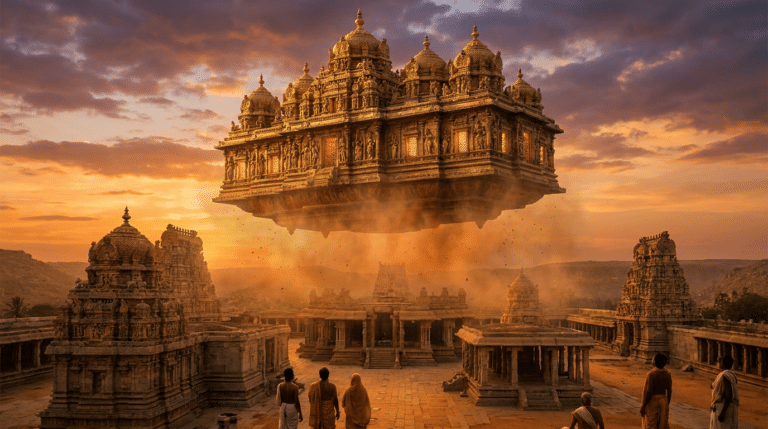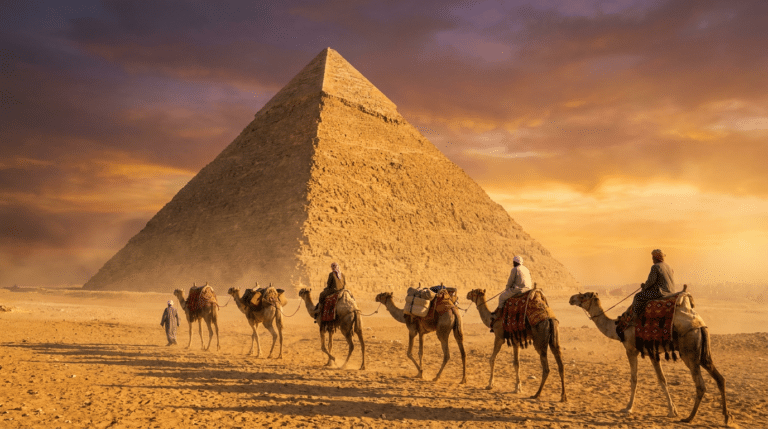
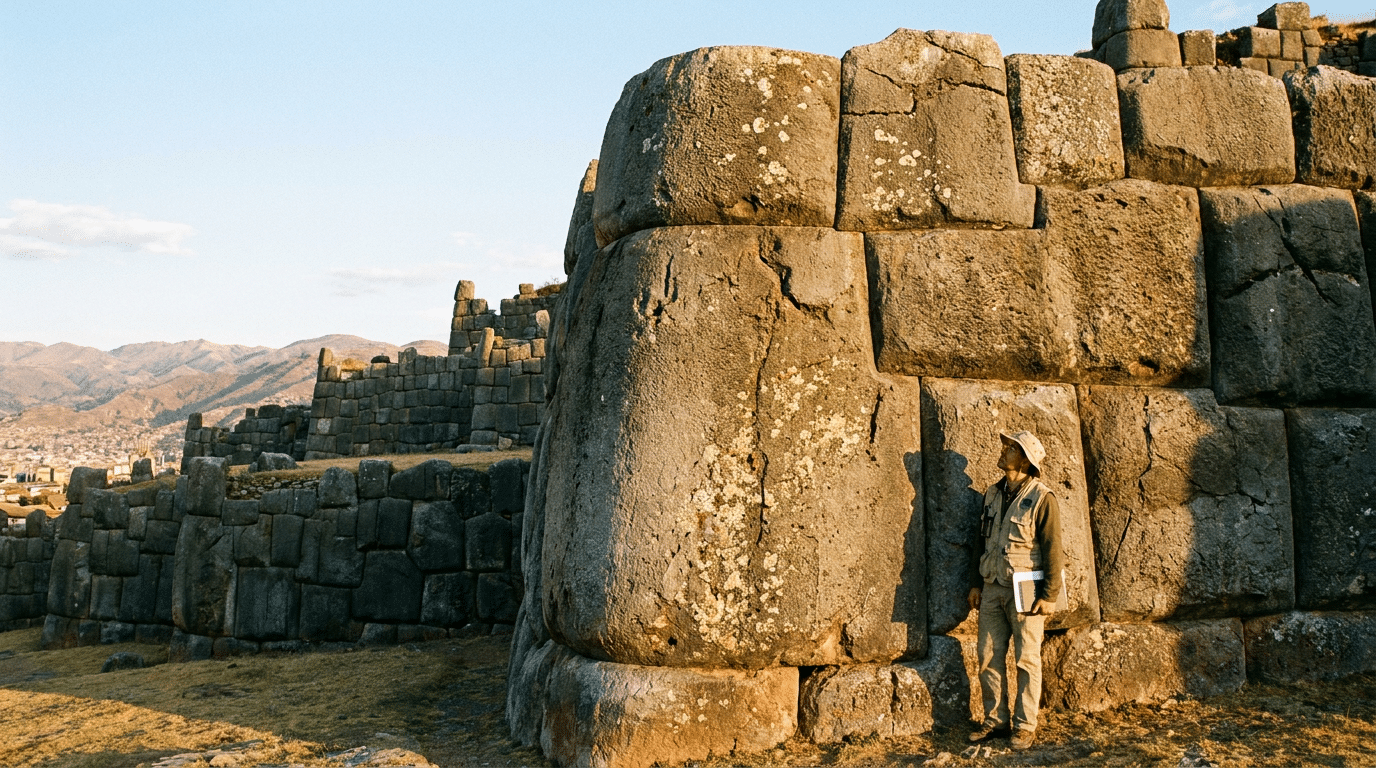
Across Europe and other parts of the world, enormous stones were quarried, transported and arranged by communities living thousands of years ago.
Some stones form circles. Others stand alone. Some enclose chambers used for burials. Others are incorporated into avenues, walls or complex ceremonial landscapes.
They are commonly described as megaliths, but the word is easy to misunderstand.
Megalithic is a description of monument construction, not the name of one lost civilization. Different communities built different monuments at different times and for different reasons.
The enduring mystery is therefore not simply how prehistoric people moved large stones. It is why particular communities decided that moving them was worth the enormous effort.
What Is a Megalith?
The word comes from Greek roots meaning “large stone.” In archaeology, it is used broadly for monuments or structures built with large stones.
That definition includes many different forms: standing stones, stone circles, dolmens, passage tombs, chambered tombs and other monumental arrangements.
These structures are not necessarily related simply because they use large stones.
A tomb in one region may have a completely different social function from a stone circle hundreds of kilometres away.
There Was No Single Megalithic People
One of the most common misconceptions is that a single mysterious civilization spread the technology of megalith building around the world.
Archaeological evidence does not require such a conclusion.
Communities in different regions independently discovered that large stones could be used to create durable monuments. Similar human needs—burial, remembrance, territorial marking, ceremony and community identity—can produce similar architectural solutions.
Chronology also matters. Different monuments were constructed at different times, sometimes separated by thousands of years.
Where Did the Stones Come From?
Stone was not always available immediately beside a monument.
Archaeologists can sometimes identify the geological source of stones by comparing their mineral composition and geological characteristics with nearby quarries or outcrops.
This can reveal the scale of transport involved.
At Stonehenge, for example, some stones came from sources far from the monument, demonstrating that prehistoric communities moved heavy material across substantial distances.
Quarrying Was an Engineering Problem
Extracting a large stone from bedrock is difficult even before transportation begins.
Prehistoric builders could exploit natural fractures, use hammerstones and wedges and apply repeated force to separate blocks. The exact techniques depended on the geology and tools available.
Quarrying also required judgment. A stone had to be large enough and structurally sound enough to survive extraction, transport and erection.
How Could They Move Such Heavy Stones?
The simplest answer is often the most powerful: people can move surprisingly heavy objects when they have enough time, tools and coordination.
Possible methods include wooden sledges, rollers, ropes, levers, prepared tracks and earthen ramps.
Water transport may also have been useful in some regions.
Experimental archaeology has tested several of these methods. Modern researchers have shown that groups using simple technologies can move stones weighing many tonnes when the route is prepared and the labor is carefully coordinated.
The Hardest Part May Have Been Logistics
It is tempting to focus on the spectacular moment when a stone is raised into position.
But the greater challenge may have been everything around it.
Workers needed food, water, tools and shelter. Routes had to be prepared. Ropes and wooden equipment had to be maintained. Construction had to be organized over long periods.
A monument therefore provides evidence not merely of physical strength but of social coordination.
What Did These Monuments Mean?
The answer probably varied.
Some megalithic monuments are clearly associated with burials or human remains. In those cases, relationships with ancestors and death are important possibilities.
Others may have served as gathering places, territorial markers, ceremonial locations or monuments associated with seasonal cycles.
There is no reason to assume that every large stone monument had exactly the same purpose.
Burial and Ancestor Landscapes
Many prehistoric monumental structures were not isolated objects. They formed part of broader landscapes containing settlements, graves, pathways and other ceremonial sites.
This suggests that their meaning may have involved repeated movement through the landscape and relationships between the living, the dead and ancestral places.
A tomb was therefore not necessarily just a container for a body. It could become a long-term place of memory and community identity.
Why Build Something That Takes Generations?
Some monuments were modified repeatedly over long periods.
Stonehenge is a particularly famous example. Its construction involved multiple phases, changes in design and different materials.
This means it should not be imagined as a single construction project completed by one group at one moment.
Monuments could accumulate meaning as later generations added to, rebuilt or reorganized them.
Were Megaliths Astronomical Observatories?
This is one of the most persistent questions.
Some monuments have convincing relationships with the position of the Sun at particular times of year. Alignments can indicate that builders paid attention to seasonal sunrise or sunset positions.
But an astronomical alignment does not automatically mean that a monument was a scientific observatory.
A community can orient a monument toward the solstice for symbolic, religious or calendrical reasons without using it as a precision astronomical instrument.
How Do Archaeologists Test an Astronomical Claim?
A convincing astronomical interpretation should involve more than one convenient line drawn between a stone and the horizon.
Researchers can examine repeated alignments, the orientation of multiple structures, the range of possible horizon positions and whether the pattern is statistically unlikely to have occurred by chance.
Archaeological context also matters. If other evidence suggests seasonal ceremonies occurred at the site, an astronomical alignment becomes easier to interpret.
Stonehenge Shows Why Context Matters
Stonehenge is often presented as a giant prehistoric calendar.
There is evidence for deliberate solar alignments, and its design clearly incorporates knowledge of the annual movement of the Sun across the horizon.
But that does not tell us exactly what ceremonies took place there or what every stone meant.
A monument can encode astronomical knowledge without being reducible to an “observatory.”
What About the Moon and Stars?
Claims of lunar or stellar alignments require even greater caution.
The Moon’s apparent position changes over several cycles, and many possible alignments can be found if enough orientations are tested.
Researchers therefore need a strong archaeological reason to distinguish intentional astronomical design from patterns discovered after the fact.
Experimental Archaeology Changes the Question
Experimental archaeology does not attempt to recreate the past perfectly. Instead, it tests whether proposed techniques are physically plausible.
Researchers can construct replicas of sledges, test different surfaces, experiment with ropes and investigate how many people are required to move a given mass.
If a proposed method works under realistic conditions, it becomes a plausible explanation. It does not prove that prehistoric builders used exactly that method.
This distinction is important.
Why “They Could Not Have Done It” Is Usually Too Strong
Ancient engineering is sometimes described as impossible simply because the builders lacked modern machinery.
But machines are not the only way to apply force.
Simple mechanical advantages—levers, ramps, rollers and sledges—can multiply human effort. Large teams can also coordinate enormous amounts of labor.
The absence of modern cranes therefore does not imply the impossibility of moving large stones.
But Simple Technology Does Not Mean Simple Organization
There is an opposite mistake as well.
Saying that ropes and sledges could move a stone can make the construction sound easy.
It was not.
The engineering challenge included planning, labor organization, material supply, route preparation, timing and risk management.
A community capable of organizing such a project possessed substantial social and logistical capacity even if its tools were technologically simple by modern standards.
Why Do the Stones Survive?
There is a major preservation bias in our picture of prehistory.
Stone survives.
Wood rots. Textiles decay. Food disappears. Leather deteriorates. Many ordinary buildings leave only faint traces.
As a result, the monuments that dominate modern discussions are the things that happened to be made from durable materials.
The people who built them probably spent far more time farming, cooking, trading, raising children and repairing ordinary houses than moving enormous stones.
Megaliths Are Not Necessarily Evidence of Lost Technology
The scale of a monument can tempt modern observers to imagine forgotten machines or unknown engineering methods.
But archaeology does not require such explanations when known physical techniques can account for the construction.
The more interesting question is often social rather than technological: what motivated people to invest such extraordinary amounts of labor in a permanent structure?
Why Monumental Construction Matters
A monument can reveal the existence of shared ideas.
People who disagree about many things still have to cooperate if they are going to quarry, transport and raise a massive stone.
That cooperation may reflect religious beliefs, political authority, kinship networks, seasonal gatherings or collective identity.
The stones therefore preserve evidence of social relationships as much as engineering.
Different Regions, Different Stories
Megalithic traditions appear in many parts of the world, including Europe, Africa and Asia.
But similarities should not automatically be treated as evidence of cultural contact.
Large stones are available in many landscapes, and human communities repeatedly discover similar advantages in using durable materials for monuments.
Only detailed chronology, material evidence and archaeological context can establish whether two traditions were historically connected.
The Real Mystery
Megaliths are not mysterious because prehistoric people lacked the ability to move stone.
They are mysterious because the stones are the surviving remains of decisions made by people whose voices are often lost.
We can calculate the approximate force needed to move a block. We can reconstruct possible quarry routes. We can test sledges and levers.
What is harder to recover is the human meaning.
Why this stone? Why this place? Why this alignment? Why ancestors? Why a circle rather than a wall?
The Bigger Perspective
Every megalith is a meeting point between geology, engineering and human culture.
The stone had to be chosen. The route had to be planned. Labor had to be organized. The monument had to mean something important enough to justify the effort.
Some monuments marked the dead. Some may have structured seasonal ceremonies. Some encoded relationships with the horizon and Sun. Others probably had meanings we can no longer recover.
The most extraordinary thing about the stones may therefore not be how prehistoric people moved them. It is that they chose to spend years moving something that would outlive them.
Curiosity Publication by Aadvik Agastya
Sources & further reading
Have a question about this topic?
Join fellow Qurons on the Quron Forum to ask questions, challenge ideas, share discoveries and explore further.
Discuss on Quron Forum